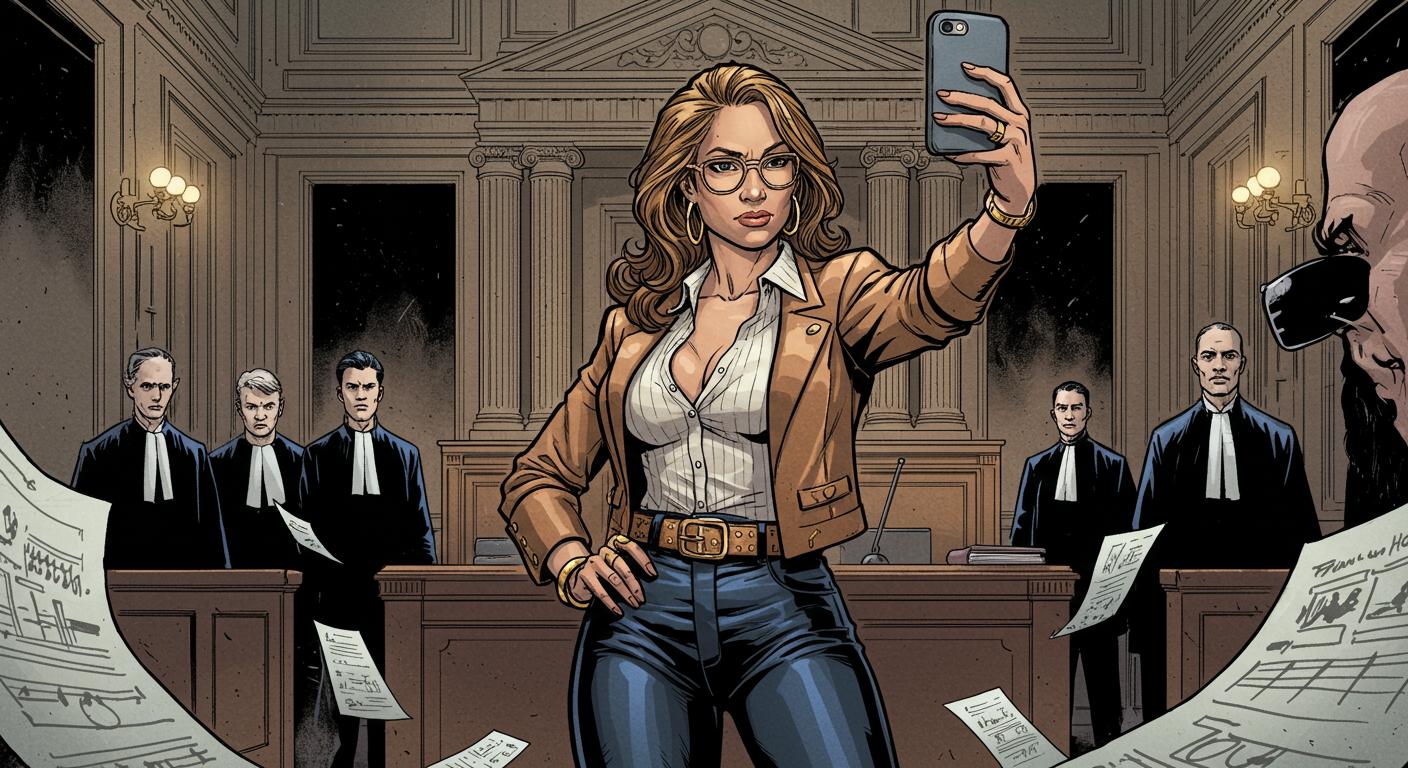
There’s a special kind of irony in watching Jennifer Lopez—someone for whom public image is practically a second skin—facing lawsuits for sharing pictures of herself in public. And yet, that’s exactly the situation, as several outlets document, surrounding her social media posts from a Hollywood party earlier this year.
Whose Face Is It Anyway?
According to BBC News, Lopez attended a glitzy Amazon MGM Studios and Vanity Fair gathering at the Chateau Marmont on the eve of the Golden Globes this January. Rather than let her photos slowly drift through fan forums and tabloids, she posted two professional paparazzi shots herself, captioning them “GG Weekend Glamour” for her followers on Instagram and X. The images, showing Lopez in a white dress and faux fur coat, quickly made the rounds across fashion blogs and fan pages.
It all sounds harmless enough—until you check the fine print on copyright law. The outlet notes that despite being the subject, Lopez doesn’t own the rights to these photographs. Instead, photographer Edwin Blanco and his agency Backgrid hold the copyrights, and they’re not thrilled about her using their work without a license. Both parties have now filed separate lawsuits, each seeking up to $150,000 per image, anchored by the argument that Lopez’s self-posts weren’t just casual sharing but deliberate self-branding.
Not Just a Selfie: The Commercial Angle
As explained in reports by Arise News, Blanco and Backgrid claim that Lopez’s posts served a commercial purpose—specifically promoting her public appearances and fashion partnerships. Legal filings cited in multiple reports argue that Lopez used the images to spotlight the designers of her clothing and jewelry, riding the event’s publicity to bolster her brand and partnerships. “Unauthorized use… for self-promotion,” the lawsuits state, makes the difference between a harmless post and a $150,000 problem.
The legal backdrop is remarkably routine: under U.S. copyright law, the person who takes the photo (or the agency that hires them) holds the rights, not the person being photographed. So even if your face does most of the work, you’re not automatically the legal owner of its image when caught by someone else’s camera.
History of Familiar Faces in Court
Lopez’s current legal pickle is not exactly novel. With inputs from United News of Bangladesh, it’s highlighted that she faced similar lawsuits in 2019 and 2020 for posting images taken by others. She’s now in distinguished company: Dua Lipa, Gigi Hadid, and Khloe Kardashian have all fielded lawsuits for sharing professional photographs of themselves without proper licensing. Apparently, for celebrities, déjà vu and court dates are equally recurrent.
Posted, Contacted, Contracted… Paused
Described by Roya News, after Lopez’s team posted the disputed images, Blanco and Backgrid reportedly contacted her representatives to negotiate a payment arrangement for the photo usage. A deal was discussed and payment terms initially agreed upon, but the paperwork, it seems, is still languishing somewhere in limbo. So, to borrow a phrase from slow-moving bureaucracy: “pending signature.”
All the while, the images have proliferated—from Lopez’s account to innumerable fan and fashion pages—while the agency and photographer await their formal settlement. One can almost picture the legal negotiation emails piling up like unsold tour merch in the back room: everyone’s agreed in theory, but nothing can go forward until the final stroke of the pen.
The Public Image Commercial Loop
What emerges is a legal and cultural loop as perplexing as it is oddly inevitable. Paparazzi take photos hoping to profit off celebrity allure. Celebrities, seeking to shape or monetize their own narrative, share professionally shot images to highlight collaborations or boost engagement. Then, the cycle spins around: the images become coveted intellectual property, and the rights holders step in, invoices at the ready.
So, as BBC News and Arise News have documented, owning your likeness isn’t the same as owning your image. In today’s social media age, even posting your own face can become a legal minefield—especially if you’re also plugging a designer in the caption.
One can’t help but pause and wonder: in an era where being photographed is as unavoidable as traffic on Sunset Boulevard, what counts as control over your own image anymore? The law says one thing; celebrity logic, quite another. If a superstar like J.Lo can’t safely Instagram her own evening out without triggering a lawsuit, have we reached peak copyright absurdity? Or is this just the new normal, another odd little corner of the internet to add to the growing list?