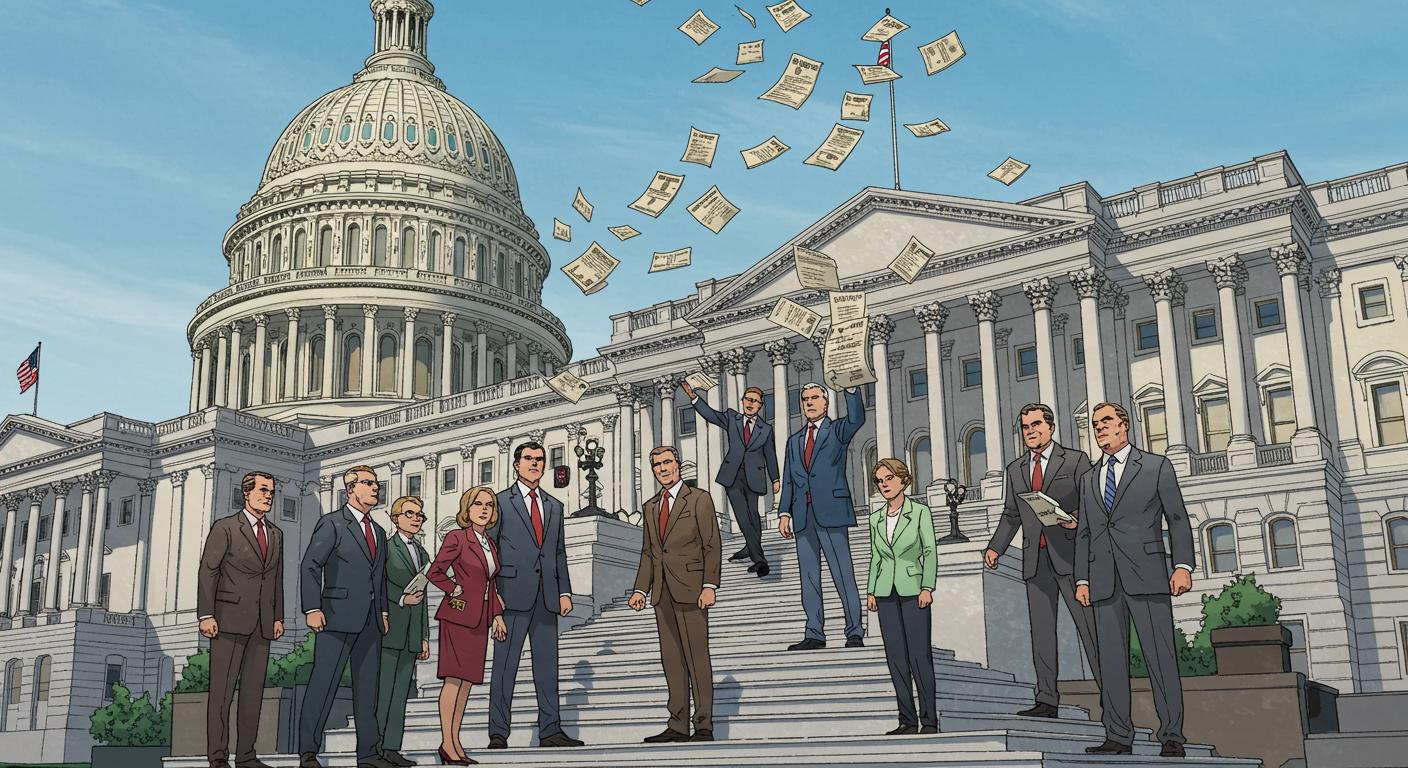
If there’s ever been a legislative document with the theatrical flair of an awards show, it’s the “One Big Beautiful Bill Act.” Not content to settle on a quietly bureaucratic moniker, House Republicans have instead baked a certain combed-over former president’s catchphrase right into the congressional record. As The Associated Press details, this sprawling 1,116-page package is less a trim fiscal plan and more a kitchen sink crammed with the greatest hits (and a few deep-cuts) from years of partisan wish lists.
Beauty Is in the Eye (and the Wallet) of the Beholder
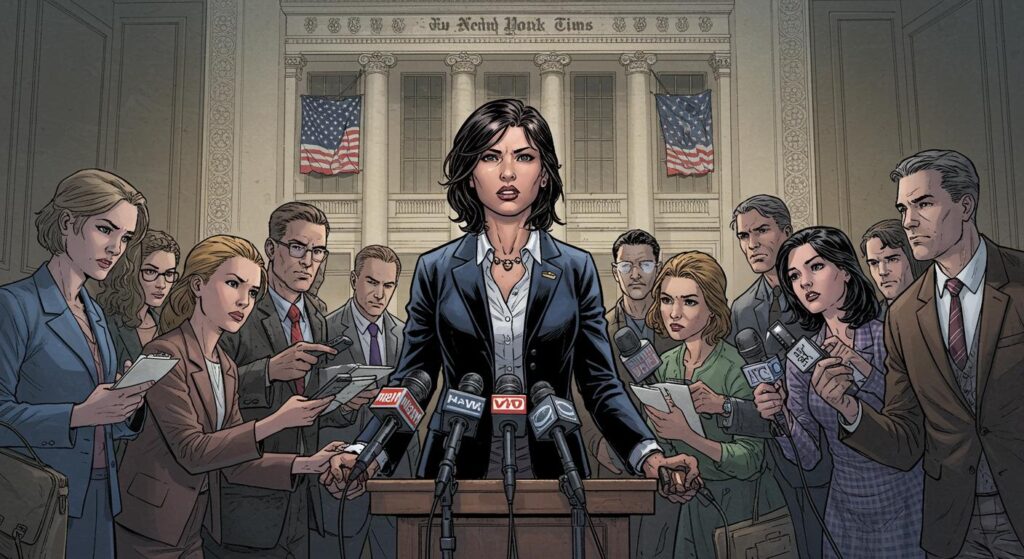
The story of this bill is as much about process as policy. Last Friday, conservative Republicans—typically first in line for the tax-cuts-and-spending-cuts buffet—teamed up with Democrats to unexpectedly tank the proposal in the Budget Committee, a moment described by the AP as a “stunning vote against it.” The melodrama was short-lived, though: as the New York Post recaps, party leaders wrangled just enough last-minute concessions to placate fiscal hawks in a late-night, almost-a-tiebreaker vote.
So what changed? The New York Post documents that Rep. Chip Roy and other fiscal conservatives wanted Medicaid work requirements to take effect sooner than planned, with leadership agreeing to timelier implementation. For context, this late-night session produced a razor-thin 17–16 committee vote, paving the way for the bill’s march onto the House floor.
One has to wonder—when a bill is named like a contestant and shepherded through the House like a reality show twist, is anyone supposed to keep a straight face?
A Bouquet of Bold (and Sometimes Bizarre) Proposals
Sifting through the contents, as outlined by The Associated Press with further detail from the New York Post, is like rummaging through an overstuffed grab bag at the world’s most polarized state fair. Tax cuts take center stage. At the core are permanent extensions of Trump’s 2017 tax breaks, new relief for tips and overtime, and a temporary hike in the child tax credit. Additionally, the estate tax exemption would rise to $15 million, and there’s a $2,000 temporary boost to the standard deduction—provisions designed to make this feel like everyone’s favorite goody bag.
For those with a fondness for clever acronyms, the debut of MAGA accounts—officially, “Money Accounts for Growth and Advancement”—means that babies born between January 1, 2024 and December 31, 2028 could get a $1,000 government kickstart, according to the AP’s breakdown. Families are permitted to contribute up to $5,000 a year, with access granted at certain milestones.
Yet amid these flourishes, the bill threads in some substantial restrictions and carve-outs. Medicaid and SNAP (food aid) recipients face heightened work requirements. The Associated Press notes that under the new plan, able-bodied adults without dependents must fulfill work requirements until age 64, up from age 54, while exemptions for parents narrow to only those with kids under seven. States would also take on a larger share of SNAP costs, a shift detailed further by both outlets.
These changes aren’t just for show—the AP cites the nonpartisan Congressional Budget Office, which projects these Medicaid requirements would lead to at least 7.6 million people losing coverage. To add another filter, eligibility is now capped so that those with homes valued over $1 million would not qualify for Medicaid. It’s a line in the sand that prompts one to wonder if anyone with a million-dollar home is actively lining up at the Medicaid office.
Distinct policy planks abound. The bill eliminates a $200 tax on gun silencers that has existed since 1934—a provision the AP attributes to National Rifle Association advocacy—while at the same time targeting Planned Parenthood and large abortion providers for Medicaid funding restrictions. The Post adds that the bill restricts Medicaid coverage for certain transgender surgeries as well. Nonprofits deemed to support terrorism could lose their tax-exempt status, which the AP observed could set an “arbitrary standard” with potentially broad implications.
Defense, Detention, and the Golden Dome
On the security front, border protection and military spending surge. The Associated Press reports the bill calls for $46.5 billion to restart construction on the southern border wall, plus hefty sums for hiring additional Border Patrol and ICE agents. It’s not just security officers getting support: $4 billion is allocated for 3,000 new Border Patrol agents and 5,000 new customs officers, along with signing and retention bonuses, according to the AP. The bill even mandates a $1,000 fee on asylum seekers—placing the U.S. in the very exclusive company of countries like Australia and Iran.
Detention and deportation ambitions swell, with a plan to remove one million immigrants annually and build capacity to house 100,000 in detention centers. The Pentagon, meanwhile, is set for a nearly $150 billion boost. As documented by the Post, this includes $25 billion for the so-called “Golden Dome”—a missile defense shield long envisioned by Trump—and billions more for building ships and restocking ammunition.
Education isn’t spared the beauty treatment. Both sources detail how the bill consolidates all student loan repayment plans into two, eliminates protections for borrowers defrauded by shuttered colleges, and imposes a tax of up to 21% on certain university endowments—an unusual blend of streamlining and new levies.
There’s also a robust energy agenda favoring more drilling, mining, and logging on public lands, with lower royalty rates for corporations. In a last-minute addition described by the AP, Republicans included authorization for selling hundreds of thousands of acres of public land in Nevada and Utah—an item sparking immediate pushback from Democrats and environmentalists.
The Beauty Pageant’s Ugly Side?
Amid all this flair, one might ask: is this bill beautiful to all, or just to the runway judges? The Associated Press observes how blue-state Republicans view the increased SALT (state and local tax) deduction as insufficient, clamoring for more substantial relief for their constituents. Moderates, as the Post points out, have qualms about cutting Medicaid and SNAP funding—programs serving over 70 million low-income Americans and affecting basic food aid.
And the math may not earn any “Miss Financial Responsibility” awards. The New York Post cites estimates from the Committee for a Responsible Federal Budget suggesting the plan, despite its large spending cuts, could still add $3.3 trillion to the national debt over a decade, mainly due to tax provisions that aren’t fully offset by revenue or cuts. In an ironic twist, the bill is expected to raise the debt ceiling by $4 trillion—needed, perhaps, to finance its own largesse. The AP earlier noted that making campaign-season tax breaks “permanent” often just means “extended through the end of a convenient term,” making the meaning of “beautiful” somewhat, well, fluid.
Finale or Curtain Call?
It’s unclear if the “One Big Beautiful Bill Act” will take home the crown or be left clutching a bouquet of participation roses. There remain obstacles in both chambers, with unified Democratic opposition, skeptical Senate Republicans, and the ever-mysterious parliamentarian waiting in the wings. Even among its own authors, as seen in both AP and Post coverage, the effort resembles more of a hastily choreographed group dance than a poised solo.
Still, the spectacle deserves its own place in the American annals of legislative oddities. Naming a 1,100-page reconciliation bill to flatter the sponsor is a twist I didn’t see coming—but, admittedly, it’s got style, if not exactly the substance that everyone’s after.
Is this a blueprint for the nation’s future, or just a well-accessorized walk down the aisle of wishful policy thinking? In the grand contest of politics, sometimes all you can do is marvel at the presentation, squint at the details, and ask: If this is what “beautiful” looks like, what did they say about the runner-up?