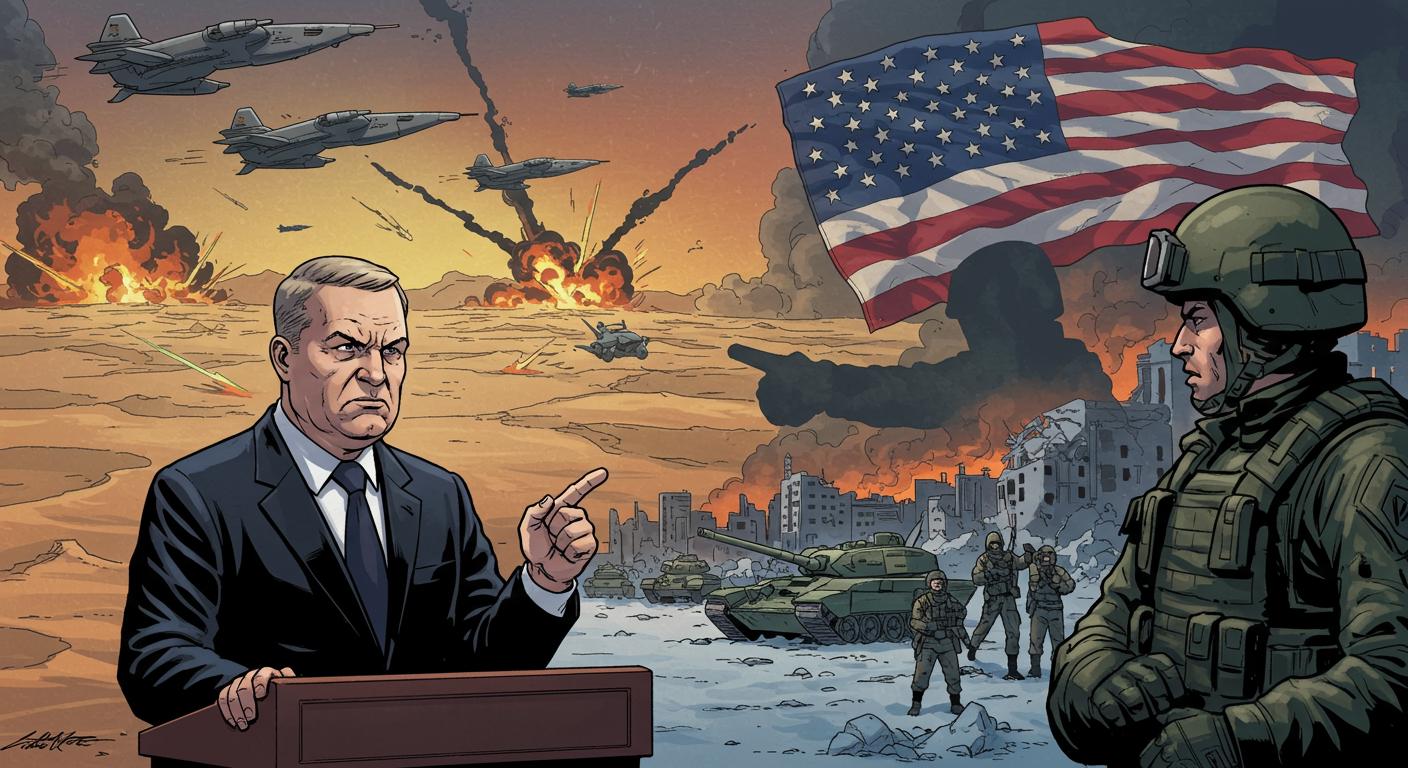
If there’s one thing international politics does well, it’s crafting moments of jaw-dropping irony. The most recent: Russia vocally denouncing U.S. airstrikes on Iran as “unprovoked aggression” and a violation of international law. You might have caught this patch of theater in The Moscow Times, which chronicles Russia’s outraged response even as its own armed drones zip across Ukrainian skies and the ink is still drying on various Hague paperwork.
The Glass House League’s Most Vocal Member
The Israel-Iran conflict has reached a fever pitch, complete with civilian casualties, daily salvos, and foreign ministries worldwide scrambling for a dignified hashtag. Russia, apparently eager to lead the charge for lawful conduct, wasted no time. As reported in The Moscow Times, the Kremlin called the U.S. operation a violation of the UN Charter, while its Foreign Ministry suggested Russians put their summer vacations to Tel Aviv and Tehran on indefinite hold. (Probably wise—missile alerts rarely pair well with beach plans.)
Yet, as Russian Deputy Foreign Minister Andrei Rudenko emphasized to the State Duma, Moscow’s recently ratified agreement with Iran—a “strategic partnership,” not a military alliance—contains no promise of troops or mutual defense. Instead, Moscow prefers the role of global mediator, recommending action through bodies like the UN Security Council and the International Atomic Energy Agency. Russia and Iran: the buddy cop duo that only investigates by holding press conferences.
Middle East expert Hanna Notte, writing on X and in Foreign Affairs, notes that Russia is likely hoping to play mediator without committing to either side—though the turbulence in the region has made it impossible for Moscow to consistently influence outcomes. If you’re picturing a diplomatic tightrope act being performed over an oil slick, you’re not wrong.
Meanwhile, Ruslan Suleymanov of ADA University told The Moscow Times that Russia’s practical support will be limited to UN maneuvers: “There is no military obligation.” Russia gets the headline—just not the risk.
Mediation, Profitable Principles, and a Pile of Drones
Vladimir Putin wasted no time in volunteering as mediator-in-chief, proffering Russia’s negotiating table to Israeli Prime Minister Benjamin Netanyahu—though analysts like Marianna Belenkaya, a former commentator for RIA Novosti, are unconvinced the offer is as neutral as it sounds. She reminds us that Russia and Israel have managed their relationship deftly, each sidestepping confrontation (and sanctions) even as Moscow courts groups like Hamas.
It’s a diplomatic ecosystem where, as Belenkaya sees it, nobody has actually closed the door—sometimes it’s just left awkwardly ajar, the kind of relationship where neither side is entirely sure who’s invited to dinner. For the record, Belenkaya doesn’t believe Russia is particularly worried about Iran’s nuclear ambitions, either. Maybe selective anxiety should be a line item in the next partnership treaty.
On the technology front, Nicole Grajewski of the Carnegie Endowment explained to The Telegraph that Moscow no longer needs direct Iranian drone support, cranking out some 2,700 Shahed-style units each month all by itself. If you’re looking for a how-to guide on outsourcing national defense technology, the Russia-Iran partnership might not actually be required reading anymore.
Oil Prices Up, Moral High Ground in Short Supply
Of course, when the shooting starts, the first numbers to jump are on the oil ticker. Igor Yushkov, an energy analyst referenced in The Moscow Times, doesn’t mince words: if Iranian oil flows slow or stop, especially due to targeted strikes on critical energy infrastructure, global prices rise and Russia—sitting atop its own export reserves—stands to rake in a little extra. The outlet consolidates this view: if China needs to pivot away from Iranian barrels, Russia is standing by, invoice in hand.
Yet, as PSB Bank analysts reassure (and perhaps disappoint hedgers), the Middle East possesses more than four million barrels per day in spare capacity—enough that prolonged spikes probably won’t last. Kirill Rodionov, another energy analyst, predicts any jump at the pump will remain fleeting. Still, for a government counting rubles, even brief turbulence can cover a lot of budget gaps.
It does make one wonder: is strongly condemning U.S. military action part of the negotiation for steady, elevated oil revenues, or just excellent timing?
“Unlawful,” “Irresponsible,” and Other Regional Adjectives
Among all the huffing and puffing over violations of law and sovereignty, Russia hasn’t hesitated to criticize Israeli strikes on Iranian infrastructure either. Suleymanov, interviewed by The Moscow Times, suggests that, despite Moscow’s louder partnership with Iran, it’s unlikely to affect the still-cordial ties with Israel. There’s an odd sort of detente here—everyone gets criticized equally, but nobody’s forced onto the enemy’s couch for the night.
All this diplomatic needle-threading has not gone unnoticed by local experts or the public. In a neat bit of foreshadowing, the Russian Embassy in Israel has already prepped contingency evacuation plans, just in case the “let’s all be reasonable” campaign has trouble catching on. Apparently, you can sell mediation services, but you should always pack a go bag.
If Only Irony Was a Traded Commodity
Every time the major players trade accusations of unlawful action and irresponsibility, there’s a faint hope someone in the back row will raise a hand and ask for a definition. As it stands, Russia’s outrage at Western military intervention sits side by side with its own hard-to-explain adventures. We all know people who dish out advice they never follow; apparently, some nations treat international law in much the same way.
You do have to wonder, in the haze of oil profits, strategic double-speak, and perennially outraged press releases: is the real contest about controlling the moral high ground, or just making sure no one else gets a stable foothold? In the end, perhaps what’s most remarkable isn’t the posturing itself—but our continued ability to act surprised by it.