If you spent part of your week musing about how things could get stranger, trust your instincts—it seems the answer is always, “Why, yes. Yes, they can.” Case in point: U.S. Immigration and Customs Enforcement (ICE), the federal agency seldom associated with subtlety, recently made a polite-but-unusual request that newsrooms blur agents’ faces during courthouse raids. As The San Francisco Standard details, this came right after four individuals were apprehended at San Francisco’s immigration court—an event already attracting sharp attention for its abruptness and public setting.
Smile for the Camera, or Don’t
One might assume that federal agents conducting official business in broad daylight would be resigned to a little visibility. Yet, reporting from The Standard recounts how ICE spokesperson Richard Beam messaged editors after Tuesday’s courthouse operation, requesting consideration for the agents’ privacy: would they blur out officers’ faces from published images and video? According to Beam, this step was motivated by “concern for the safety of our personnel,” though he prefaced the ask by acknowledging the media’s right to document public events.
The Standard’s editorial response, as cited in the article, was firm: while privacy and safety matter, blurring faces in this context was deemed a precedent too risky for press freedoms and the public’s ability to scrutinize government work. Managing editor Jeff Bercovici explained that such censorship would be at odds with the public’s right to know—a stance familiar to those who think open government makes for better policy.
In a detail highlighted by The Standard, Beam initially claimed that ICE “would normally not make such a request,” only for the agency to later note that these appeals are now routine. This bit of rhetorical footwork invites questions: When, precisely, did routine requests for heightened secrecy become the norm?
Behind Masks and Sunglasses
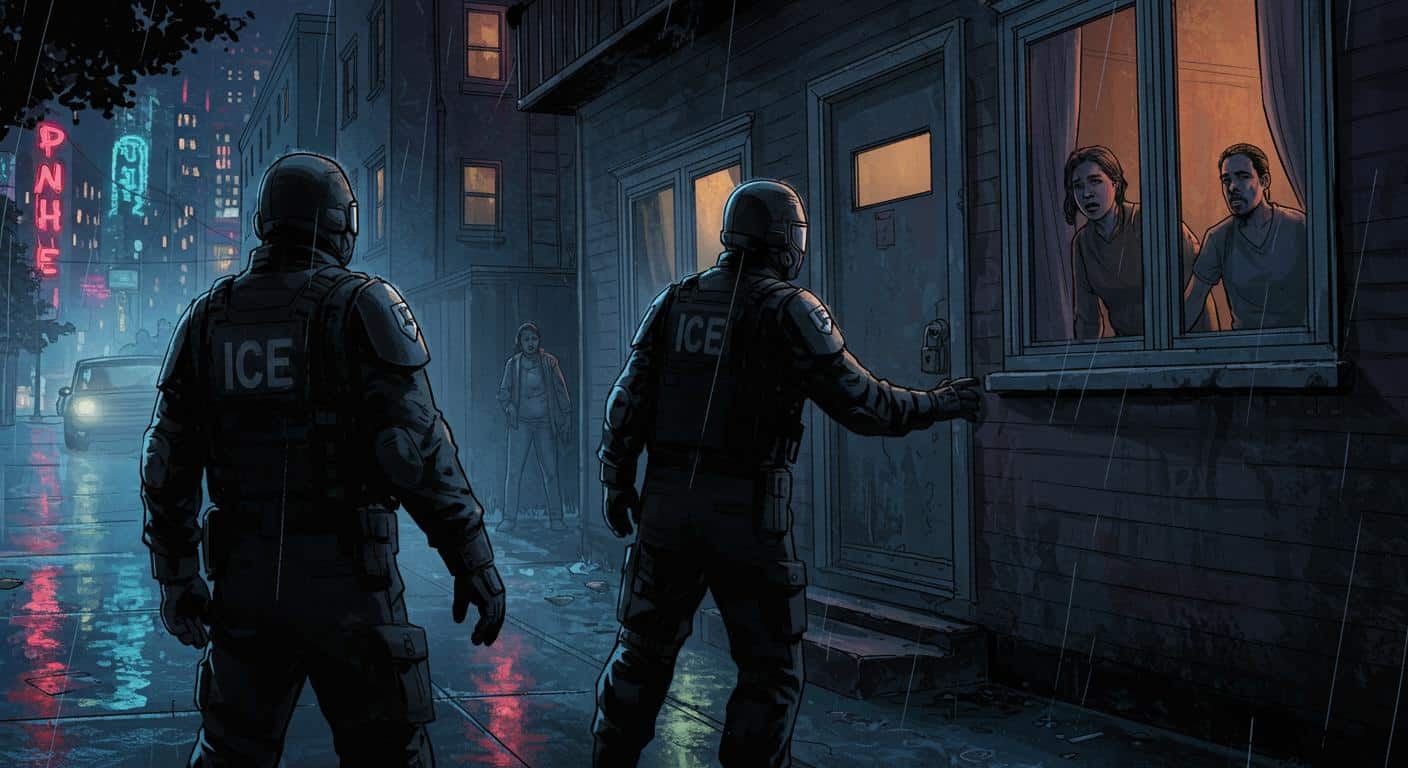
Observing the courthouse scene, The Standard describes agents blending modern surveillance chic with pandemic flair, donning surgical masks and sunglasses as they escorted detainees into waiting vehicles. The report draws parallels to other incidents beyond San Francisco, noting that ICE agents have adopted face-shrouding practices from Seattle to Los Angeles, sometimes even operating without visible law enforcement identification. Earlier in the piece, it’s mentioned that NBC Bay Area decided to blur agents’ faces in one video segment, but did not do so across the board, highlighting the subjective nature of these privacy decisions. Meanwhile, outlets in Seattle recounted to The Standard that, although they received no direct blurring requests, photo policies inside federal buildings were reiterated by Department of Justice representatives when cameras entered disputed ground.
In a move that seems tailor-made for confusion, Democratic Sens. Mark Warner and Tim Kaine recently wrote to Department of Homeland Security officials, cited in The Standard, warning that masked, unidentified agents conducting street arrests risk misunderstanding—or even dangerous escalation—by bystanders who can’t identify who is detaining whom, or why.
Secrecy’s Selective Nature
It’s tough to ignore the irony—observed by The San Francisco Standard throughout their coverage—that ICE, so frequently a source of publicized booking photos (criminal record or not), is now lobbying for selective concealment. The outlet also documents allegations by families of detainees who say ICE agents have filmed or mocked their loved ones with personal cellphones. Yet when the roles are reversed and agents are the ones being documented in public, the ask is for privacy and blurred pixels. Is this a case of government transparency for the governed, but not for the governors?
ICE’s official justification, as relayed in the Standard’s reporting, is the existence of credible threats: some agents, at times, are doxxed online or face real danger, such as the Texas man recently arrested for making violent threats against ICE personnel. The agency points out that some officers carry undercover credentials or are part of sensitive investigations—a claim that certainly merits consideration. Still, journalism professor Stacy Scholder, quoted in the article, suggests that the delicate balancing act of protecting true undercover identities doesn’t always extend logically to agents making arrests on city streets. She notes, “I also understand the safety of the everyday person on the street,” positing that news outlets have to weigh these factors transparently themselves.
A New Public Square, Less Public?
The Standard’s reporting underscores a persistent theme: ICE’s penchant for secrecy is not limited to photo requests. Unlike local police, ICE forgoes publishing daily booking logs and may not reveal information about where detainees are being held. This opaque approach, paired with appeals for media self-censorship, moves high-stakes enforcement further away from community oversight and into subdued shadow.
That raises the question: Do such attempts at erasing agent identities in public spaces genuinely prevent harm? Or, in a strange twist of logic, does seeking selective anonymity erode trust and transparency in ways that risk greater harm—both to public confidence and to our ability to know what’s happening in our backyards?
Closing Thoughts
Some stories really don’t need exaggeration. The Standard’s account of masked, sometimes unnamed federal agents requesting their faces be blurred while whisking people from city sidewalks already toes the line between darkly comic and unsettling. In a world where so much happens behind the scenes, the expansion of that secrecy to official, public actions seems worth pausing over. As public servants seek new ways to avoid the spotlight, it’s increasingly legitimate to ask: Who gets anonymity, and who must stand in the full light? Sometimes, the facts are surreal enough on their own.