
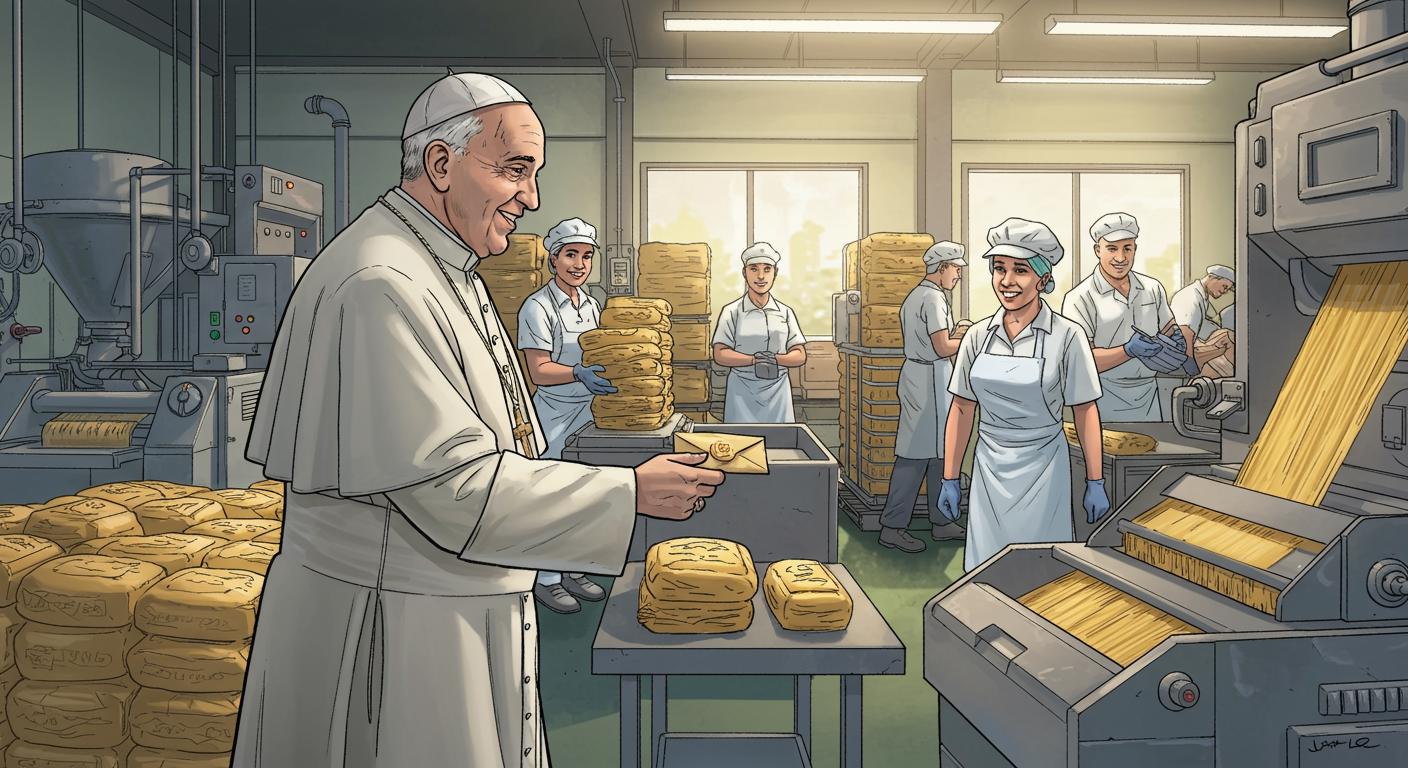
It’s not every day a headline brings together the Vatican, elbow macaroni, and a prison mortgage, but here we are. In a move that—depending on your perspective—reads as either classic Francis or an entry from an unusually spiritual episode of Anthony Bourdain, Pope Francis’ final act of generosity has come to light: giving €200,000 (about $227,000) from his personal account to help a group of juvenile inmates pay off the debt on a pasta factory inside Rome’s Casal del Marmo detention center. As CatholicVote details, it’s a story that pairs saintly largesse with a distinctly starchy twist.
Debt, Dough, and Divine Intervention
If you’ve ever felt like your own pasta habit might be a little excessive, consider this: there’s a juvenile correction facility with a full-blown pasta-making operation, and the Pope himself just helped them cover the mortgage. Monsignor Benoni Ambarus—a name that, let’s be honest, sounds perfectly at home in a tale of ecclesiastical intrigue—oversees charity and prison outreach in Rome and shared details of the donation following Pope Francis’ passing. According to CatholicVote, Ambarus explained that after he told the pope about the big mortgage for the pasta factory and the potential to lower pasta prices and hire more boys if the debt was reduced, Pope Francis replied, “Almost all my money is finished, but I still have something in my account.” Then came the gift: €200,000, delivered without ceremony. No papal bull, just a personal bank transfer—divine fiscal stimulus with a side of carbohydrates.
CatholicVote reports that the factory is not just serving up carbs, but providing a tangible route to rehabilitation. The pasta enterprise offers manual labor and business skills, giving incarcerated youth practical tools for a fresh start. Only in Rome could your first job after prison be “artisan pasta maker,” made possible courtesy of papal funding.
A Legacy of Loaves and Goodwill
This gesture is not out of character when viewed alongside Pope Francis’ approach throughout his tenure. CatholicVote goes on to recount that, in his final months, despite obvious frailty, the Pope continued visits to prisons, including opening a Holy Door at Rome’s Rebibbia prison in December and marking Holy Thursday at Regina Coeli prison. Monsignor Ambarus emphasized to the outlet that even as age and illness took a toll, the pope’s presence commanded the prisoners’ attention and offered them hope. “He fought for them until his last breath,” Ambarus observed, a sentiment apparently echoed by the inmates themselves.
Described in CatholicVote, following his death, many inmates expressed a sense of loss, with Ambarus receiving messages from those who now feel “like orphans.” Some prisoners have even asked him to place a flower on Pope Francis’ grave on their behalf. Ambarus explained he is doing his best to honor these requests, ensuring that what he calls the pope’s “favourite children” can participate in mourning.
The outlet also notes that these moments—washing feet, personal charity, and steadfast presence among society’s outcasts—are emblematic of Francis’ “broader witness.” Whether through symbolic gestures or literally paying a factory’s bills, his actions consistently leaned toward granular, direct support for individuals rather than distant doctrine. There is something both sweet and mildly surreal about the fact that, while world leaders regularly spar over arms or fossil fuels, Francis opted to fire a salvo of compassion using penne and checkbook.
The Flavor of Redemption
So, what do we do with the image of a papal donation keeping a pasta factory afloat inside a juvenile prison? The symmetry is striking: bread and wine for the altar, rigatoni for a rehabilitation project. As CatholicVote documents, this is more than a quirky story—it’s an institutionally sanctioned second chance, sustained by real, personal giving. Few would expect that the death of a pope would prompt incarcerated youth to request flowers for his grave, yet here we are, according to Ambarus’ account for the outlet. There’s an almost Dickensian undertone: a cycle of loss, hope, and improbable philanthropy.
It’s hard not to ask: How many other correctional facilities are quietly dreaming up fettuccine-based futures as a path to redemption? Or, on a broader scale, what other unlikely mashups of social outreach and comfort food might do the world a bit of good? For now, the pasta at Casal del Marmo doubles as both sustenance and a tribute to second chances—with a final dash of papal generosity to bind it all together. Truly, something to chew on.