
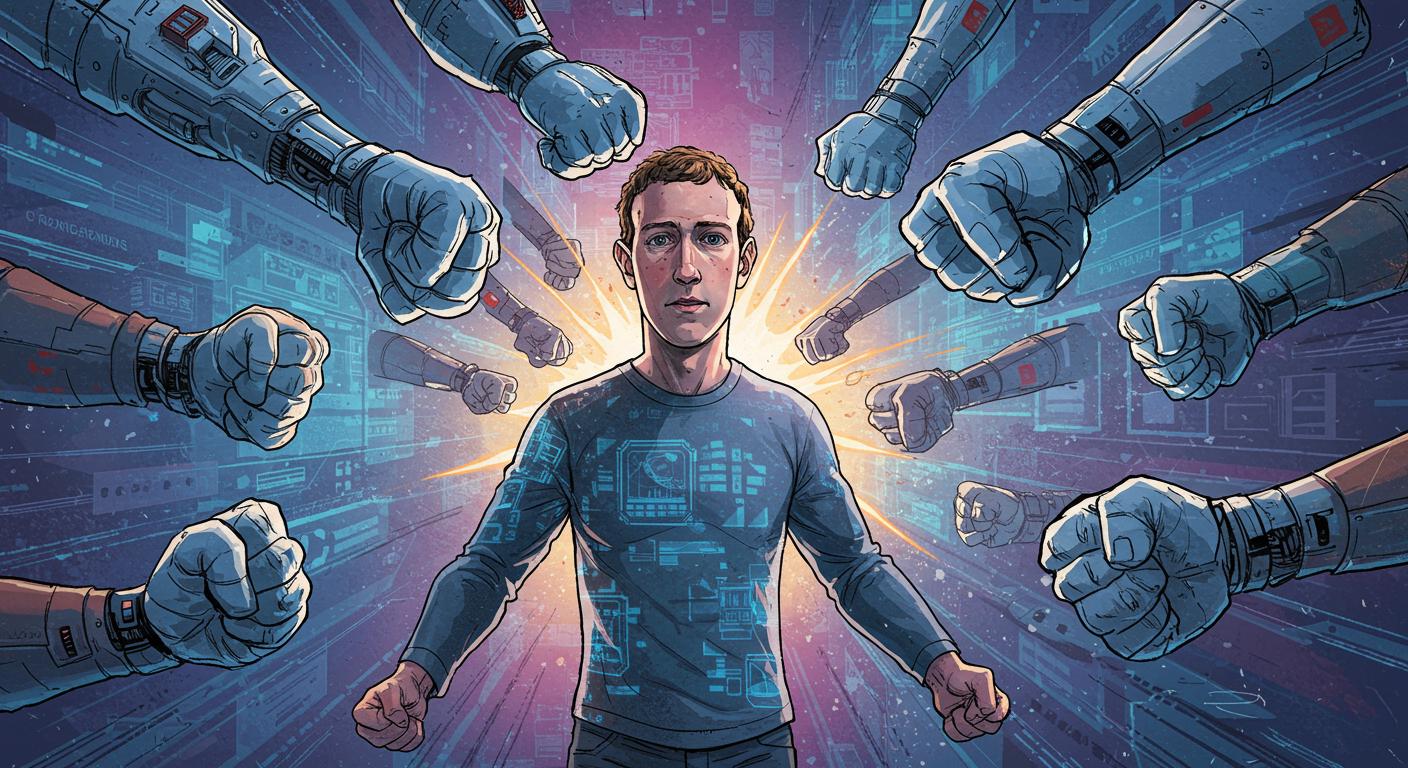
Sometimes, a billionaire’s lament makes its way into the news cycle—softened by a haze of irony when it’s about the emotional toll of their own empires. The latest instance: Mark Zuckerberg, CEO of Meta, likens his experience at the helm to “being a punching bag,” a phrase captured by CelebNewsFix in their recent coverage of his response to ongoing pressures. According to the outlet, Zuckerberg is candid about the bruises he’s taken—metaphorically, of course—while managing the many-headed beast that is Meta.
What stands out is the sheer scale of what Zuckerberg contends with. As recounted in the report, the good old days of Facebook’s “move fast & break things” motto coincided with a surging stock and boundless optimism. But then came 2022—a sharp market correction, public backlashes, and a new era of scrutiny turned the tables, making the CEO seat feel less like a throne and more like the last position at a dodgeball game.
It’s a curious kind of appeal to relatability. Does Zuckerberg envision an understanding audience, or is he simply processing the transformation of his role from disruptor-in-chief to official recipient of the world’s anxieties about social media and tech power? For all the billions in personal wealth, there are evidently limits to what a net worth can cushion. Maybe he’s even surprised that a company with billions of users generates so many opinions, most delivered with all the gentleness of, well, a punch.
Art Reflects the Age of the Bruised Billionaire
While Zuckerberg airs his grievances about being on the receiving end of endless criticism, fiction isn’t far behind in picking up the theme. Mountainhead, a new HBO film dissected by TIME, assembles a set of tech moguls for a not-so-subtle exploration of what happens when the world’s most powerful digital overlords try to control AI run amok.
Jesse Armstrong, the creator, drew inspiration from a cocktail of real-world figures: Zuckerberg, Elon Musk, Sam Altman, Peter Thiel, and other fixtures of Silicon Valley mythology. Armstrong described his characters not as direct copies, but as “Frankenstein monsters with limbs sewn together,” making them funhouse-mirror versions designed to illuminate the traits and anxieties most associated with today’s tech royalty.
The film’s “dynamo,” Venis—a social media emperor with 4 billion users—bears traces of Zuckerberg’s public persona. According to Armstrong’s research, Venis is at once ambitious, insulated, and surprisingly fragile, grappling with accusations that his platforms have caused real-world harm but brushing aside concerns in favor of technological progress. In one especially pointed parallel, Venis faces international ire for his role in global unrest, echoing criticisms that have followed Meta into United Nations reports and headlines. Armstrong notes he was channeling the genuine fears voiced by tech leaders themselves: the same executives who sound alarms about AI’s possible threats often seem caught off-guard by public backlash to their creations.
The dynamic runs through the whole Mountainhead ensemble: characters rationalize, justify, and occasionally sulk over the fallout of their own ambitions. Steve Carell’s “Randall” conjures up the grandiosity of Peter Thiel and Marc Andreessen, while Ramy Youssef’s “Jeff” is both critic and participant, ultimately caught in the gravitational pull of power. The narrative isn’t a direct roast, Armstrong clarified to TIME, but a reflection of the very real mix of hubris, anxiety, and beleaguered defensiveness often observed in Silicon Valley’s elite circles.
What Happens When the Punches Keep Coming?
Looking at both reality and its fictional echo, a pattern emerges. Leaders like Zuckerberg often describe a sense of being misunderstood, unfairly targeted, or subject to waves of criticism—despite overseeing platforms that quite literally shape global discourse. The sense of relentless scrutiny, as Armstrong points out, appears to be both self-inflicted and inescapable; after all, the tools they built amplify every punch thrown their way.
It’s tempting to ask: how much does this sense of embattlement influence the actual decisions at the top of Meta, or any tech giant? And do these bruises foster any real introspection, or simply thicker skin? The world watches tech CEOs toggle between grand ambitions (space travel, immortality, world-bending AI) and moments of very public vulnerability.
Epilogue: On Bubble Wrap and Punchlines
So, is the “punching bag” metaphor a genuine insight into the psyche of a modern tech CEO, or simply the latest in an evolving PR playbook? After reviewing the patterns described in both news and fictional accounts, there’s a kind of symmetry in how those steering the world’s most disruptive companies also seek out sympathy for the turbulence they face.
Could it be that the only thing more persistent than public criticism is the tech world’s ability to both create and lament the disruption? In the end, we’re left with the image: Zuckerberg—and his many analogues—perpetually in the ring, dodging blows, convinced that the next round will be different. Maybe that’s the true cost of ambition in the age of billionaires: bruises you can’t spend your way out of, and a new audience for every punch.