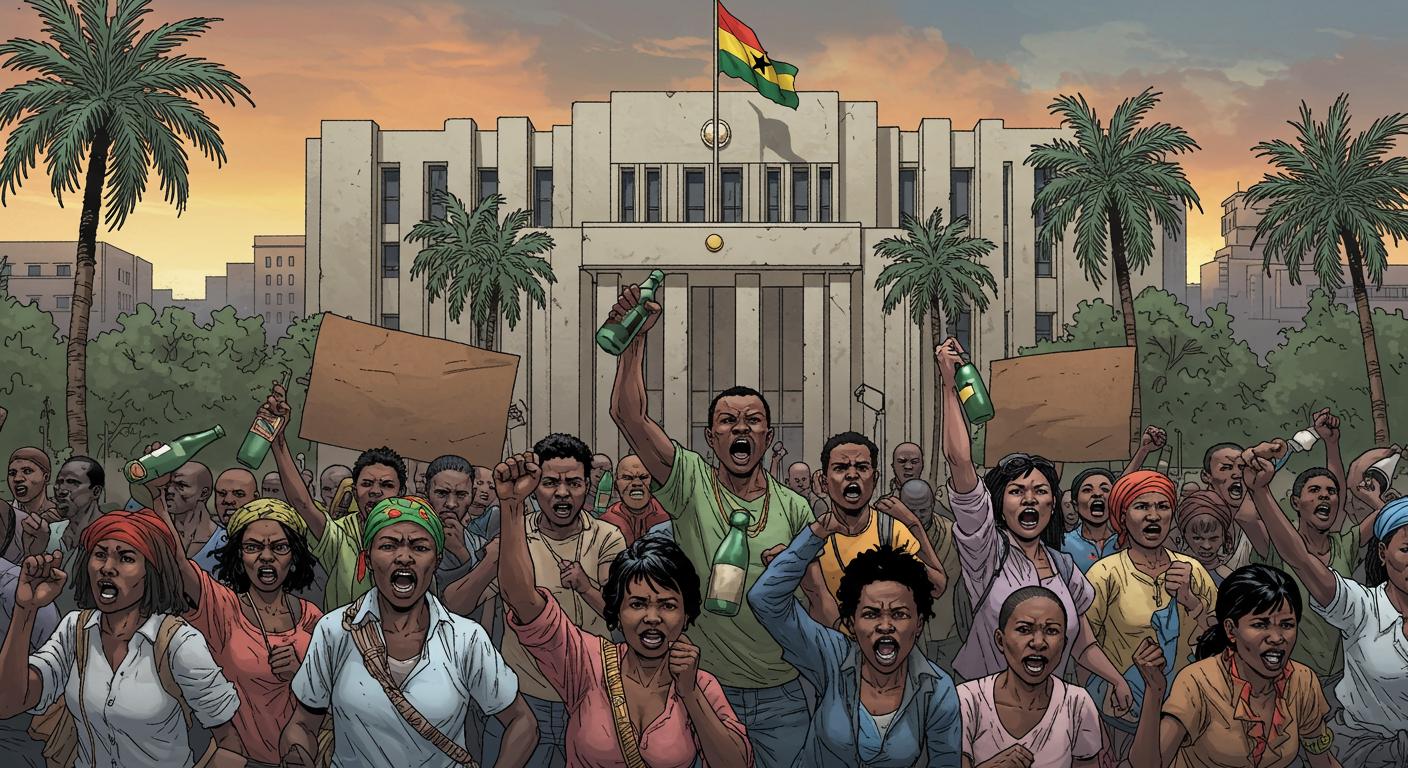
There’s a certain poetry in the headlines some mornings—a rare alignment of numbers, economics, and public advocacy, all filtered through a haze of high spirits. Sometimes, the news reads like a punchline no one saw coming: the Ghana Drunkards Association has delivered the government a three-week ultimatum. The demand? Lower alcohol prices, or face a nationwide protest—presumably as organized as any gathering of 16.65 million self-identified “drunkards” might be.
Dramatic Demands: A Toast (or Protest) Awaits
A video posted on X and shared widely, as first reported by Gistreel, features association spokesperson Moses Obuah urging the Ghanaian government to act on alcohol prices in light of the cedi’s sharp appreciation. Obuah points out that, despite a currency rally, alcohol prices have actually risen—by about 15%—affecting not just consumers, but vendors as well.
In his direct appeal, Obuah called on President John Dramani Mahama and the Minister for Trade and Industry to intervene, emphasizing, “We’ve learnt that the cedi has gained some strength and the price of some items has been reduced. However, the cost of alcohol remains high.” Gistreel also highlights Obuah’s assertion that this advocacy is not just for “alcoholic drinks but for the non-alcoholic ones as well,” broadening their cause beyond a single beverage.
The Tribune Online report corroborates these statements, noting that the association has laid out a three-week grace period for government engagement. The outlets document that the group’s membership reportedly numbers 16.65 million—a figure that, whether literal or not, certainly suggests a groundswell of shared frustration.
When Currency Surges, But Spirits Don’t
The roots of this spirited ultimatum lie in an economic plot twist: the Ghanaian cedi is having a banner year. As referenced by both Gistreel and Tribune Online with supporting data from Bloomberg, the cedi opened 2025 trading at approximately ₵15 to the US dollar, but now floats near ₵10—a near 50% boost in strength and, so far, the world’s best-performing currency this year.
Given that imported goods often respond directly to currency shifts, members of the Drunkards Association argue their favored beverages should be following suit. Yet, as both outlets describe, alcohol prices remain stubbornly high, with inflation outpacing even a triumphant cedi. Is this a temporary market lag, deliberate price gouging, or something more peculiar about the alcohol import chain? The question lingers, as does the association’s frustration.
That leaves a scene where economic logic says one thing, and everyday life says another. Who hasn’t felt the sting of a price tag defying the headline news of national progress? Viewed through that lens, the Association’s demands seem less like comic relief and more like a ground-level barometer of public mood (with or without the pun intended).
The Curious Calculus of Collective Bargaining
Tribune Online highlights the organization’s impressive claimed membership and the forceful tone of its three-week ultimatum. The combination invites more than a passing chuckle. Is this merely political theater—performance art in protest form? Or is it, in its own way, a valid manifestation of consumer advocacy, revealing who really benefits when a nation’s fortunes rise?
Members’ insistence that the price drop applies not only to alcoholic drinks but non-alcoholic ones as well may broaden their appeal. After all, according to Gistreel, the call is for real economic reflection: shouldn’t a currency rally trickle down to basic goods, regardless of their effect on sobriety? Perhaps the next headline will feature Ghana’s Tea Drinkers Mutual or the National Syndicate of Soda Pop Enthusiasts taking a page from this flamboyantly earnest playbook.
Sobering Reflections
Beneath a headline built for viral curiosity, there’s a certain sincerity. The Drunkards Association—and the frustration it represents—mirrors a familiar dilemma: when the big news is good, but its impact feels abstract or absent at the street level, people notice. This time, the messengers just happen to be unified by their affection for an evening tipple.
Whether these 16.65 million will truly “shut down everywhere” remains to be seen, but their ultimatum puts a spotlight on broader themes: economic justice, transparency in pricing, and the surprising places from which collective action can bubble up. In the quirky theater of public advocacy, perhaps it’s only fitting that sometimes you need a round—or a rally—to get things moving. And looking ahead, who will drink to the next economic victory, and at what price?