
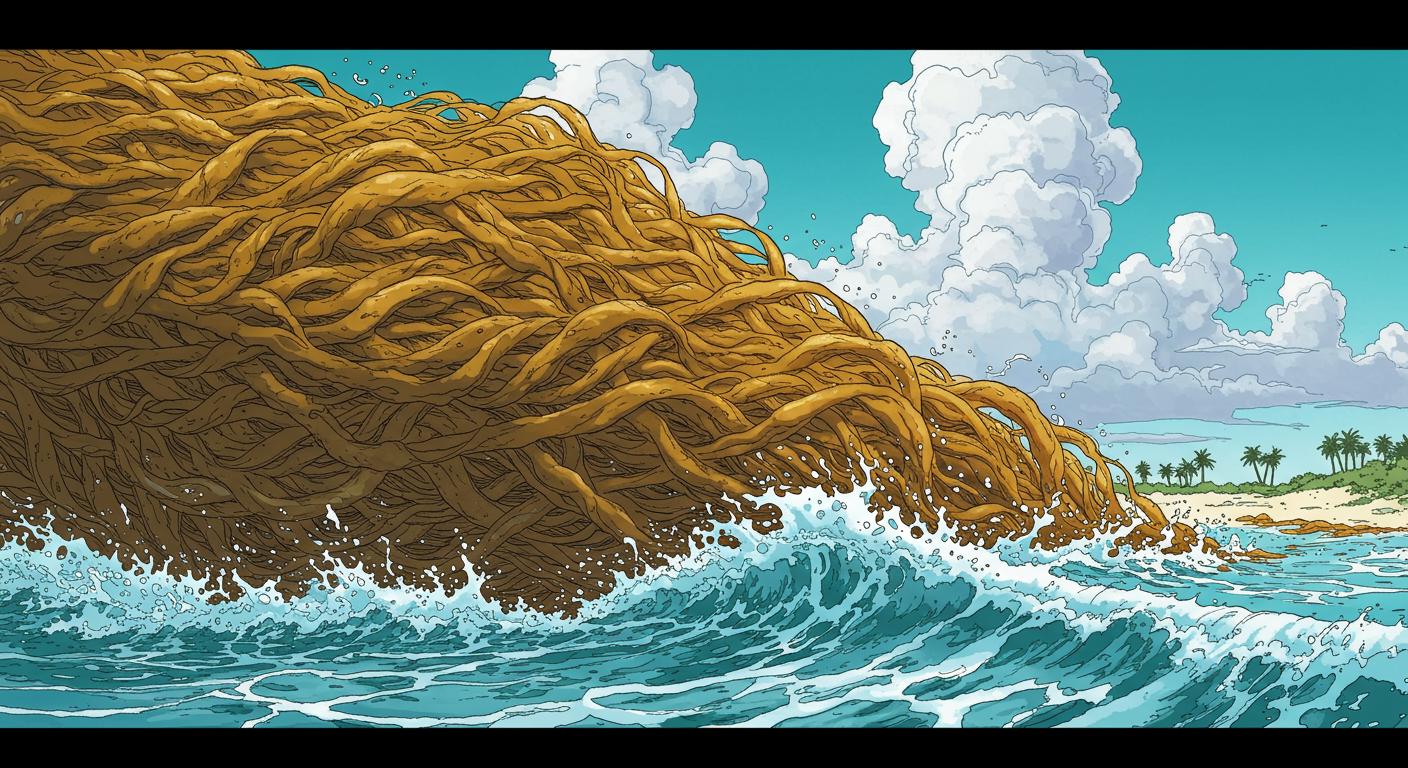
Ah, Florida: land of sun, sand, and now, apparently, record-shattering walls of rotting seaweed. The term “algal bloom” rarely inspires a sense of the dramatic, but with thirty-one million tons—that’s million with an “m”—of sargassum drifting steadily toward Florida’s shores and much of the Caribbean, suddenly “the blob” seems less B-movie and more breaking news. As described in CNN’s recent coverage, 2025’s bloom isn’t just nudging past previous sargassum records; it’s obliterating them, with the growing season still not over.
The Relentless March of Brown Algae
Consider the logistics presented in the CNN report: sargassum is stretched across some 5,500 miles of ocean, forming floating islands of algae that balloon from the coast of West Africa toward Brazil, then sweep into the Caribbean and the Gulf of Mexico. Marine scientist Brian LaPointe, cited by the outlet, points out that sargassum, in modest doses, plays an important role in ocean ecosystems—offering shelter to sea turtles and larvae, and even making a cameo in the journals of Columbus. Yet the story loses its charm once the algae piles up on land, transforming from helpful nursery to harmful invader.
CNN notes that when excessive sargassum washes ashore, it releases hydrogen sulfide—a rotten-egg stench that no spin doctor could salvage—and causes headaches for both tourism and local ecosystems. For more than a decade, Atlantic coastal communities have found their iconic white sands swapped for brown tangles and nose-wrinkling fumes. The bloom also harbors larvae and organisms capable of irritating swimmers’ skin, adding a mild horror element for those who still dare to wade in.
What’s Feeding the Monster?
The surge in sargassum is hardly a whimsical act of nature. As highlighted by both LaPointe and the wider reporting, an unnaturally warm Atlantic—supercharged by human-driven climate change—is providing exactly the environment sargassum needs to thrive. To make matters worse, researchers informed CNN that excess nitrogen in the water has given the bloom an extra boost. Where does that extra nitrogen come from? The burning of fossil fuels loads the air and sea with nutrients, but the biggest culprit is agricultural fertilizer runoff from the American Midwest and Amazon basin. When it rains, all that fertilizer—alongside organic matter from drought-stricken forests—escapes into rivers like the Mississippi and the Amazon, and then takes an all-expenses-paid trip to the Atlantic.
Christian Appendini, a professor at the Universidad Nacional Autónoma de México, explained to CNN how these “first flush” events bring massive concentrations of nutrients that prompt explosive sargassum growth. The outlet also mentions that, as the Amazon basin witnesses record drought and subsequent rainfall, the sudden washout of dried organic material fuels this runaway seaweed factory. It’s almost poetic, in a way. One foot of fertilizer in Iowa, one backhanded slap of seaweed in South Beach.
Coastal Communities: On the Defensive
As detailed in CNN’s report, the response along the Yucatán Peninsula and the Riviera Maya could probably fill its own procedural drama. With the sargassum invasion now such a regular event, Quintana Roo’s governor announced that the state is working with the Mexican Navy to collect sargassum at sea, while six miles of floating barriers—described as similar to oil spill booms—attempt to keep the worst of the tide at bay. The article documents that beach crews work from sunrise to sunset removing sargassum, employing front-end loaders, bulldozers, and dump trucks in a Sisyphean effort to keep beaches tourist-friendly.
The economic impact is tangible. The report points out that piles of decaying sargassum repel visitors and jeopardize livelihoods tied to tourism, especially during the crucial travel season. Meanwhile, local wildlife suffers too. LaPointe explains in CNN’s interview that as sargassum decomposes, it releases ammonia, stripping oxygen from coastal waters and creating dead zones where “you don’t see many fish or crabs… If you do, they’re probably dead because there’s no oxygen in that water.”
For tourists, and perhaps unfortunate locals, the arrival of mounds of sargassum also means coping with noxious gas, possible skin rashes, and a beach scene closer to dystopia than destination.
Can Sargassum Be More Than an Eyesore?
Yet, amongst the complications, there’s a flavor of innovation. Researchers working with and cited by CNN are exploring ways to put sargassum to productive use. Possibilities include converting it into biofuel, manufacturing building materials, using its absorbency for water filtration membranes, or even sequestering carbon by sinking the biomass to the ocean’s depths. LaPointe and Appendini suggest that sargassum’s ability to soak up heavy metals could be harnessed for environmental clean-up—though the very same property also means the seaweed is stuffed with toxins picked up from polluted ocean waters.
In a particularly optimistic turn, the outlet mentions potential for sargassum to replace some single-use plastics, offering a silver lining to this unwelcome brown tide—should researchers ever solve the accompanying safety and processing puzzles.
When Oddity Becomes a Warning
Ultimately, the surging wall of sargassum is starting to feel less like a seasonal nuisance and more like nature’s warning flare. Appendini told CNN that this string of record-breaking blooms is a reminder to rethink how we manage both land and sea. Do sargassum invasions mark another link in the chain connecting our daily choices to global oddities? Or, as vacationers discover for themselves, are we simply at the mercy of ecological dominos set in motion miles and continents away?
For now, as resorts mobilize their fleets of bulldozers and barrier booms and the annual summer beach pilgrimage collides with the unmistakable tang of hydrogen sulfide, Florida waits to see if the next sargassum bloom will bring with it even more surprises. And perhaps, in the process, remind us that the world is not as disconnected—or as predictable—as we like to imagine.