Sometimes the strangest moments in public life arrive at the most unsettling times. Take, for example, the tradition of the condemned’s last words—a window that often reveals regret, anger, or love, but seldom an unsolicited campaign endorsement. Yet Glen Rogers, best known as the “Casanova Killer,” made headlines by departing this world with a phrase fit for a political rally rather than a somber chamber.
Shout-Outs From the Execution Chamber
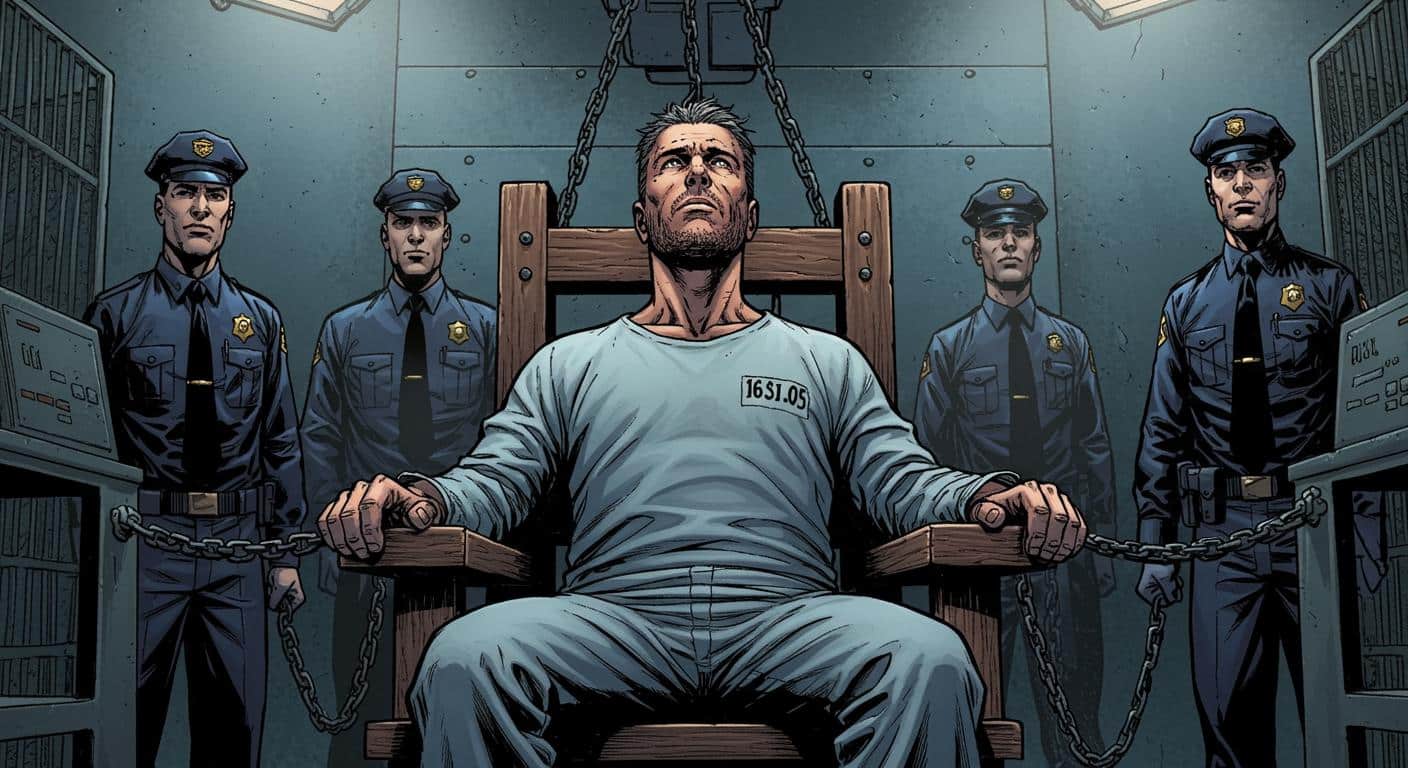
As recounted in USA TODAY’s coverage, Rogers, awaiting lethal injection at Florida State Prison, used his final moment to say, “President Trump, keep making America great. I’m ready to go.” His words didn’t exactly land with the dignity of a final blessing or the defiance of a last protest—they produced confusion, even among the most prepared witnesses. Family members of victims in attendance, according to the outlet, exchanged glances and muttered their disbelief, with comments such as, “What the hell?” echoing in the execution witness area. This wasn’t the catharsis or closure some might have anticipated from a high-profile execution.
In a detail highlighted by the Tampa Free Press, Rogers’ final hours included precisely the kind of ordinary choices that contrast so sharply with the extraordinary context: he awoke at 3:45 a.m., shared a last meal of pizza, chocolate, and soda, and visited with someone before the procedure. During his final statement, the outlet also notes, he expressed love for his family and a vague promise that lingering questions for his victims’ families would “in the near future… be answered,” offering what might generously be called closure. Only after these remarks did he pivot into direct political commentary.
The room’s confusion raises the inevitable question: Was Rogers seeking relevance, making a final dig, or simply inhabiting the surreal intersection of American crime and political fan culture?
A Serial Killer’s Farewell Tour
The context behind Rogers’ execution seems almost routine by the standards of true crime. As described in USA TODAY, Rogers’ notoriety stems from the 1995 murder of Tina Marie Cribbs—a 34-year-old mother of two he met at a bar. Authorities also tied him to several other killings spanning multiple states; the victims, as observed in the reporting, often fit a pattern: women in their thirties, often with red hair.
Rogers hardly shied from embellishment. NewsBreak, referencing information from both NBC News and law enforcement, describes how he once told police he’d killed up to 70 people, a claim he later denied. His penchant for dramatic confession extended to the 1994 murders of Nicole Brown Simpson and Ron Goldman, which, according to the Los Angeles Police Department, did not have credible links to Rogers despite media speculation after a 2012 documentary. The outlet notes that the LAPD pointedly said, “We know who killed Nicole Brown Simpson and Ron Goldman. We have no reason to believe that Mr. Rogers was involved.”
Ultimately, the persona of the “Casanova Killer”—a man of claimed charms, actual brutality, and a flair for the melodramatic—remained consistent through to the end. Offered one last chance at the microphone, he assembled a statement as jarring as his criminal resume.
The Trump of It All
Rogers’ parting words managed to drag national politics onto center stage of the execution chamber. Even for a period marked by headlines that often blur the boundaries of reality and spectacle, this stands out. The Tampa Free Press outlines the particulars: the inmate’s dying words echoed a presidential slogan, with no clear connection beyond the theater of the moment.
Trump’s own stance on the death penalty, as previously reported in USA TODAY, leaves little doubt as to his approach: calling for broader and swifter use of capital punishment, and recently issuing an executive order restoring federal executions. His order declared, “Only capital punishment can bring justice and restore order in response to such evil,” a sentiment unlikely to soften the ethical debates around the practice or to anticipate the company it would keep in the history books.
Given Rogers’ reputation for mythmaking and spectacle, is it any surprise that political branding inserted itself, uninvited and slightly surreal, at the end? The question isn’t so much whether this endorsement was political or personal, genuine or performative—but what it says about the age we’re living in, where the trappings of fame, infamy, and slogans seem to swirl together at life’s final curtain.
Last Words and Lingering Questions
What are we to make of a convicted serial killer using his final breath not for apology or defiance but to echo a campaign? As observed across the reports from the Times, the Free Press, and NBC, this isn’t a trend, just a particularly American intersection of notoriety, politics, and spectacle.
Perhaps last words, like everything else, are susceptible to the currents of cultural obsession—where notoriety seeks a spotlight, no matter how fleeting. And perhaps, in the ever-stranger annals of American history, we’ll simply mark this as another moment that leaves us scratching our heads and wondering if we’ve truly reached the end of the peculiar, or if there’s always another twist waiting.