Once in a while, the news cycle coughs up a specimen so strange it feels less like current events and more like the plot twist at the end of an especially creative late-night brainstorm. This week, that star turn belongs to a Costa Rican cat whose résumé now includes “prison smuggler”—a truly unexpected entry for a creature better known for knocking coffee mugs off tables.
A Cat, a Prison, and a Tape Job Gone Awry
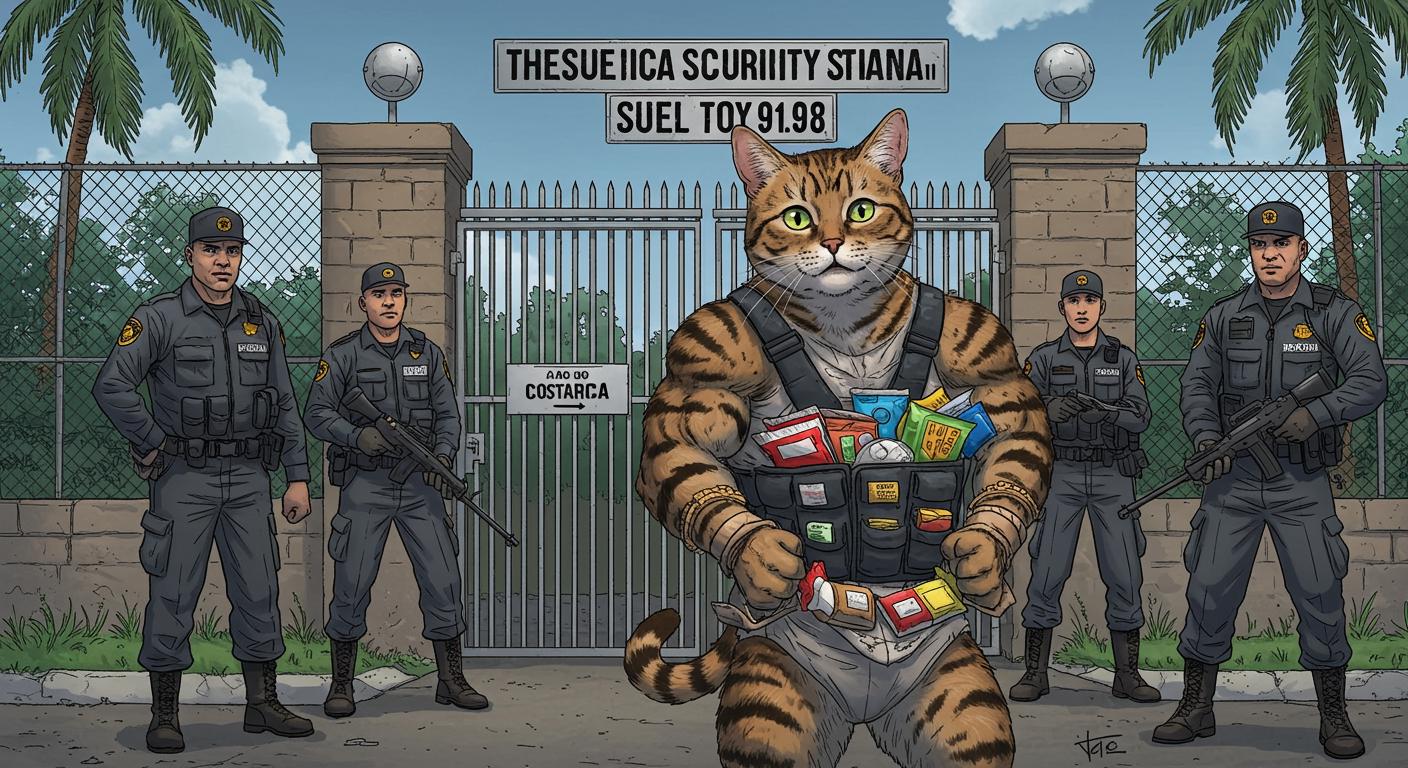
The peculiar scene at Pococi Penitentiary unfolded on May 6, as detailed by a BBC report: guards observed a small animal moving suspiciously through a grassy area near the facility. Upon closer pursuit, the interloper turned out to be a cat—though “ordinary” hardly describes its situation. The feline was strapped with not one, but two tightly sealed packages affixed to its torso. According to a statement relayed on the Ministry of Justice’s Facebook page, these bundles contained roughly 235 grams of marijuana and 67.76 grams of heroin.
Authorities clarified that the drugs were promptly seized, and, perhaps the most reassuring detail for animal lovers, the cat itself was handed over to the National Animal Health Service for a health assessment. Courier Mail, referencing the same incident, alternately specified the drugs as crack cocaine and marijuana, adding a touch of uncertainty—or perhaps just range—to our feline’s brief contraband career (original Courier Mail coverage). Times Now News, citing Saysdotcom, even states that rolling papers were included in the stash—because apparently, if you’re going to organize a furry delivery, you go all-inclusive (Times Now News story).
Such discrepancies are typical when news bounces across multiple outlets, but they’re united in one theme: this was a criminal plot with nine lives’ worth of audacity.
The Digital Jury: “Narcomichi” and Outrage
When footage from the Ministry of Justice started circulating online, the internet delivered its characteristic cocktail of humor and indignation. Times Now News documents that the cat, now dubbed “Narcomichi” by some netizens, inspired a flurry of memes and witticisms. Still, the tone was far from universally light. In a moment of bracing pragmatism, one X user remarked, “At least it’s not inside him”—a backhanded acknowledgment that things, somehow, could have been stranger.
More notable than the memes were the sharper reactions directed squarely at the human architects of the plan. Many online observers, as captured by Times Now News, condemned the traffickers’ lack of scruples for roping an animal into the trade. “How inconsiderate of the drug traffickers to have used cats wrongly for the purpose of transportation of drugs across the world,” one commenter wrote—a rebuke that manages to sound both understated and deeply exasperated. It’s clear the public is, if anything, less surprised by bizarre smuggling attempts than by the continued exploitation of animals in their execution.
Not the Only Odd Note in the Criminal Playbook
Though it would be comforting to believe this caper is unique, past incidents suggest otherwise. Courier Mail situates the event within a broader, mildly alarming trend—everything from pigeons to bread loaves have reportedly been conscripted as smugglers’ tools in recent years. BBC archives themselves are dotted with stories of capybara-costumed officers busting rings and drug-laden bananas intercepting shipping lines. But feline participants remain rare—probably not for lack of stealth, but perhaps because corralling a cat’s cooperation is closer to high art than science.
The real marvel here is not so much the use of an animal, but the sheer optimism (or desperation) that must drive someone to decide that a prison delivery operation should rest on the shoulders of a housecat. Did someone, somewhere, hold a strategic meeting and land on “cat with parcels” as the winning plan? And—possibly the greater leap of faith—did they ever expect it would work? One wonders if, in retrospect, the only reliable element of this scheme was the certainty that the cat wasn’t in on it.
The Tail End (Pun Regrettably Intended)
If nothing else, the saga of Costa Rica’s “Narco Cat” leaves us pondering the ever-shifting boundary between comedy and tragedy in modern contraband creativity. The facts remain as initially presented: the feline was unharmed, the deliveries undelivered, and the prison guards, presumably, can now add “seized drugs from a cat” to their list of workplace anecdotes.
Yet for all the dry absurdity—cat memes, head-shaking news hosts, and requisite rhetorical questions—the underlying story is less about a clever cat and more about human ingenuity channelled in questionable directions. Should we expect a world where prison checkpoints are fitted with motion-sensing laser pointers, or will this debacle serve as an honest deterrent for would-be copycats? Does the next security protocol involve screening for suspicious purring?
In the end, the only certainty is that—just when you think you’ve seen it all—life, or at least the criminal imagination, finds a way. And somewhere, there’s probably a cat who just wanted to sunbathe, utterly unaware of her international infamy.