
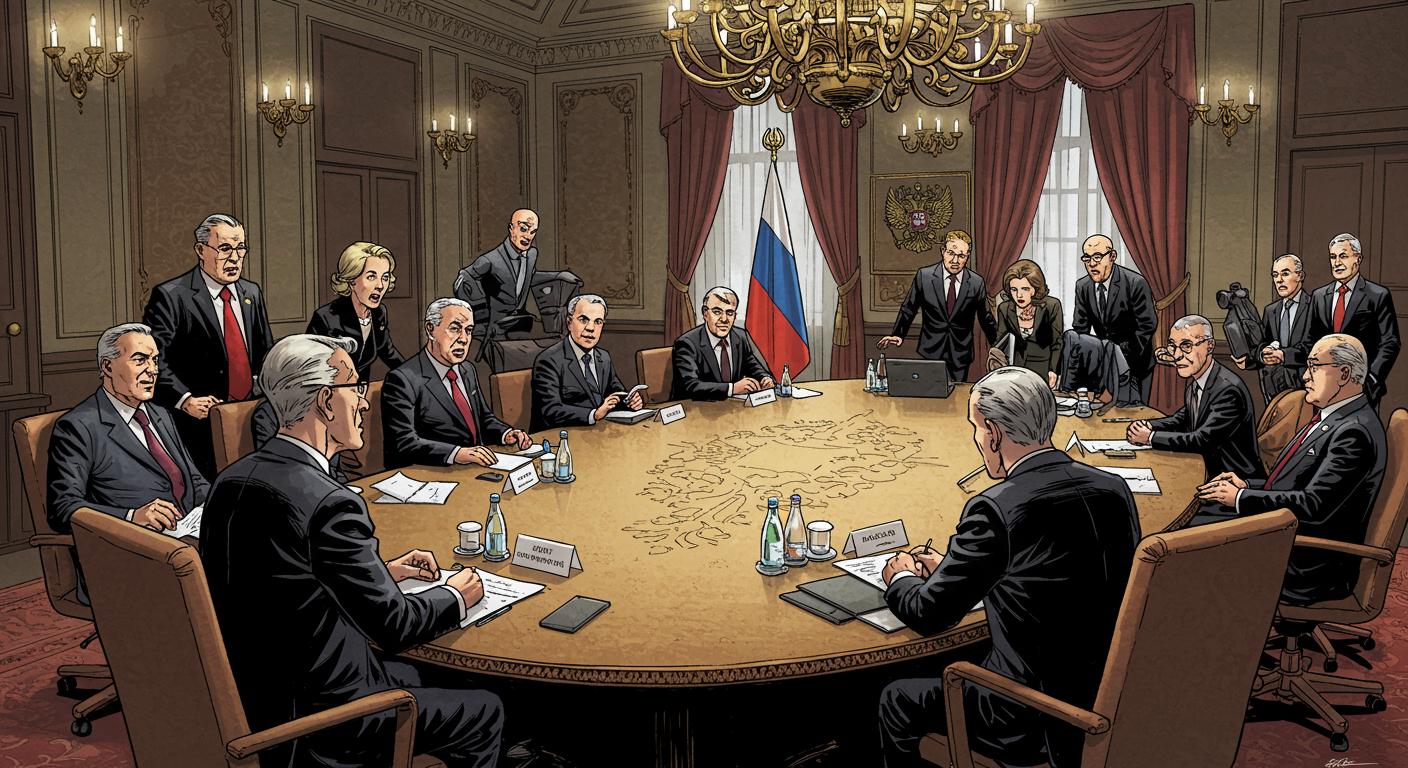
Diplomatic summits have their own rules of gravity, but sometimes, a single comment manages to destabilize the whole performance. Enter the latest Russia-Ukraine peace talks in Istanbul, which provided less of a masterclass in conflict resolution and more of a case study in baffling personnel choices—thanks largely to the appointment of Vladimir Medinsky as Russia’s chief negotiator. If his reputation as a controversial figure wasn’t enough, Medinsky’s previous assertion that Russians possess “one extra chromosome” ensured the world’s attention, albeit not quite in the way Moscow might have intended.
Medinsky’s Unlikely Ascent to the Negotiating Table
Observers from both sides of the Atlantic struggled to suppress their surprise, with Volodymyr Zelensky openly dismissing the Russian negotiating team as “decorative” and many Western outlets skeptical about Vladimir Putin’s real intentions for the talks. According to online.ua, the composition alone was seen as an unsubtle gesture—handpicking Medinsky, well-known for his ultra-nationalist takes and his flair for historical revisionism, telegraphed a lack of seriousness about genuine diplomatic progress.
It’s not as if Medinsky is new to failed negotiations; online.ua highlights that he had been dispatched to talk with Ukraine three years ago, where his hardline demands—full capitulation, disarmament, and guaranteed neutrality from Ukraine—helped sink the talks before they could get anywhere meaningful. Given his track record, was anyone at that Istanbul table genuinely expecting a breakthrough?
Genes, Jargon, and Facepalms Around the Table
While Medinsky’s ultra-patriotic credentials have long been a subject of academic scrutiny, it’s his infamous chromosome comment that managed to overshadow even the most creative Kremlin spin. As described in The Telegraph, Medinsky suggested in 2012 that Russians had an “extra chromosome,” claiming this gave them a unique resilience and heroism. The outlet notes that, while he was almost certainly attempting a metaphor, the blunder was pounced upon by both domestic critics and the wider international community, who dryly observed that extra chromosomes are more closely linked to developmental disorders than genetic superiority. You’d think at least one Kremlin media handler would have intervened there, no?
The Telegraph also presents Medinsky as not exactly a darling of the academic world. Despite being often called a “historian”—with online.ua referring to him as trained in the field—The Telegraph points out he isn’t recognized as a professional historian by scholarly peers, instead bringing a populist and nationalistic approach to his work. His own writings, as cited by The Telegraph, confess that “facts don’t matter very much,” favoring instead an interpretation colored by patriotic sentiment: “If you love your homeland, your people, then the story you write will always be positive.”
History Written With a Wink (and a Heavy Hand)
This philosophy isn’t confined to casual interviews. The Russian school textbook Medinsky co-authored, as outlined in both online.ua and The Telegraph, recasts Ukraine as an “ultranationalist state” and frames Stalin as a wise, progress-bringing leader—all while glossing over the inconvenient piles of bodies from the Soviet era. The Telegraph further notes that these narratives dovetail neatly with the Kremlin’s larger messaging; Medinsky is credited by former TV Rain editor Mikhail Zygar with helping construct the intellectual scaffolding for much of Putin’s rule, even ghostwriting some of the president’s more infamous academic pronouncements.
Medinsky’s background also comes with a few unexpected plot twists. The Telegraph details his earlier stint as an advertising executive lobbying for the tobacco and casino industries—an origin story less expected than, say, climbing the Foreign Ministry ranks. In a detail cited by the outlet, he’s admitted to detesting art, a curious quirk for a former culture minister, and he’s faced long-standing criticism from Russian academics for bending historical narratives to fit a prescribed patriotic arc.
Istanbul’s Stage: Negotiators or Just Pageantry?
With such a resume steering the Russian side, it’s little surprise that the Istanbul talks have left much of the world raising its collective eyebrow. The Telegraph observes that the rest of Russia’s delegation was composed mainly of diplomatic and intelligence “placeholders,” further signaling that Putin wasn’t investing significant political capital in the peace process. With Donald Trump—current U.S. president—publicly downplaying any immediate hope for resolution, the meetings themselves seemed intended less for productive discussion and more to demonstrate motion.
Could it be that we’re witnessing diplomacy as theater, with the outcome a foregone conclusion and the players cast more for loyalty than for expertise? Or is Medinsky’s particular blend of creative fact-mashing, patriotic zeal, and tone-deaf metaphors simply a reflection of the current Russian political style—one where the surface spectacle outweighs any practical intention?
As both outlets have documented, there was little sign, at least in Istanbul, of meaningful progress. Instead, observers are left with a distinctly modern diplomatic riddle: what happens when the negotiator sent is more skilled at crafting heroic mythology than at building consensus? And in the future, will we look back on the “extra chromosome” episode as a cautionary tale about letting history’s interpreters lead the negotiations—or as just another oddity from the international diplomatic archives?