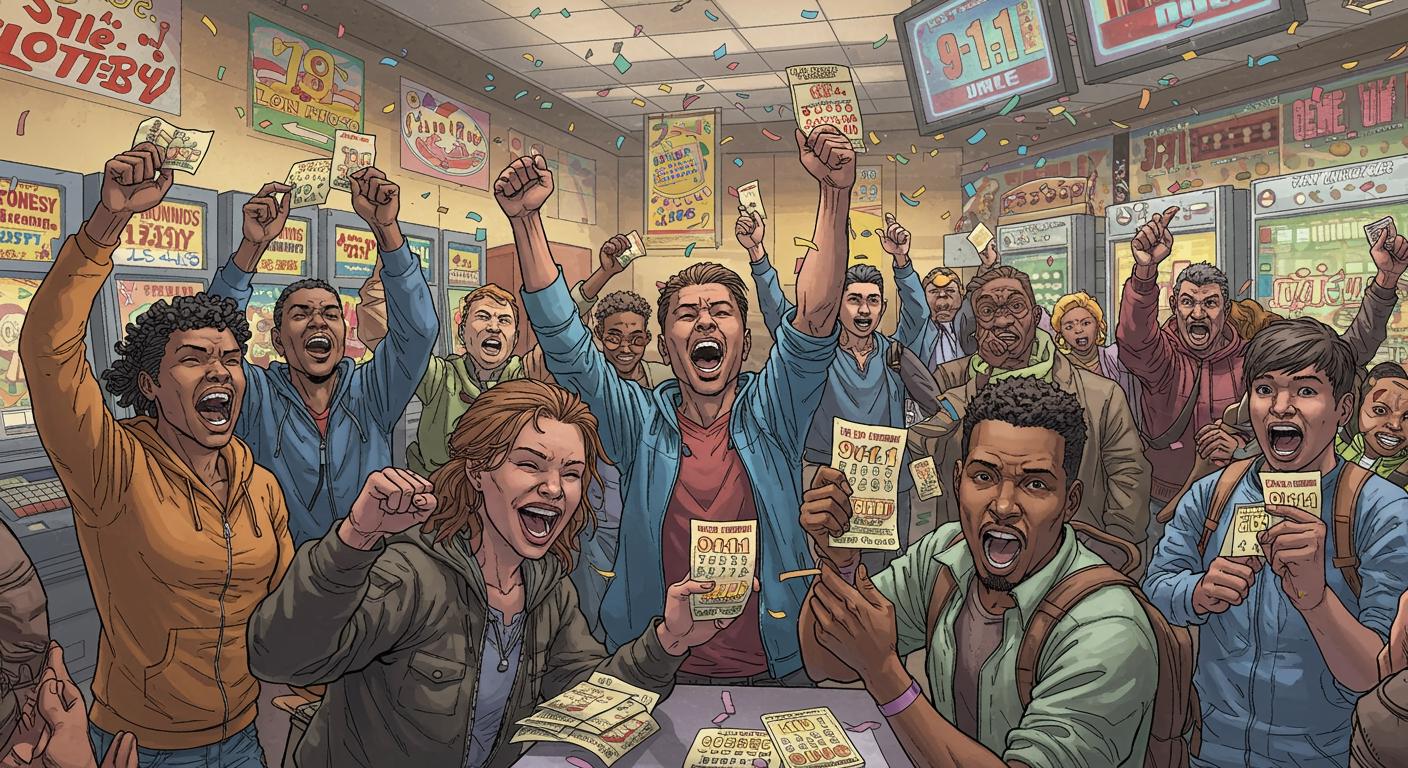
Every so often, the universe throws out a winning lottery sequence that manages to feel less like a fluke and more like a sly nod to everyone paying attention. This week, the numbers 9-1-1—iconic far outside the world of random draws—surfaced as the winning combination in North Carolina’s Pick 3 game, sending an uncanny ripple through the state and producing a frankly enormous pool of shared winners.
When Familiar Digits Spark a Payout Surge
In a detail highlighted by both UPI and the NC Lottery’s news blog, 4,501 lucky tickets matched all three numbers on Tuesday night’s drawing—no mean feat given the 1-in-1,000 odds. According to lottery officials, the winning numbers translated into over $1.24 million in payouts: a $500 prize for each $1 play, or $250 for 50-cent tickets. Winners now have 180 days to claim their share of fortune. The scale of the win, the outlet notes, stands out strikingly from your garden-variety Pick 3 night.
Grouped together, these facts paint a picture: the pattern “9-1-1” isn’t just any numerical combo—it’s one that virtually everyone in the US recognizes, dialing it in moments of crisis or seeing it emblazoned on emergency vehicles. It’s no wonder, as the NC Lottery’s own write-up underscores, that such numbers tend to exert an outsized gravitational pull on the hopes and hunches of everyday players. Who hasn’t, after all, mulled over playing a sequence that feels, even irrationally, like it’s fated to hit?
The Fascination—and Irony—of 9-1-1
Earlier in UPI’s reporting, it’s mentioned that every Pick 3 combination carries the same odds, whether you choose the birthday of your beloved aunt or the emergency code etched into the nation’s psyche. Still, the sheer volume of winners this week demonstrates a perennial quirk: in a realm ruled by chance, our collective imaginations love a good motif.
The NC Lottery blog further illustrates this with a tidbit from their comments section—a user bemoaning having played 9-1-1 “too early” and then running out of funds before the draw finally popped, half-humorous, half-heartbreaking. The emotional rollercoaster of “so close, yet so far” seems to haunt every lottery, but rarely with numbers this familiar.
As previously reported, patterns like repeating digits or obvious runs—7-7-7s and 1-2-3s spring to mind—occasionally produce similar surges in winners. Still, seeing 9-1-1 shell out over a million dollars in one go, to thousands, feels notable even among the archive of oddities; it’s a kind of collective synchronicity, with luck playing backup vocals to popular culture.
When Chance and Collective Sentiment Collide
Is there a lesson in thousands aligning their hopes to a number that, on most days, means something entirely different? Perhaps not, unless it’s that our relationship to randomness is forever shaped by the stories we attribute to it. The system is neutral, indifferent, thoroughly random—but human hope? Never so dull. Would you have guessed that so many people, on the same night, would pin their luck on 9-1-1? Or does the appeal make perfect sense, given how numbers like these burrow into memory and folklore?
It’s a gentle reminder, perhaps, that even if the lottery is built for one type of odds, it sometimes quietly reveals the other patterns—the deeply human ones—underneath. As the winners cash in and the rest pick new favorites, the story lingers: sometimes, the jackpot is less about beating the system, and more about how many of us happen to bet, literally, on the obvious.