In the grand catalog of American curiosities, a freshly filed lawsuit stands out—not least for its premise. A Georgia man, styling himself “John Doe,” wants $100 million from the NFL, claiming emotional distress after quarterback Shedeur Sanders fell to the 144th pick in the NFL draft. Sometimes reality hands you stories so odd, you just need to step back, squint, and wonder if you’ve wandered onto the set of a legal drama written by Kafka and co-produced by ESPN.
The Agony of a Fifth-Round Revelation
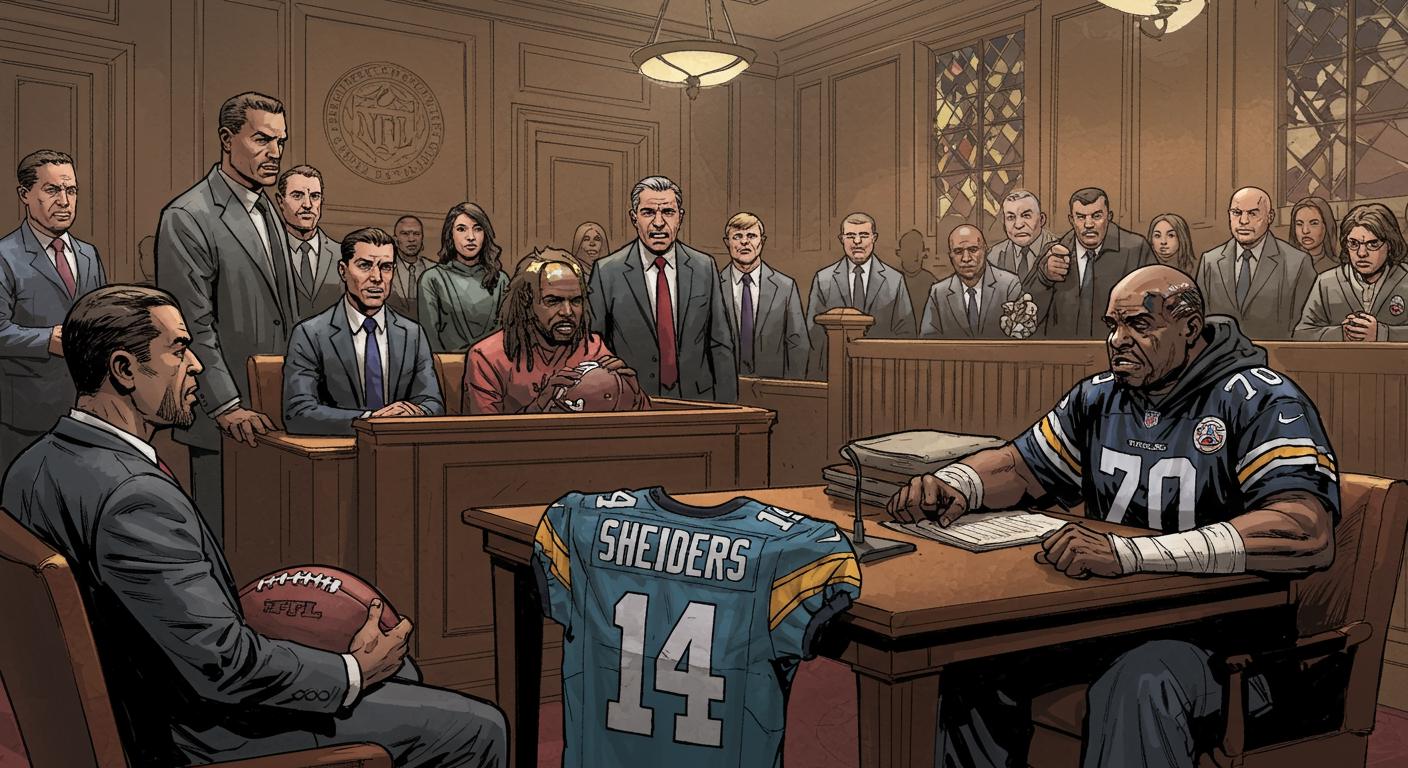
Let’s consider the peculiar tableau of “John Doe,” whose frustration on draft day swelled past mere grumbling. The Independent details how Doe, who requested anonymity to shield his Atlanta logistics business from attention, filed a sweeping federal suit after his favorite college player didn’t go in the opening rounds, despite roster-churning hype suggesting otherwise. According to Doe, he suffered “emotional distress and trauma… as a fan and consumer,” finding the experience “mentally frustrating and debilitating.” Said Doe, plainly: “This guy was projected to be the first or second pick, no later than the top five, and to watch mediocre players be chosen before him… it was frustrating.” Court records cited by The Independent confirm his dedication goes back to Sanders’ Colorado debut against TCU in 2023—witnessing, as the suit puts it, Sanders’ “exceptional talent and potential.”
But when the Cleveland Browns selected Sanders deep into the third day, “Doe” saw more than disappointment—he saw collusion. Owners were alleged to have “conspired to influence the drafting process,” a notion that NFL Hall of Famer Cris Carter, for one, dismissed quickly on “The Art Of Dialogue” podcast. Carter argued that Sanders and his father, NFL icon and Colorado coach Deion Sanders, “overplayed their hand.” Still, The Independent notes a swirl of rumors that team owners wanted to take the younger Sanders down a peg for his family’s headline-friendly confidence.
Collusion or Collateral Damage? The Legal Logic Gets a Workout
The complaint didn’t stop with bruised feelings. In filings quoted extensively by The Independent, Doe’s grievances balloon: accusations fly of antitrust violations under the Sherman Act, hints of decisions tainted by racial bias, and angry references to supposedly “slanderous statements” regarding Sanders’ pre-draft interviews. According to Doe, negative leaks about Sanders being “too cocky” and “tanking interviews” helped build a narrative that “unjustly harmed his reputation”—fuel for not only Doe’s disappointment, but, it seems, his sense of personal injury.
Legal experts, naturally, had thoughts. In a detail highlighted by Reason, Professor Eugene Volokh reviewed the complaint and found the case far-fetched, noting the intentional infliction of emotional distress claim “requires highly egregious conduct, generally targeted at the particular plaintiff”—and that a fifth-round pick does not, in most legal circles, rise to “outrageous.” Volokh also picked apart Doe’s antitrust theories and possible civil rights claims, observing that, as a fan rather than a direct participant, Doe is unlikely to have the “standing” necessary to proceed. The court, for its part, allowed Doe to move ahead with a pseudonym and waived initial filing fees, but left little doubt that patience, and legal precedent, would soon run thin. The outlet documents that due to Doe’s filing status, a frivolousness screening is a near certainty.
One can’t help but wonder: If “collective fan trauma” sets legal precedent, will sports leagues have to keep a team of therapists and defense attorneys on permanent retainer?
Emotional Damages: A Pricetag for Disappointment
Doe’s suit may set a new benchmark for creative math. He pegged the $100 million sum to his own “emotional distress,” then tacked on the potential income Sanders lost by being picked so late—amounts put at up to $50 million by estimates from former NFL star Cris Carter. Asked if a win would benefit Sanders or local players, Doe mused—perhaps with faint optimism—about donating some of the windfall to youth football associations.
Reason underscores the reality check here: even the most embittered fans can’t usually claim damages because their favorite player slid down the draft board. Professor Andy Geronimo, cited by Volokh, pointedly joked that if emotional distress over rooting for the Cleveland Browns counted, he might understand. Still, one wonders: what kind of world would we live in if every jersey-burning disappointment sent fans straight for the courts? Would half the country be suing over their March Madness brackets?
Closing Arguments: Passion, Absurdity, and the Legal Sideline
Taking a wider view, Doe’s lawsuit is less a blueprint for winning than a monument to the strange overlaps of fanaticism, identity, and the desire for recourse—however tenuous—in the court of law. The Independent recounts how Doe hopes the suit at least “puts the NFL on alert,” seeking a formal apology, retraction, and changes in draft practices, even as he admits finding affordable legal help has been an uphill battle. Does this represent a new era in fan empowerment, or just a footnote in the great big book of sporting oddities?
If cheering from the couch just isn’t enough anymore, perhaps some will try their luck before the bench. After all, if Doe’s case prevailed, would emotional injury lawyers—or at least humorists—run out of work? Is there a statute of limitations on heartbreak, and if not, which sporting calamity will next make its way to federal court?
For now, as Volokh concludes in Reason, the court is likely to dismiss this spectacle as frivolous. But maybe there’s an odd comfort in knowing that, across all the passionate corners of American fandom, one person took their disappointment so seriously. In the immortal words of every long-suffering fan: there’s always next year. Whether that comes with a lawsuit—or just another helping of existential sporting angst—remains to be seen.