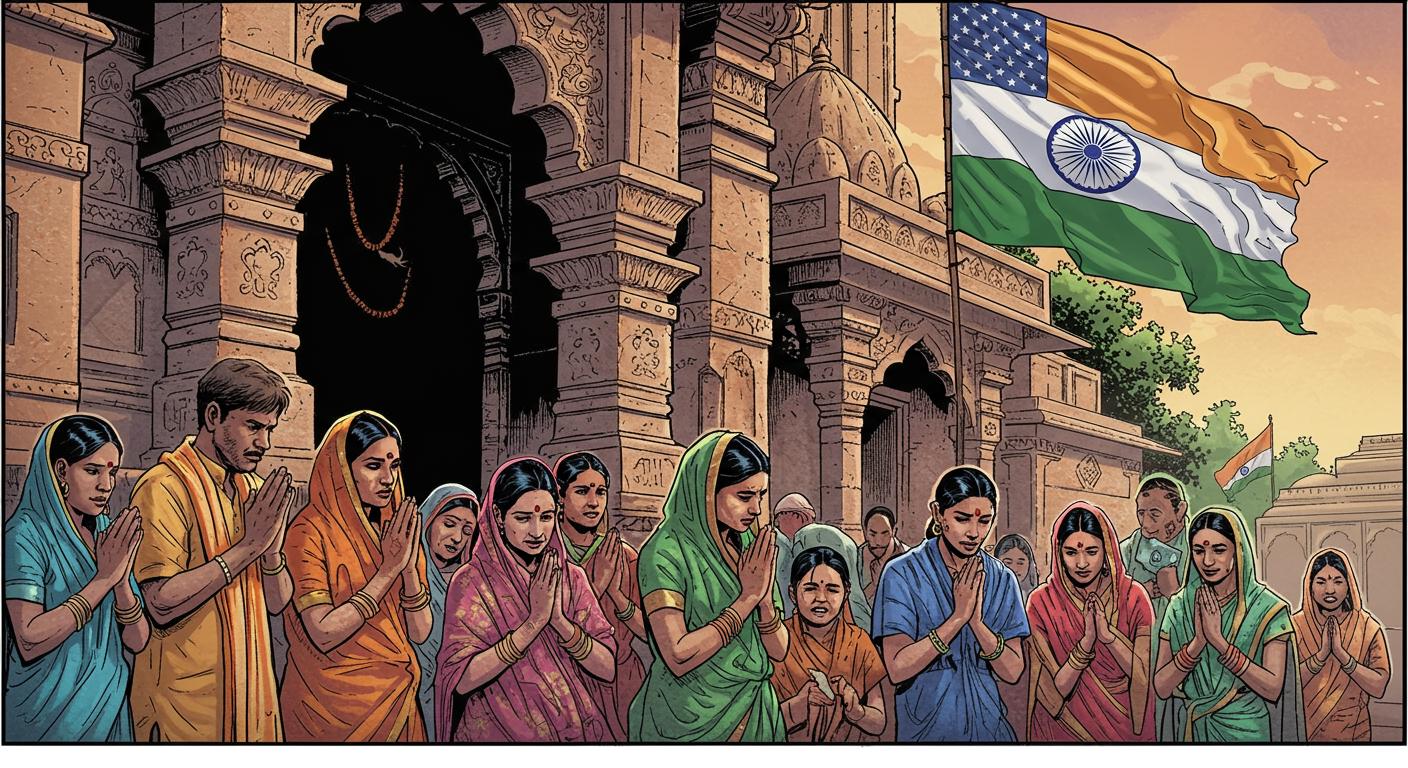
There’s a certain brand of cosmic irony in the phrase “visa temple,” but in western India, that’s not a punchline—it’s a pilgrimage. Stepping into the Chamatkarik Shree Hanumanji Mandir in Ahmedabad, worshippers line up, passports in hand, for something a little more spiritual than a consular appointment: prayers to the Hindu monkey god Hanuman for an approved US visa, in exchange for a modest $2, according to reporting from NPR. There’s no ticker tape parade for successful applicants, but the rapid-fire prayer-and-passport circuit strikes a familiar note—a blend of faith’s persistence and bureaucracy’s peculiar sense of theater.
It’s a ritual that, on closer inspection, reveals the kinds of patterns that crop up again and again in the archives of migration: hope, risk, disappointment, and, beneath it all, a streak of human creativity bordering on the audacious.
Prayers, Passports, and the Pull of Elsewhere
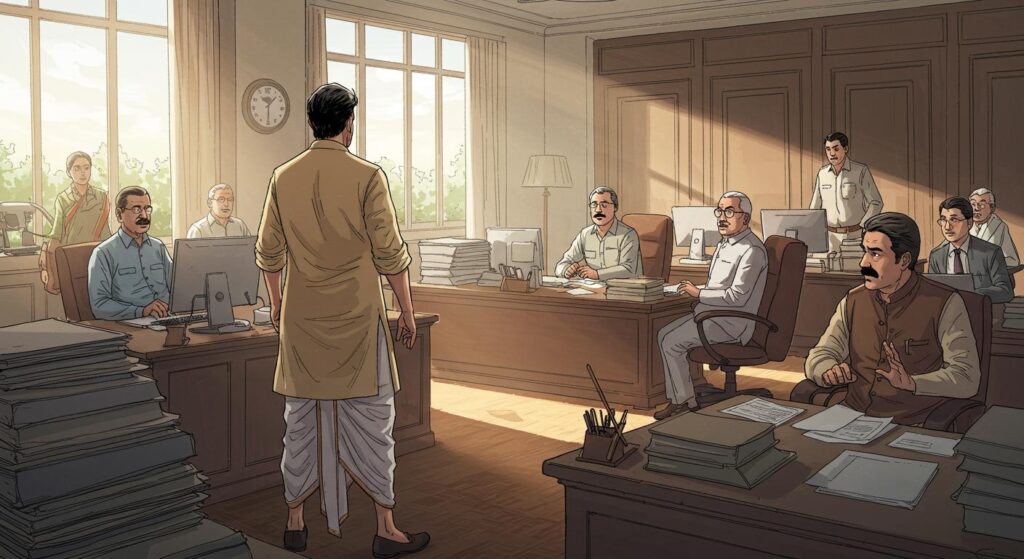
At a glance, queuing up at a temple with official documents might sound like something dreamed up in a bureaucratic fever dream. Yet, as detailed in NPR’s coverage, the interplay between religious devotion and international paperwork is neither new nor niche. Those hopeful for a life in the West—be it for better jobs, brighter futures, or family reunification—add personal prayers to Hanuman to the usual stack of paperwork and frank appeals to luck.
The pull of “making it” is documented not just in stories but in statistics. NPR, summarizing data from Pew Research, notes that over five million Indian Americans now reside in the United States. The effects cascade back home. In the village of Dingucha, with just 3,000 residents, the generosity of immigrants is visible everywhere from the municipal building to the local temple. Administrator Jayesh Chaudhary, speaking to NPR, interprets these donations as signals pointing villagers toward the American dream—even if the odds border on fantastical.
But those odds remain daunting. As cited in NPR’s investigation, over 600 Indian nationals have been deported from the US since President Trump’s return to office. Details emerge of deportees—mostly men but including women and children—shackled for almost 40 hours on military flights, with footage and social media posts, including one from the US Border Patrol chief, circulating widely. The imagery functions as both warning and punishment, encapsulating a message no government official is likely to spell out in a press release.
Chains, Trade Tensions, and Muted Protests
Winding through the legal and logistical maze, Indian officials find themselves balancing outrage and realpolitik. Despite India’s status as a defense partner of the US and Prime Minister Modi’s keen display of camaraderie with President Trump, there was no audible public protest after those infamous deportation flights; NPR highlights Modi’s silence, even as his own foreign minister privately lodged concerns over the use of shackles—particularly on women—to US counterparts.
Where officials hesitated, certain media commentators, like Arnab Goswami, filled the gap with bombast. NPR notes how he openly mocked deportees, framing them as criminals unworthy of sympathy and suggesting, with typical flourish, that perhaps champagne and first-class treatment would better suit them.
Meanwhile, the national calculus appears to shift toward pressing trade issues: as NPR compiles, India faces the challenge of negotiating over tariffs recently imposed on its exports, and analysts such as John Hopkins University’s Daniel Markey emphasize the sense of vulnerability India feels in the face of a Trump-led America. Diplomatic headaches mount, but for many families, these remain distant concerns—overshadowed by more immediate personal stakes.
Behind Every Prayer: Losses and Longings
The human ledger behind these headlines—people, debts, and dashed hopes—doesn’t always make for tidy narratives. NPR relays Maribehn’s account: a roadside vendor in Ahmedabad, she relates how her daughter and son-in-law sold everything, took out loans, and paid traffickers to smuggle their family into the US. Now, her daughter works in a hair salon somewhere in America, location unknown, but her mother’s central wish is simple—her daughter’s happiness and safety.
Stories from rural Gujarat offer further illustration of the stakes. In the village of Dingucha, local legends retell the fate of families who succeeded and, tragically, families who didn’t: NPR references the case of a family who froze to death at the US-Canada border, and another whose journey led to deportation. Administrator Chaudhary, reflecting on these patterns, told NPR, “Even if it’s just a 1% chance of success, people will keep trying.”
Meanwhile, in neighboring Vaghpur, NPR describes how dairy farmer Chetna Rabari hasn’t heard from her husband in two years since he set out via the Dominican Republic, using up the family’s savings and selling their cows to cover the $24,000 journey. Rabari is left to raise the children, tend the remaining cows, and repay the resulting debts—yet she continues to hope he’ll call one day, a belief as steady as any faith placed in a temple offering.
Where Hope Clings: Faith, Futility, and the Unyielding Bureaucracy
The enduring spectacle of visa temples points to a curious intersection—where faith is both an act of last resort and a protest against impersonal systems. As NPR’s reporting makes plain, almost every avenue—be it through official paperwork, human smugglers, familial sacrifice, or prayer—becomes a lottery ticket of sorts. Broader policy debates around tariffs or regional tensions barely register compared to a parent’s yearning for their child’s chance at something more than a repetition of inherited hardship.
From the archive’s gaze, one can’t help but notice a persistent loop: obstacles are built, then circumvented; prayers are offered as readily as official forms; and each generation measures its fortunes against the footsteps (or the missing phone calls) of the last. As Chaudhary’s words remind us, “Even if it’s just a 1% chance of success, people will keep trying.”
Maybe the real measure of a migration system isn’t in visa grants or deportation statistics, but in the stubbornness of hope—in all its mundane, miraculous, bureaucratic, and outright bizarre forms. Where, after all, does the line truly blur between divine intervention and human tenacity? For the families queuing at temples with passports in hand, the answer might just be: wherever the next chance presents itself.