
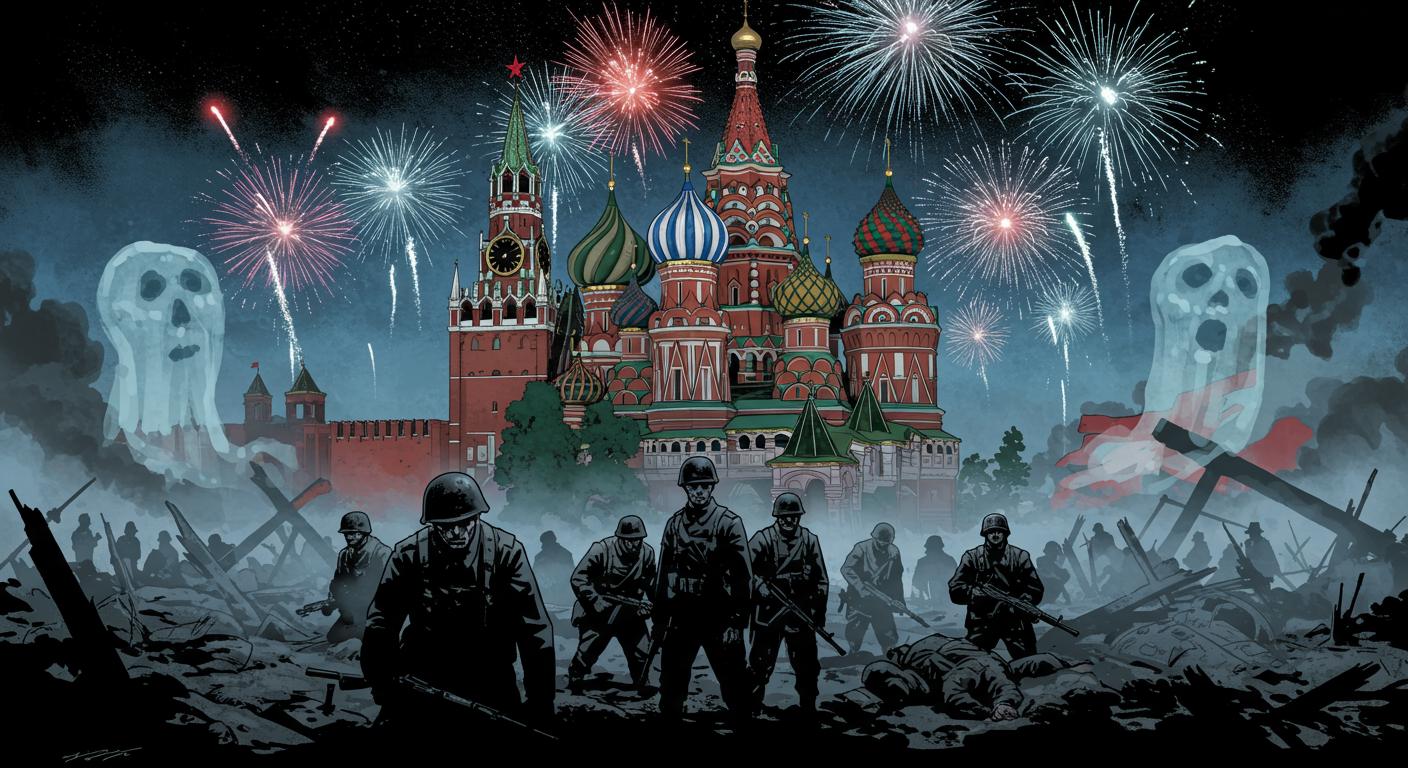
Diplomatic pleasantries sometimes sound like they’ve wandered in from a parallel universe, and this year’s US message for Russia Day is an exemplar. At the very moment Ukraine reports Russian war casualties surpassing the one-million mark, the United States found itself extending congratulations. The tension between ritual and reality is almost palpable—strange enough that, if you squint, you might see a glimmer of irony waving from the sidelines.
Congratulations—With Context You Can’t Ignore
According to Kyiv Post, US Secretary of State Marco Rubio issued a formal Russia Day greeting “on behalf of the American people,” congratulating Russians and affirming support for their “aspirations for a brighter future.” The communiqué went on to express a hope for “constructive engagement with the Russian Federation to bring about a durable peace between Russia and Ukraine.” And, not to understate, “It is our hope that peace will foster more mutually beneficial relations between our countries.”
All deeply civil and, at a glance, unremarkable. But there’s no mistaking the discord when, elsewhere in that same news cycle, Ukraine’s General Staff is tallying over one million Russian soldiers killed or wounded since February 24, 2022. Kyiv Post, citing Ukrainian military sources, details how the losses reached approximately 1,000,340 personnel by June 12, 2025, with an increase of 1,140 soldiers in just the previous 24 hours. Over 628,000 of these casualties materialized in the last year and a half alone.
The breakdown, as the outlet describes, reads like wartime ledger-keeping at an industrial scale:
-
In 2022, Russian losses: 106,720 personnel, averaging 340 soldiers per day.
-
In 2023, the number rose to 253,290—about 693 per day.
-
2024 proved deadliest: 430,790, with a daily average of 1,177.
-
2025 (as of early June) already exceeded 200,000, with rates nearing 1,286 each day.
The statistics in Kyiv Post also highlight some of the costliest days, with daily Russian casualties peaking above 2,000. “A million occupiers—a million of our steps toward a just peace,” the Ukrainian General Staff said in remarks quoted by the outlet. They underlined the scale: “The world must know and remember that Ukrainians are holding back an enemy horde many times larger than themselves… This is the price the enemy pays for unleashing a bloody war in Ukraine.”
While one can argue that diplomatic notes are more chore than choice (Alex-the-archivist can all but hear the shuffling of templates in State Department folders), the numerical litany from Kyiv Post makes the official US greeting feel less like olive branch and more like a gilded fig leaf, especially given the ongoing reality on the ground.
Polite Applause While the House Burns
Kyiv Post further outlines the concurrent violence: Ukraine’s Air Force reported that Russian forces launched 63 Shahed-type drones and drone decoys across June 12-13, aiming at the Kharkiv, Donetsk, and Odesa regions. Ukrainian defenses shot down 49, with the remainder inflicting damage in at least seven locations and scattering debris in several others.
In one especially brutal attack, as detailed by Kyiv Post and local officials, Russian drones twice struck Kharkiv, wounding 14 people—among them a 2-year-old boy, a 12-year-old girl, and two teenagers aged 16 and 17. This assault followed earlier airstrikes killing four civilians and injuring sixty more, including additional children. According to Kyiv Post’s review of regional and official reports, 17 drones crossed two city districts overnight, striking residential buildings, private houses, and industrial sites—igniting fires and damaging infrastructure from trolleybuses to corner shops.
President Volodymyr Zelensky, writing on Telegram and quoted in Kyiv Post, didn’t let the moment pass. He called these attacks another “vile Russian strike” and argued that each new atrocity proved current deterrent efforts insufficient. Zelensky pressed world leaders—especially the US—to stop hesitating and to escalate the pressure on Moscow, insisting, “Without this, they will not engage in real diplomacy.”
Rituals and Reality—When Diplomacy Doubles Down on Politeness
It’s tempting to treat ceremonial statements as harmless pageantry, but as the Kyiv Post stacks up casualty statistics beside news of fresh air raids and civilian suffering, the gap between language and reality yawns. The article makes clear: the US’s ongoing diplomatic posture is out of step with the facts as laid out by Ukrainian authorities, who detail both the cost in human lives and the sustained targeting of their cities.
And yet, the habits of international engagement persist. The United States stands by its protocol, expressing a hope for peace while the machinery of war grinds on—to the tune of a million fallen, if Ukrainian military records cited in Kyiv Post are to be believed. The historian in me can’t help but wonder: Are we witnessing a new tradition, where the more jarring the circumstances, the more unbending the ritual?
It’s a curious pattern—one not unique in the annals of statecraft, but no less odd for its repetition. This year, “Happy Russia Day” echoes as both diplomacy and uncomfortable footnote, a sterile greeting set awkwardly on top of a staggering toll. Maybe that’s how history accumulates its ironies: in the repeated overlap of polite applause and cities still smoldering, numbers still climbing, and the search for meaning somewhere in between.