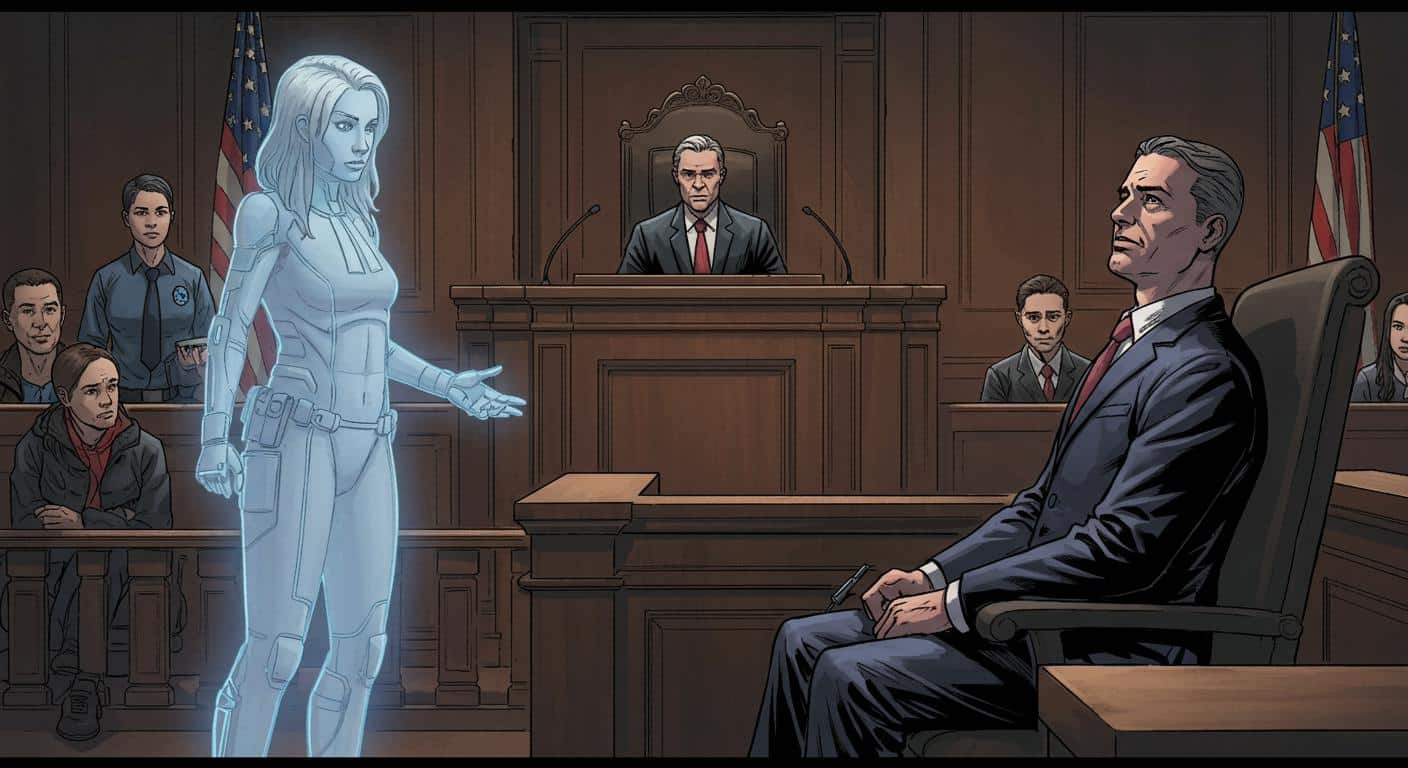
If you’ve ever wandered into the realm where high-tech tools meet raw human heartbreak, you know it’s rarely straightforward—and never boring. So let’s take a moment to consider something both unsettling and oddly touching from a courtroom in Chandler, Arizona, where artificial intelligence added an unexpected twist to justice.
Speaking from Beyond (Sort Of)
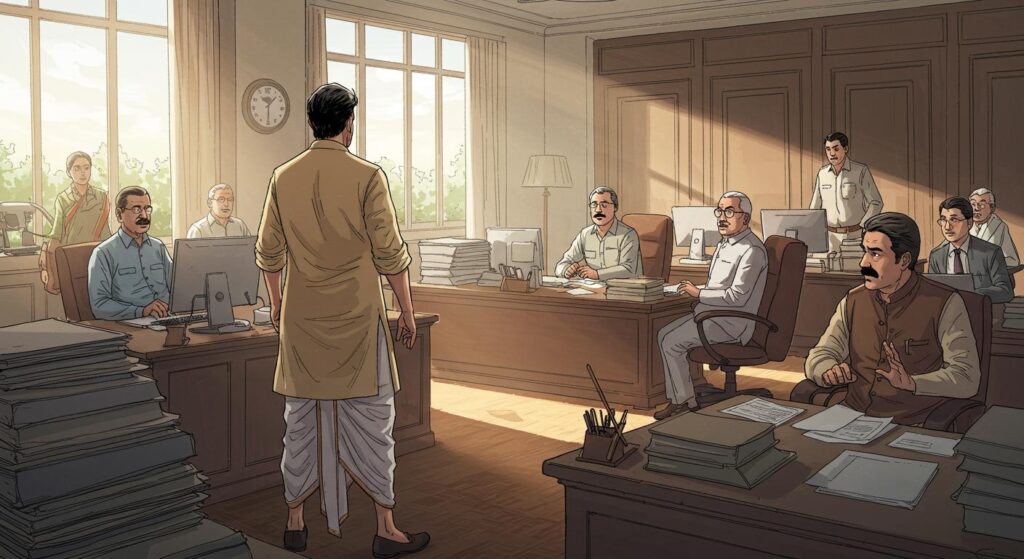
Christopher Pelkey was killed in a 2021 road rage shooting, an all-too familiar headline on its surface—until his voice appeared in court three and a half years after his death, speaking directly to the man who shot him. An AI-generated video of Pelkey, crafted using old home movies and voice recordings, was played during the sentencing of Gabriel Horcasitas. As detailed by The Guardian, the digital stand-in, outfitted in Chris’s familiar grey baseball cap and thick beard, declared, “In another life, we probably could have been friends. I believe in forgiveness, and a God who forgives. I always have, and I still do.”
The process was neither slick nor simple. Stacey Wales, Pelkey’s sister, explained to local media that assembling the AI message took a hodgepodge of digital tools—scrounged from various corners of the internet. As Wales described to Fox 10 Phoenix, her husband and a tech-savvy friend ended up mashing scripts, audio, images, and video in what she likened to a “Frankenstein of love” to make the heartfelt simulacrum possible. The family even applied an “old age” filter to one of Chris’s photos, offering a vision of the years he never had. In the AI’s words, “This is the best I can ever give you of what I would have looked like if I got the chance to grow old,” a moment that landed somewhere between haunting and hopeful.
“Genuine” Forgiveness or Emotional Theatre?
What makes this digital apparition even more curious is how it was received. Judge Todd Lang, clearly moved by the display, commented, “I loved that AI, thank you for that. As angry as you are, as justifiably angry as the family is, I heard the forgiveness.” According to The Guardian and further outlined in New York Post reporting, the sentence he handed down was 10.5 years—over a year longer than what prosecutors had originally suggested. The AI’s message appeared to tip the emotional scales in the courtroom.
Other reactions weren’t scripted. Chris’s brother John, whose first view of the video came in court, recalled to Fox 10 Phoenix that watching his brother’s likeness “say things that would never come out of my mouth, but I know would come out his,” brought about “waves of healing”—underscoring just how distinct family perspectives can be on loss and forgiveness. Stacey herself told Fox 10 that detaching her own feelings from the project and focusing purely on what Chris would say was both difficult and essential: “What he believes was clear. What he believes was pure. And what he loved was for everyone.”
The emotional impact rippled beyond the family and the bench; public reactions swirled too. Highlighted at TheNerdStash, a flurry of Reddit commentary revealed unease and a soupçon of existential dread over the idea. There were concerns about emotional manipulation, with some users labeling the practice as crossing a moral line. One even suggested adding explicit clauses to wills—no posthumous AI statements, thank you—while another admitted the very idea of being “resurrected” digitally to deliver words they never said felt “very strange,” no matter how well-intentioned.
A “Frankenstein of Love”—and a Legal Grey Zone
Beyond the immediate drama, the event has kicked up quite the dust cloud for legal observers. The U.S. judicial conference advisory committee has announced, as reported in The Guardian and echoed in the New York Post, an upcoming review to determine how AI-generated evidence should be regulated in courtrooms. Arizona’s Chief Justice Ann Timmer, quoted in both outlets, expressed a mix of optimism and apprehension. She confirmed the formation of a committee to evaluate the benefits and dangers of such technology, admitting that while AI’s utility “is very useful,” there’s ample risk it could “hinder or even upend justice if inappropriately used.”
The method behind Chris’s “appearance” would make any archivist raise an eyebrow: multiple tools needed to be patched together, no single off-the-shelf solution. Fox 10 Phoenix notes this digital mosaic included painstaking hours spent gathering visual and auditory fragments until something recognizable—and deeply personal—emerged for the courtroom.
Is it appropriate for the dead to “speak” in legal proceedings, even as a carefully constructed digital double? At what point does honoring the memory cross into scripting a new persona altogether? Plenty of commenters, as reflected in TheNerdStash’s summary of online responses, aren’t ready for a world in which anyone could be called to the stand, posthumously, via the magic of code and guesswork.
Uncanny Valley of Justice
Courtrooms have always been fertile ground for theatrical gestures, with emotion and testimony sharing equal footing. The victim impact statement is designed to reshape the narrative, reminding all present of the real people affected. AI, though, introduces a peculiar wrinkle—a voice that is both familiar and not, a face nearly but not quite right, expressing emotions no longer accessible to the living.
If grief sometimes makes us reach for the impossible, technology seems eager to hand it over—awkward seams and all. In the end, Pelkey’s AI farewell was both balm and provocation: healing for some, deeply unsettling for others, and almost certainly a preview of the ethical puzzles to come. As people begin to consider adding “no AI clones at my sentencing, please” to their wills, one question hangs in the digital air: If technology lets us speak when we’re gone, who gets to decide what we say?
Maybe it’s not full-on Black Mirror, but a little courtroom uncanny valley—the kind of story that leaves you marveling at what’s possible, and a little uneasy at what comes next.