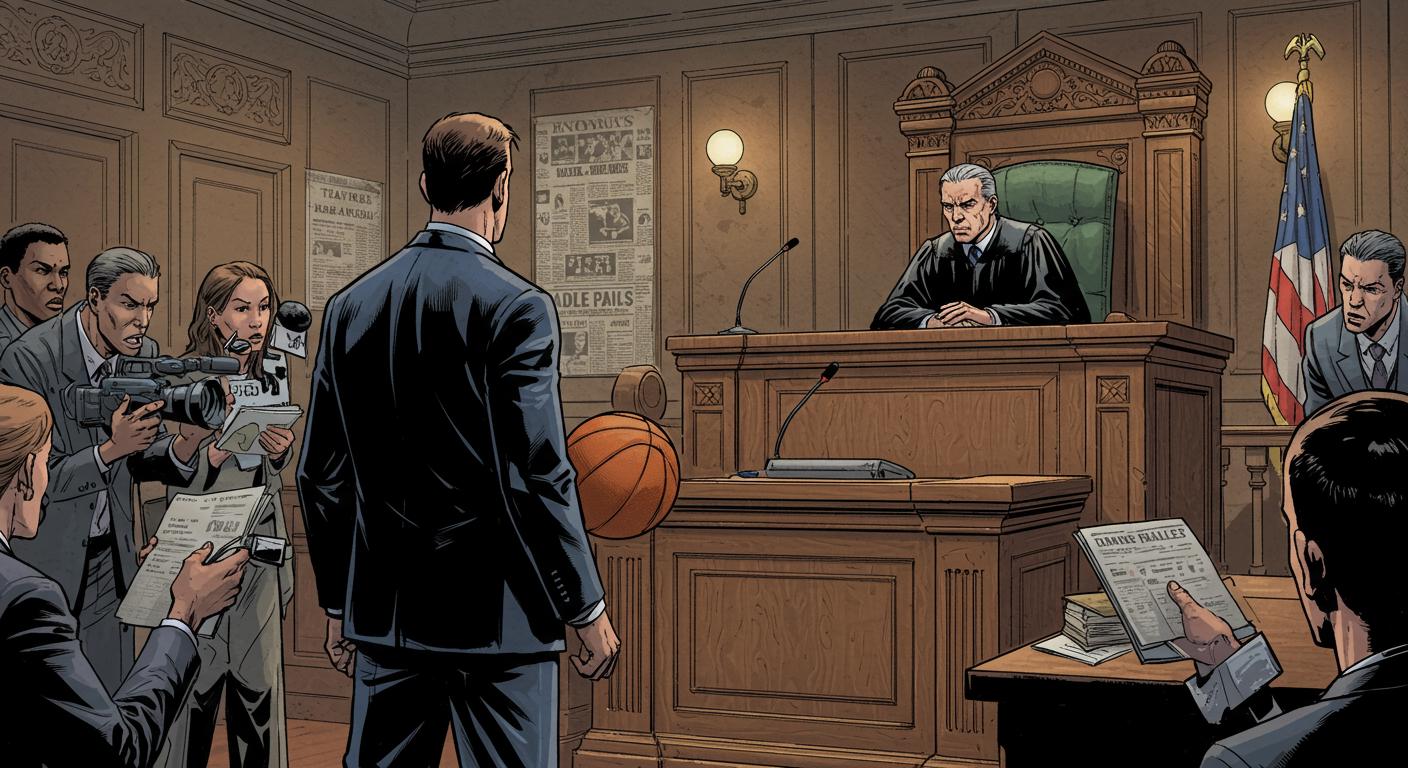
Every so often, a headline swings by that files itself straight into the archives of the wonderfully bizarre—right alongside tales like the baker who sued for too few crumbs. As detailed in VTDigger’s reporting, Vermont father Robert Lafayette brought the Burlington Free Press to court, faulting them for not publicizing his son’s basketball games. If you’re wondering what sort of existential crisis might inspire this, Lafayette claimed the lack of coverage brought on stress, panic attacks, and a suite of gastro-intestinal troubles. Not your everyday sports story.
The Curious Case of the Missing Box Score
Lafayette’s suit, described through court records cited by VTDigger, named both the newspaper’s high school sports offshoot, Vermont Varsity Insider, and two employees, Alex Abrami and Judith Altneau. His central allegation? A marked preference for Chittenden County schools—especially those with business ties to the paper—left his son’s moments on court languishing in the shadows. Lafayette asserted that, because his son was absent from the headlines during the 2024-25 season, college prospects dimmed and family stress soared.
The specifics are pure oddity: among various damage claims were violations of the Consumer Protection Act, breach of contract, negligent infliction of emotional distress, and unjust enrichment. One imagines a law library’s worth of case files, but with a basketball through each chapter.
Curiously, VTDigger notes, Vermont Varsity Insider’s actual coverage spanned games statewide, not just in the publication’s home turf. It seems the pattern Lafayette saw may have been more a full-court illusion than a coordinated blackout.
Court Whistles for Editorial Discretion
From the legal bleachers, Judge Benjamin Battles brushed off the suit, sustaining Vermont’s Article 13 protections for press freedom—those lines in the rule book that reserve the right of editorial choice to the newsroom, not the stands. As referenced in the outlet, the court didn’t accept Lafayette’s assertion of regional bias, essentially reaffirming the idea that newspapers can choose their own lineups for the front page. It’s a precedent librarians and editors alike might quietly bookmark.
In an altogether remarkable turn, the report details that the court is now considering sanctions due to Lafayette’s use of fabricated case citations and invented quotes in his submissions. The judge also determined that, under Vermont’s anti-SLAPP law—meant to prevent lawsuits from chilling speech—the Burlington Free Press is entitled to recover attorney fees. A subplot nearly as odd as the main event.
It’s mentioned in VTDigger’s account that attorneys for the newspaper declined comment while this last bit plays out in court. Perhaps they’re reserving their words for print.
A Parent’s Hope vs. A Paper’s Pages
If you’ve ever wandered through the archive of peculiar lawsuits, this one finds a comfortable shelf. Small-town reporters grow accustomed to fielding calls from parents cheerfully (sometimes forcefully) lobbying for more ink about their offspring. There’s a familiar awkwardness here—between the intensity of local sports dreams and the practical constraints of column inches.
Yet, how often does this everyday tension escalate into a multi-pronged legal challenge, complete with allegations of emotional turmoil and, yes, claims of digestive upset? The file of “parent suing for lack of positive press” just received a particularly thorough entry.
Stepping back, it raises an almost anthropological question: with the media landscape shifting and local newsrooms shrinking, does the imperative to feature every star player become more acute? Or does this serve as a reminder that even well-intentioned passions can tip over into the truly odd when boundaries blur—especially when the path from the gym to the courthouse is shorter than it should be? It’s notable, too, that Lafayette’s case included invented citations; the urge to rewrite the rules, it seems, knows no bounds.
The Final Whistle (and the Filing Cabinet)
Flicking through this saga, one wonders whether Lafayette will next attempt to launch his own highlights zine, or perhaps retreat from courts both literal and legal. For now, as described in the outlet’s summary, Vermont’s judiciary has quietly reasserted that the art of news selection is a protected craft—sometimes frustrating, often imperfect, but ultimately not up for grabs every time the press bench gets crowded.
If history teaches anything, it’s that the world of parent-driven PR will always generate its fair share of bizarre side stories. Some will disappear into the stacks; others, like this, earn a place with the surprisingly robust canon of American news oddities. Is there a hidden pattern in the annals of litigious parental advocacy? One could spend a lifetime indexing the entries, and never make it past the first shelf.