
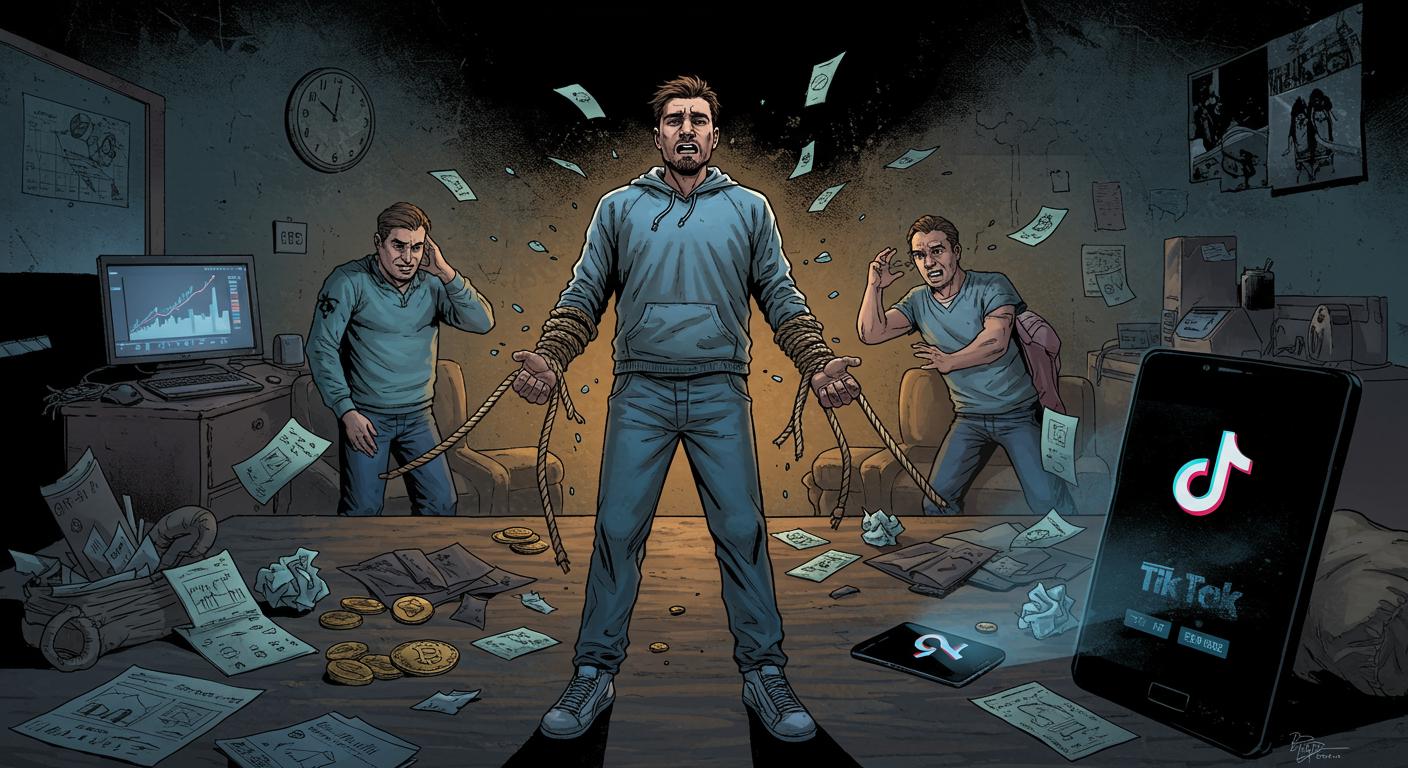
If you plan your criminal enterprise around the lucrative image of “crypto influencers,” you might want to double-check the actual portfolio before you slide into the getaway car. This lesson came home with a thud for four would-be extortionists in France, who, according to a Cointelegraph report that draws on details cited from French radio station Europe 1, plotted to snatch a TikTok crypto trader in hopes of a 50,000 euro digital payday—only to discover their target’s most valuable asset was apparently his follower count, not his crypto wallet.
The Not-So-Great Crypto Caper
Cointelegraph, referencing coverage by Europe 1, describes how a 26-year-old crypto content creator was forced into a stolen vehicle by four assailants while returning home in Juvisy-sur-Orge, a suburb of Paris. The goal? A quick transfer of €50,000 (about $57,000) in cryptocurrency. The encounter, which reportedly included a beating, ultimately ended rather anticlimactically when the TikToker demonstrated to his captors that he couldn’t pay—the low balance in his account abruptly cutting negotiations short. So, instead of striking it rich, the kidnappers evidently released the trader when they realized he wasn’t exactly the next Satoshi Nakamoto.
The victim had about 40,000 TikTok followers, as noted in the Cointelegraph synthesis of events, underscoring that an audience doesn’t guarantee assets. France’s Organized and Specialized Crime Division is now investigating the case, and the trader reportedly received six days of work incapacity benefits as a result of the ordeal. Perhaps the most unexpected outcome is that, for once, being broke is an effective security feature.
Reality Check: The Crypto Image vs. Reality
What’s perhaps most striking here is the gap this incident reveals between the perceived riches of crypto influencers and their actual bank (or wallet) balances. As Cointelegraph, summarizing Europe 1’s reporting, points out, a sizable online following doesn’t always translate to a digital fortune. One can imagine the mood in the getaway car, any illusions of a windfall fading fast as the kidnappers scrolled through line after empty line in a crypto account.
It raises a question: Did these would-be criminals simply assume that a social media following equals immediate liquidity? The episode neatly punctures the idea—widespread even outside felonious circles—that digital visibility is inevitably paired with overnight riches. In a world where someone’s worth is often measured in likes and retweets, it’s a good reminder that illusion and reality can be separated by more than just a blockchain ledger.
A Broader Pattern: When Crime Targets the Blockchain
Cointelegraph further highlights that this isn’t a one-off case. Citing incidents reported via France 24 and related sources, the outlet documents an uptick in crypto-related kidnappings across France this year—serious enough to prompt meetings between the interior minister and industry players. Some incidents have taken far darker turns: Cointelegraph references the attempted kidnapping of the daughter and grandson of the Paymium CEO, and a separate, brutal abduction where a crypto entrepreneur’s father was held for days and suffered serious injury as part of a multimillion-euro ransom attempt.
Arrests have followed. Citing France 24, Cointelegraph notes ongoing action, including the recent charging of 25 individuals by the Paris public prosecutor’s office in connection with various plots against crypto figures and their families. Earlier reports also mention that authorities arrested a suspected key figure behind several of these attacks abroad—a nod to the international scope that crypto crime can take.
The Irony (and Danger) of the Digital Gold Rush
If there’s an underlying irony, it’s in the mismatch between appearance and reality that runs through both influencer culture and criminal expectations. A group, apparently convinced by the “easy money” mythology of the digital age, seizes a figure better known for TikTok tutorials than token holdings. Did they imagine a fortune tucked away in a cold wallet, left unsecured for the taking? Or did they—like many—fail to distinguish sizzle from substance in the online economy?
Sometimes, not having much to steal is, paradoxically, the ultimate protection. In the endlessly peculiar intersection of crypto culture and crime, viewers are left to wonder: Are we witnessing the start of a new breed of criminal mishap, where would-be ransomers walk away empty-handed because the hype turns out to be hollow? Or just another installment in the long, strange saga of perception outpacing reality—now set to a blockchain beat? Either way, a little skepticism still goes a long way.