
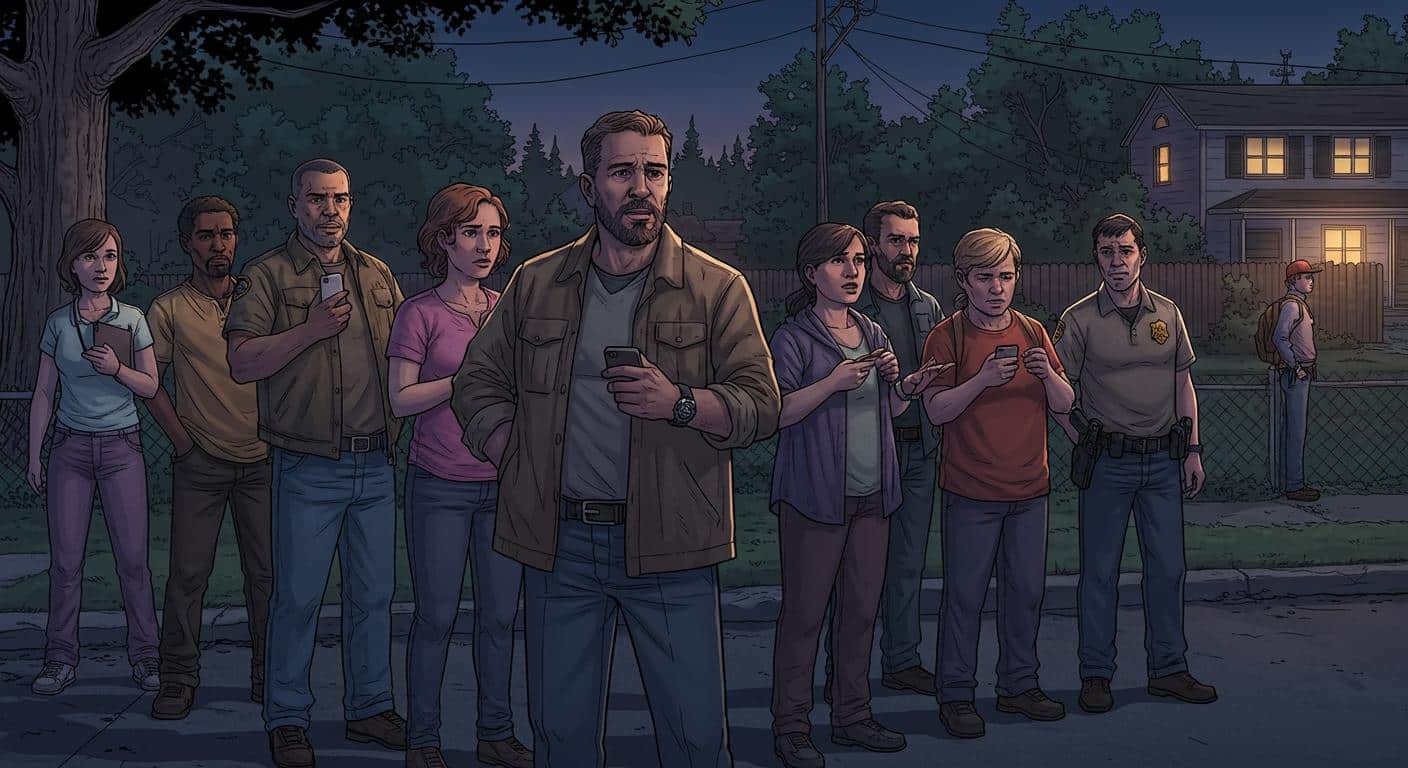
The phrase “neighborhood character” more often calls to mind block parties or eccentric wind chimes than unclad pedestrians, yet in one corner of Cowley County, Kansas, it’s taken on a refreshingly literal twist. Residents near Arkansas City have found themselves participants in what can only be described as a civic conversation about the limits of public attire—or, depending on your perspective, the absence of it. As detailed in a report from KWCH, concerns have been mounting over a man who strolls the neighborhood regularly, entirely in the buff.
An Ordinance in the Making
Several neighbors, among them Shannon Gurnee, shared at Tuesday’s Cowley County Commission meeting just how far the situation has tested their patience. The root of the anxiety seems to be the proximity of these walks to an elementary school, as well as the presence of children and grandchildren in the neighborhood. While some might label this a test of Kansas’s live-and-let-live philosophy, Gurnee’s take—“It’s just unacceptable”—couldn’t be more direct.
Despite repeated calls to the sheriff, the response from authorities has amounted to a legal technicality: under existing statutes, public nudity only rises to the level of an offense if there’s intent to arouse. As Sheriff David Falletti clarified to commissioners, there’s been no evidence of such intent, leaving the local lawman in the odd position of explaining to exasperated callers that the law isn’t actually on their side. One imagines this makes for awkward phone conversations and even trickier coffee shop small talk.
Faced with these limitations, the commission authorized both the sheriff and the county attorney to draft a new ordinance specifically addressing public nudity. Attendees like Pam Craine described the move as an overdue but welcome development, calling it a “good first step.” There’s a gentle, familiar hopefulness in those words—tempered perhaps by the collective experience of seeing many a “first step” fizzle before resulting in actual change. Concerned parents such as Kristy Topper voiced a desire for a more enforceable solution, emphasizing that they’d rather see legal consequences for future strolls.
The Social Contract, Redefined—Again
The ongoing dialogue in Cowley County taps into an age-old question: just where should the boundaries of public decency lie? In the view of some residents, the answer seems obvious—clothing required. Yet, the legal process reveals just how tricky it can be to write “common sense” into statute. If a man walking unclothed isn’t acting with lewd intent, does it matter who might be looking? Who decides which flavor of eccentricity deserves accommodation, and which earns a meeting at City Hall?
It’s a peculiar sort of civic performance—one where the script and costume are very much in flux. The neighborhood’s naked stroller so far remains wordless in the narrative, his motivations unexamined and inscrutable. Is it protest? Habit? An unspoken challenge to the fabric of society… or simply a remarkable dedication to comfort?
With a potential ordinance in the works, change may well be afoot—perhaps bringing a little more textile into the local landscape. Still, the situation reminds us how even the smallest communities sometimes wind up debating the bare essentials of coexistence. Would things be as lively if everyone always played by the same unwritten rules? And in a world both stranger and more interconnected than ever, how often are the true boundaries set not by legislation, but by the contents of a neighborhood meeting—and maybe, just maybe, by who dares to walk the talk?