Perfection is a funny word. So rarely accurate, so frequently overused. But every now and then—once every-century sort of rare—you get to use it literally. LSU Shreveport’s 2025 baseball campaign, as reported by the Associated Press, is one of those near-mythic oddities: college ball’s first ever unbeaten run, clocking in at an absurd 59-0. That’s zero losses, for the skeptics in the back.
In a sport where even juggernauts stub their toe at least once on a bad hop or a rain delay, the Pilots did not. They didn’t even trip over the chalk line. Of their 59 games, just four were decided by a single run; the rest, handled with apparent ease. For the arithmetically inclined, that’s a 1.000 winning percentage. I checked twice. Still held up.
Anatomy of a Streak
The specifics tilt toward the ridiculous. The AP reports LSU Shreveport averaged 11.3 runs per game—second in the NAIA—and posted a third-ranked .361 team batting average. Their pitching staff, led by ace Isaac Rohde (16-0, NAIA-leading 146 strikeouts, 2.09 ERA), owned a team ERA of 2.38, more than a run better than the next-best group. Three Pilots hitters topped the .400 mark, most notably Josh Gibson at .436. In the field, the team’s .982 fielding percentage led the nation. For comparison, previous NAIA marks for winning percentage (Mount Vernon Nazarene’s 43-3 in 1996) and top NCAA seasons (like Arizona State’s 64-6 in 1972) fell well short of what these Pilots achieved.
It’s one thing to be good, it’s another to be historically, unassailably dominant. The statistical spread from LSU Shreveport’s season—those superlative offensive, pitching, and defensive numbers—reads less like a typical collegiate ledger and more like the summary of a baseball-themed fever dream.
The Blowout Heard ’Round the Web
Media attention ramped up after a single, slightly surreal game: a 37-0 blitzing of Texas College, described in Fox 8/KSLA’s reporting. That weekend series saw the Pilots outscore the Steers 94-4. There’s no delicate way to put this—scoreboards weren’t designed for this scenario. The reporting further notes that shortly before the championship, LSU Shreveport surpassed the prior overall consecutive-wins record by picking up their 58th straight victory against Hope International (CA).
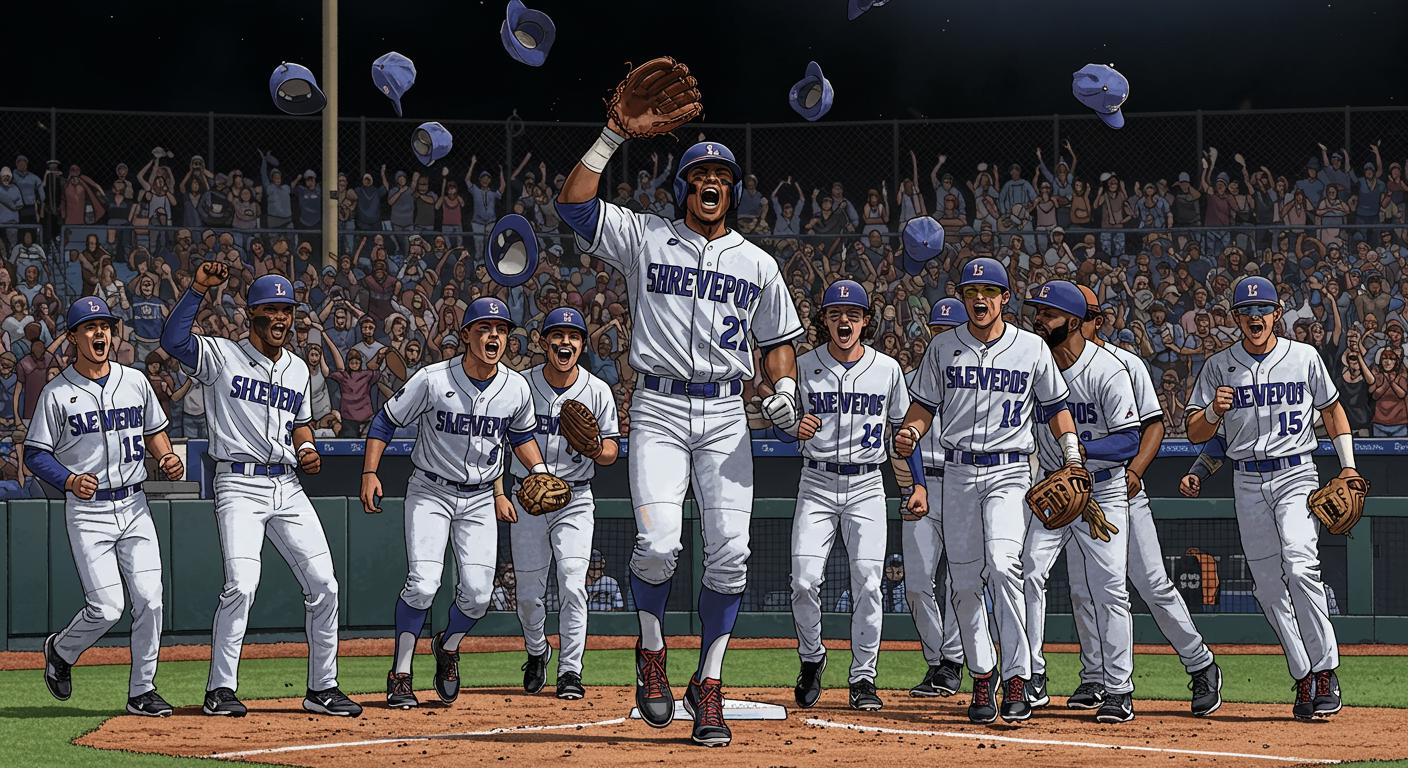
But the Pilots didn’t limit their beatdowns to regular-season foes. The NAIA World Series final saw them topple Southeastern (FL) 13-7 in Idaho, cementing the program’s first national title after nearly a quarter century atop their conference and two decades of postseason attendance.
You have to picture the scene: a small school in northwest Louisiana, a crowd in Lewiston, Idaho, and the first perfect college baseball season anyone can dig up on the books. Did fans start to wonder after each lopsided game if—or when—reality would correct itself? Or did it stop being surprising after the twentieth blowout?
A Record with Irresistible Strangeness
For those who’d chalk this up to small-school quirks, the simple counterpoint is that perfection of this scale has avoided even the grandest Division I programs for generations. The Associated Press and Yahoo Sports both circle back to the singularity of this feat: if perfection was ever more than theoretical in organized college baseball, there’s no record of it.
No documented scandals, no odd twists lurking beneath the surface—just relentless, sustained excellence game after game. It’s the kind of anomaly that feels destined for trivia nights and future yearbooks: the time an NAIA team simply refused to lose.
Does this end up as a one-off, a banner no one else will ever fly, or the start of something stranger? Will the Pilots take the field next spring with an actual loss in the loss column, or has reality really bent just a little around their dugout? Stranger things have happened, but almost never this flawlessly.