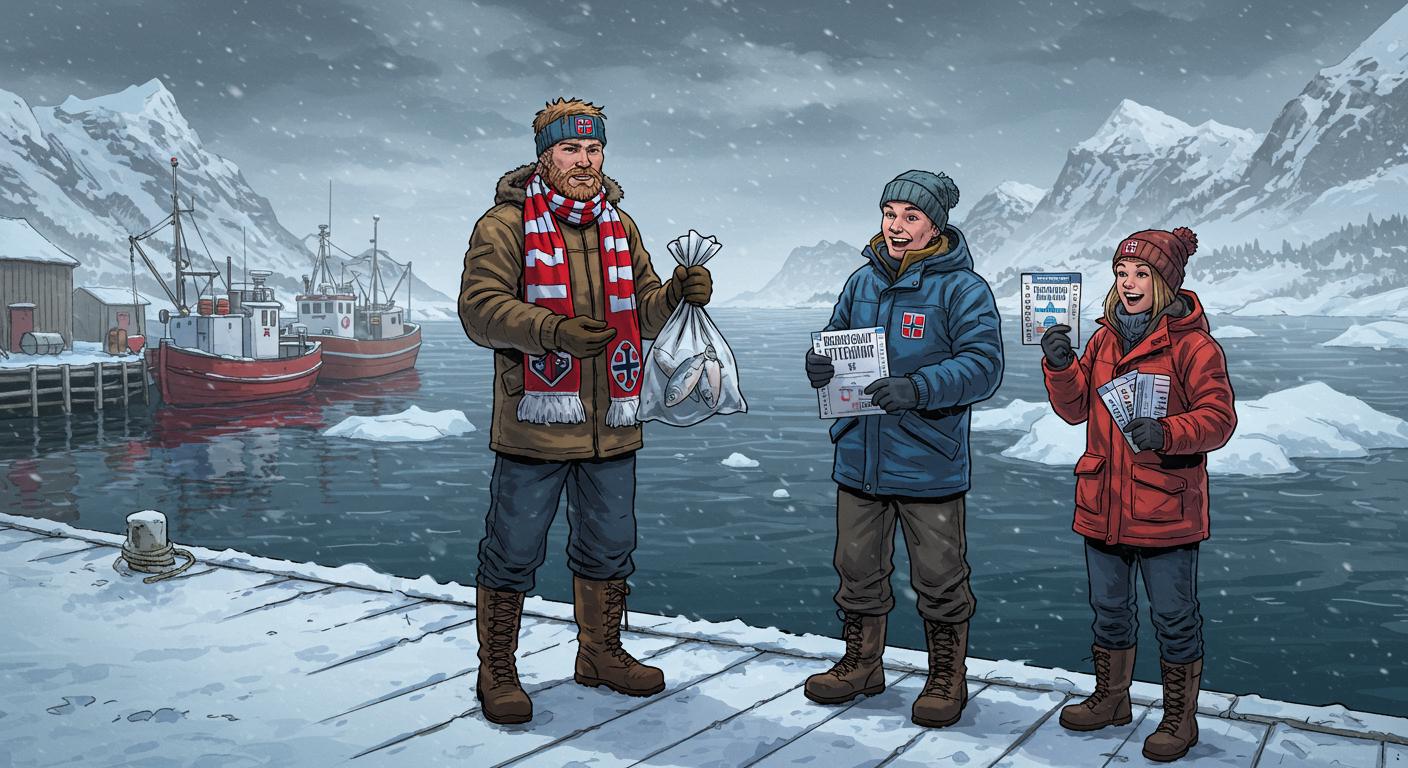
Ticket lotteries, scalpers, relentless online queues—modern sports fandom has its headaches. But the Arctic semi-final between Bodø/Glimt and Tottenham produced a workaround that’s, well, uniquely Norwegian. As detailed in The Guardian, Torbjorn Eide reeled in a Europa League ticket by bartering five kilos of semi-dried boknafisk, a local delicacy valued at nearly 2,500 Norwegian crowns. The currency of fandom, it seems, is tasting a bit fishier these days.
The supply imbalance is extreme: with just 480 seats and nearly 50,000 would-be attendees, official avenues were largely wishful thinking. According to the outlet, Eide—a production manager at a Senja fish farm—reasoned that Bodø’s residents had limited access to his region’s prized boknafisk and decided to post his offer: cod for a coveted seat. Oystein Aanes responded, offering his spare ticket after a last-minute drop-out in the family. Aanes described the swap to Norway’s state broadcaster NRK as “just a fun thing,” underlining how informal creativity can skirt the digital arms race that ticket sales have become.
The fish-for-football market didn’t stop there. Inspired by Eide’s success, local fan Nils Erik Oskal attempted to trade five kilos of reindeer meat—worth about 1,000 crowns—for his own golden ticket. As recounted by The Guardian, Oskal’s gamble paid off quickly: “It didn’t take long.” For him, the food’s monetary value fell secondary to the chance to witness a “huge” event. The episode hints at a kind of regional barter system—one where culinary pride and community outmaneuver bank transfers.
Even The Independent briefly noted the unusual swap, tying the event back to North Norwegian identity and the lengths supporters would go to just for a spot in the stands. One has to wonder how many away fans brought a cooler just in case inspiration struck.
Between Fish, Football, and Fandom
The details say a lot about what’s at stake. As The Guardian points out, Spurs lead Bodø/Glimt 3–1 from the first leg—a daunting gap, but the prospect of seeing a Norwegian team push for a European final is enough to inspire inventive logistics. In this Arctic theater, tickets proved so rare that dried cod and reindeer became makeshift currencies; perhaps for some in Bodø, these staple foods outstrip even cash in sentimental value.
What stands out isn’t just the oddity of cod as payment, but the distinctly local flavor such barter brings to a global spectacle. The experience is tangible, rooted in community and tradition, not just a barcoded PDF attachment. This isn’t a scene you’re likely to find at Wembley, or even in Portland; a home-baked pie might have trouble competing with the lure of Arctic fish.
All told, the whole affair feels like a nod to a more personal economy—one that rewards ingenuity, persistence, and a willingness to think, or cook, outside the box. Is this a fleeting flash of fish-based exchange, destined for folklore, or could other football fans get crafty if the resale bots drive prices too high? As always, much depends on the match—and on what’s in your freezer.