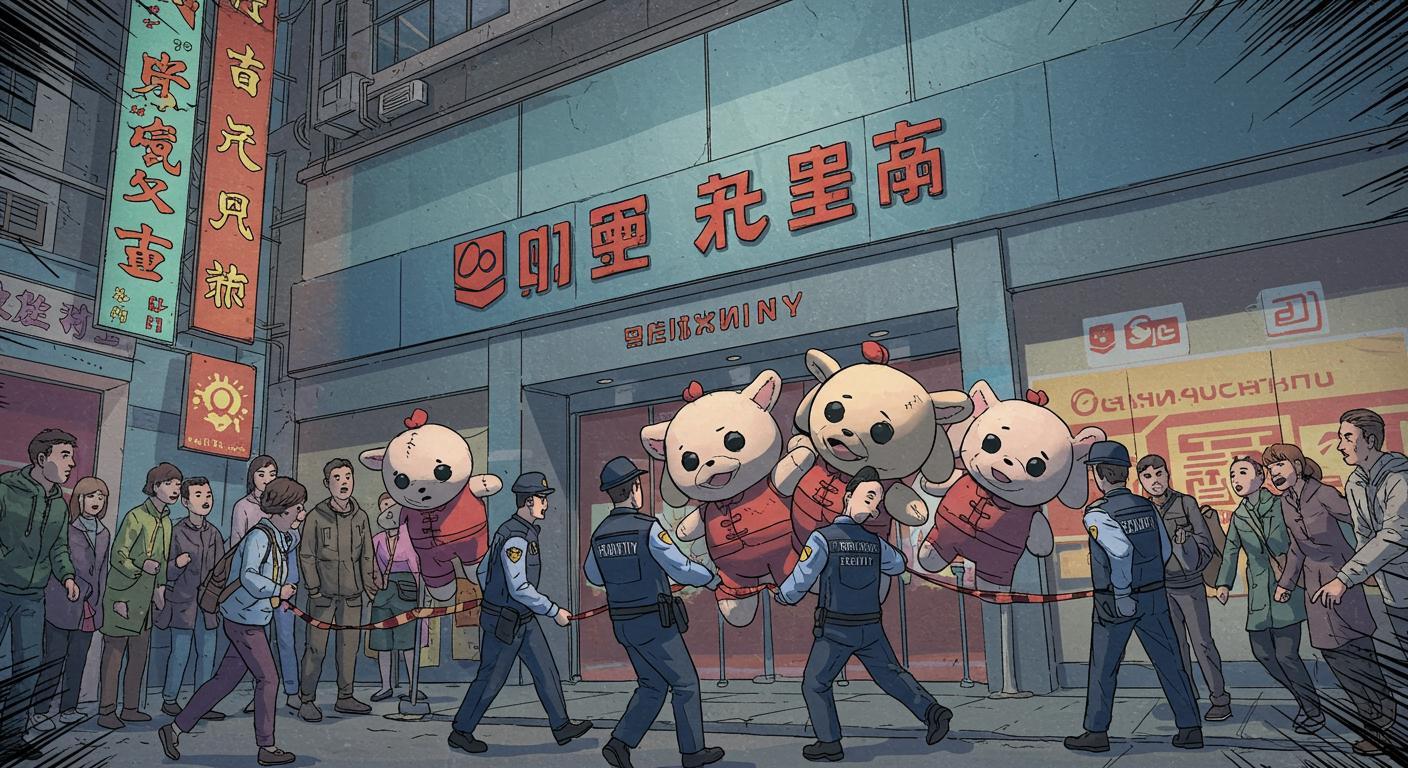
As sales tactics go, offering a snarling, wide-eyed toy monster in exchange for a hefty cash deposit is a creative leap. Yet, if there was ever evidence of late-capitalist marketing running headlong into the brick wall of bureaucratic seriousness, it’s the recent saga involving China’s ban on using Labubu dolls—as in, yes, actual designer toys—as bait to reel in new bank customers. Labubu: part critter, part internet phenomenon, and now, apparently, a financial regulatory flashpoint.
When Savings Accounts Meet Blind Boxes
According to The Guardian, Ping An Bank, among others, tried to boost business by giving away Pop Mart’s viral Labubu dolls to anyone parking the equivalent of £5,162 for three months. The promotion offered new customers a choice between a Labubu 3.0 blind box or a cushy gift package—objectively more festive than your standard-issue pen.
So, why the fuss over a fuzzy figurine with a sharp smile? Multiple outlets, including Jang, recount Labubu’s origin: a creation of artist Kasing Lung, who was inspired by Nordic mythology and launched the character within a series of “Monsters” picture books in 2015. The doll’s trajectory is pure 21st-century lore—it became an internet favorite after BlackPink’s Lisa and Rihanna were spotted accessorizing with one, which Fortune specifies caused Labubu merchandise to sell out swiftly across Chinese e-commerce platforms. That celebrity boost nudged Labubu from collectible oddity straight into viral status.
Amid all this, The Guardian and Bloomberg both report that the National Financial Regulatory Administration’s Zhejiang branch felt it needed to intervene, instructing local banks to refrain from offering non-compliant perks—including, apparently, plush monsters—to attract new deposits.
The Doll That Broke the Bank’s Back
But what’s the real motivation for this clampdown? Agencies cited in The Guardian and Jang say it boils down to hard numbers: handing out quirky collectibles like Labubu (or, in the past, bags of rice or small home appliances) drives up bank costs at a time when profit margins are already scraping the bottom. Lowered interest rates have turned the Chinese deposit market into a fierce competition, as Bloomberg explains, encouraging banks to search for unique customer draw-ins, but also threatening financial stability if left unchecked.
Ping An Bank’s campaign surged on Chinese social media, especially Xiaohongshu (RedNote), as noted by The Guardian, setting off a brief viral run that compelled regulators to step in. State media, referenced within that report, called these kinds of doll-powered deposit schemes “not a long-term solution.”
The spectacle of grown-ups queuing at the bank for a designer toy (instead of toasters or umbrellas) is, in its own right, a little slice of economic theater. But as Jang underscores, while such gifts have been used for years to woo savers, the popularity and collectible status of Labubu pushed things into pop-culture territory—far riskier (and far pricier) for banks to sustain.
Perks, Purses, and Profit Margins
On the face of it, the shift from utilitarian perks (a bag of rice, say) to celebrity-endorsed figurines seems oddly fitting for this era. Still, Bloomberg and Fortune both indicate that from the regulator’s perspective, the underlying economics haven’t changed: rising giveaway costs paired with record-low profit margins create a financial equation that even the cutest mascot can’t solve. The regulator’s intervention isn’t just about one particularly attention-grabbing campaign, but a full-court press to keep banks focused on less volatile, more sustainable practices.
In a detail highlighted by Fortune’s coverage, scalpers and collectors quickly swept the Labubu dolls off Pop Mart’s own channels as soon as the bank campaign made headlines—reminding us that in the world of trendy tchotchkes, scarcity and hype are the real drivers of value.
Closing the Box (For Now)
Ultimately, the Labubu ban may transform collectible mania more than quell it; there’s a certain forbidden appeal to anything branded “too popular for compliance.” Still, this episode is a fascinating snapshot of where financial pragmatism and viral culture intersect—not quite in harmony, but certainly in the same teller line.
What’s next—for bank promotions, or for the steady rise of the designer toy as a savings incentive? Sometimes the monsters disrupting banking are more felt on the balance sheet than in the blind box. But really, what would it take for your own bank to lure you in: a national obsession, a celebrity endorsement, or simply a decent interest rate? The answer might say more about us than about the dolls themselves.