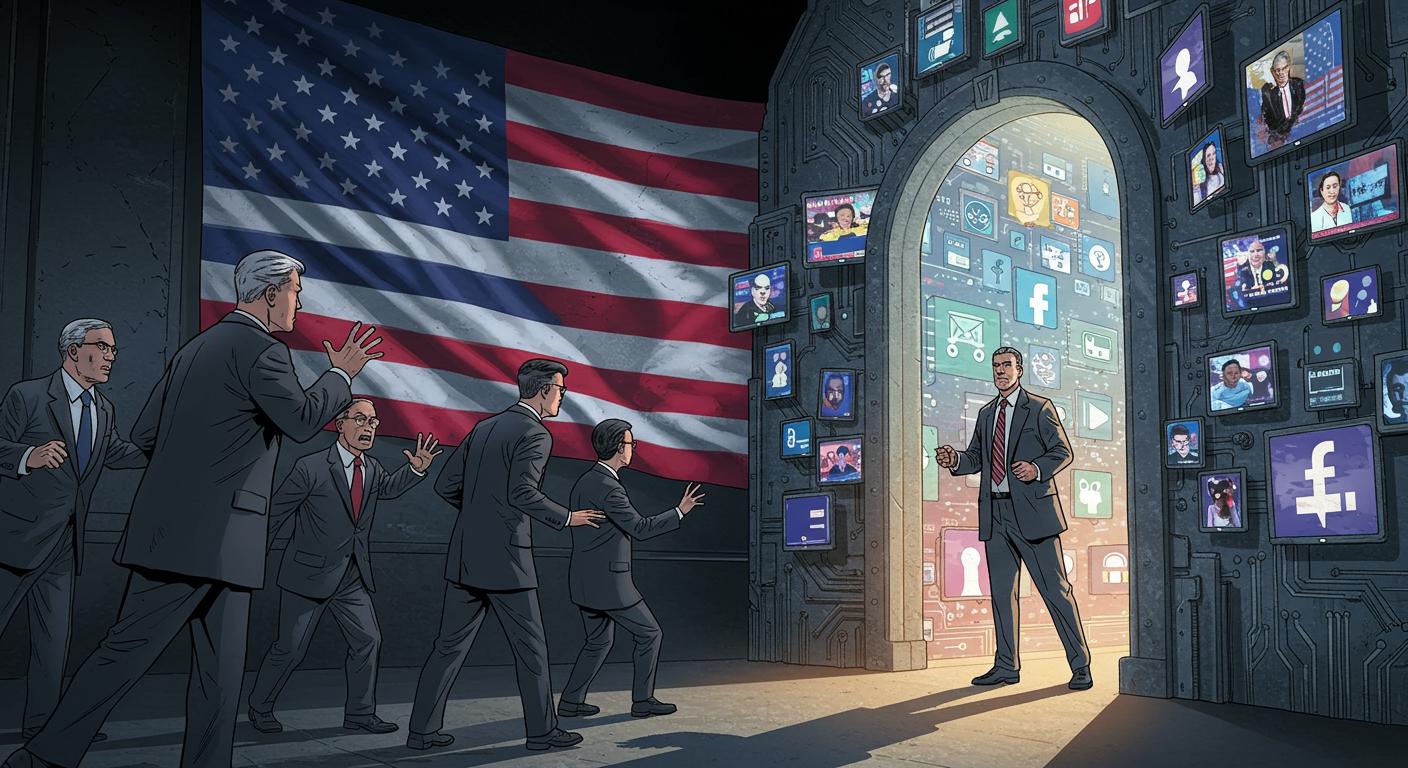
It’s not every day that global diplomacy pivots on who gets to post what on X or Facebook. But as of this week—specifically, announced on May 28, 2025—the US is making social media moderation grounds for denying visas to foreign government officials. Yes, you read that correctly: policies about what gets blocked online could now make the difference between a photo op in Times Square and a very different kind of sightseeing.
A Fresh Line in the Digital Sand
Details outlined in The Guardian show that Secretary of State Marco Rubio declared a new US policy: any “foreign nationals who are responsible for censorship of protected expression in the United States” could find themselves persona non grata. The target isn’t just hypothetical—Rubio recently floated the idea of sanctioning a Brazilian Supreme Court judge, Alexandre de Moraes, after a standoff with X owner Elon Musk over alleged disinformation.
In a statement distributed by the State Department and cited by The Register, Rubio emphasized, “It is unacceptable for foreign officials to issue or threaten arrest warrants on US citizens or US residents for social media posts on American platforms while physically present on US soil.” The policy, as described in The Register’s summary, explicitly draws a line against foreign demands for American tech platforms to moderate content according to non-US laws, especially when those demands encroach on posts made from within the US.
The Guardian further recounts that no specific officials have yet been named under this policy, but its rollout comes against a climate of escalating disputes between the US and its democratic allies over internet speech. Germany and Britain, in particular, have fielded pointed criticisms from the Trump administration over their laws restricting online hate and misinformation—regulations the US right is happy to label as censorship.
The Paradoxes Multiply
It wouldn’t be internet-age politics without a big dollop of irony. As noted by a European Commission official (and referenced in The Register), American social media companies themselves remove most digital content not because of government directives, but under their own terms—think nudity, controversial art, or delicate topics like euthanasia, which sometimes get swept aside more readily from US sites than European platforms. The Register reports that during a window from September 2023 to April 2024, 99 percent of content removals were initiated by the platforms themselves.
So, on the one hand, the US is warning other governments not to pressure American companies to remove content; on the other, those same companies are quietly cleaning house all on their own. One could be forgiven for seeing double standards. And then there’s the US Protecting Americans from Foreign Adversary Controlled Applications Act, which paved the way for a looming TikTok selloff—presented as a security issue but, in practice, more than a little about speech control on foreign-owned platforms, as detailed in The Register.
Social Media Moderation, or Digital Sovereignty?
So why up the ante now? According to India Today, Rubio’s official statement framed foreign censorship as an attack on one of the pillars of shared Western culture and values (India Today). He added, “Whether in Latin America, Europe, or elsewhere, the days of passive treatment for those who work to undermine the rights of Americans are over.” The article relays that US social media companies, in particular, have objected to the European Union’s Digital Services Act, which compels big tech firms to counter illegal content—a move they describe as censorship, though EU officials say it protects users from harm like hate speech and child exploitation.
The diplomatic dance has already produced a few real-world dramas. The Guardian recounts the case of Rümeysa Öztürk, a Turkish doctoral student at Tufts University who, after publishing an opinion piece critical of university policy on Gaza, was arrested by masked agents and later released by judicial order. While technically separate from the new policy—her case centered on protests concerning US foreign policy—the episode illustrates the broader entanglement of speech, activism, and US visa powers.
Who Moderates the Moderators?
Embodied in all of this is a classic, paradoxical push and pull: the fervent US defense of Americans’ global right to speak colliding with the world’s desire to define—and sometimes limit—what can be said online within their own borders. Digital sovereignty, it seems, isn’t just for autocracies.
The Guardian documents that visa denials could reach officials not just in adversarial countries but in those close allies enacting what the US considers overzealous social media restrictions. Meanwhile, a state department advisor’s essay called out European regulation for following a “similar strategy of censorship, demonization and bureaucratic weaponization” as seen against Trump and his supporters.
Against this backdrop, the US continues to wield its own moderation club: Rubio, as noted by the paper, claims to have already revoked thousands of US visas from foreign nationals—mainly students—who protested against Israel. One is left wondering if the commitment to open speech is truly universal, or simply a matter of which interests are being championed at the moment.
New Rules, Old Game
Perhaps the upshot here is that, in 2025, information control and international influence are fully intertwined. A country with the world’s largest social media empires now moves to project its rules—if not directly, then at least via stiffer diplomatic penalties for those who don’t comply. Will this nudge governments to lay off demands for worldwide content takedowns? Or simply provoke copycat restrictions abroad?
As the lines between diplomacy, technology, and free expression get blurrier by the hashtag, the new US stance offers a peculiar reflection: if you block our tweets, you might just block your own boarding pass at JFK. What, exactly, will count as “censorship” remains to be seen. And if every nation draws its own digital boundaries, are we looking at a borderless internet, or just a patchwork of virtual visa checkpoints? The answers, it seems, are as shifting as the algorithms themselves.