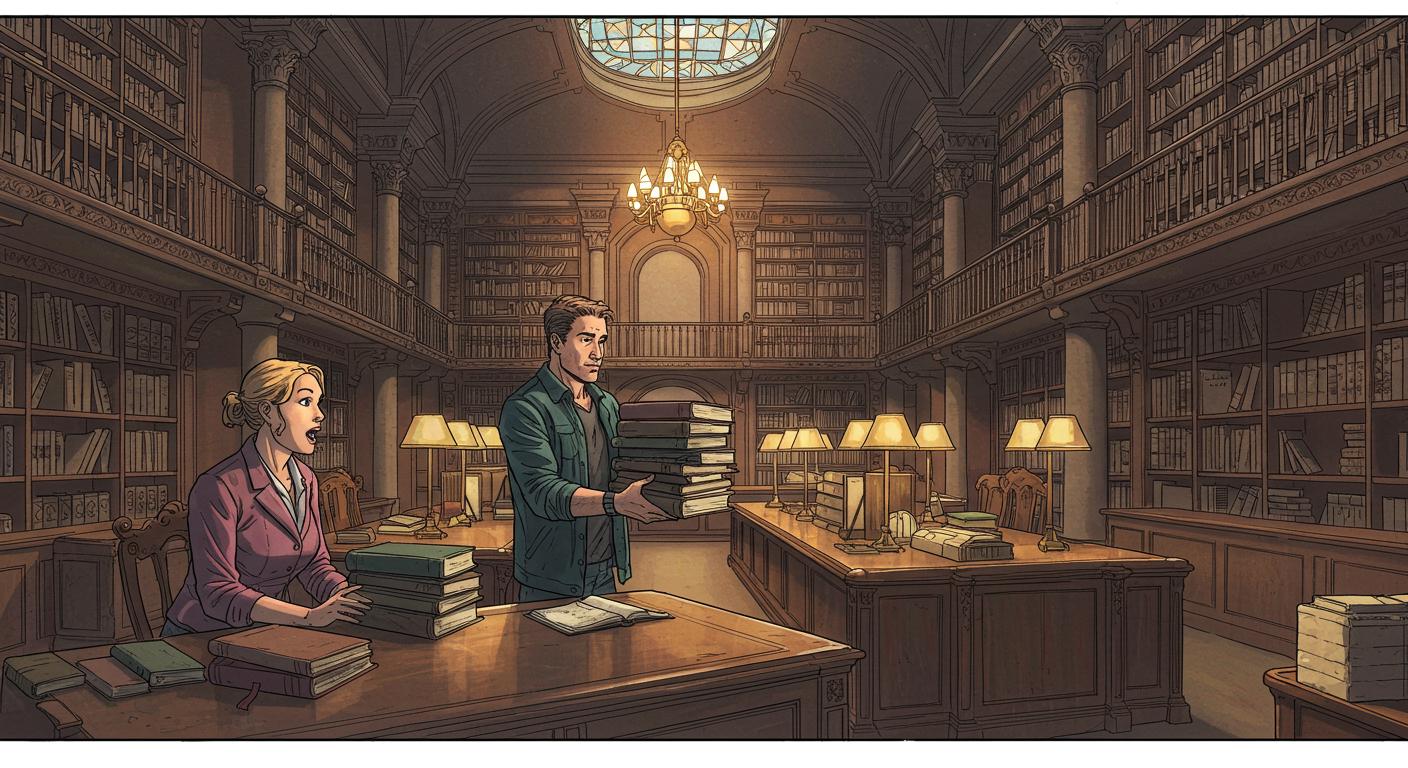
There’s a unique kind of nostalgia that comes with rediscovering an old book, long-dormant and dusty on a back shelf—let alone three library books belonging to Oxford’s Lady Margaret Hall, missing in action for the better part of two decades. According to UPI, a former undergraduate recently emerged as the unwitting protagonist of a bibliophile’s version of a cold case, finally returning a trio of titles checked out some twenty years prior.
Aol News also noted in its coverage that the books, relics of a long-past academic adventure, turned up only when the borrower was sorting through boxes and stumbled on them—one of those discoveries that probably sparks equal parts delight and dread, depending how much one cares about library due dates.
An Apology Letter, Some History, and Forgiveness
The specifics of the returned books, as described in UPI’s report, included Philip Stubbes’ Anatomy of Abuses, William Pierce’s An Historical Introduction to the Marprelate Tracts, and Robert S. Paul’s The Lord Protector: Religion and Politics in the Life of Oliver Cromwell. We’re talking one 16th-century society critique, one look at rebellious Elizabethan pamphleteers, and a deep-dive into Puritan politics—not exactly the sort you’d willingly risk the wrath of the library just to keep on your nightstand.
UPI highlighted the borrower’s move to include a handwritten note that read simply, “Please forgive me.” There’s something timelessly British about such understated contrition—a modest bid for pardon after 20 years adrift. Lady Margaret Hall’s librarians, perhaps sensing the note’s charm or just relieved to reclaim the wayward volumes, responded online: “Better 20 years late than never. This note and three overdue LMH Library books were delivered to our librarian this week. Thanks to the sender for getting them back home in the end—all is forgiven!”
The Joy (and Mild Chaos) of Overdue Returns
Both outlets reported on the books’ overdue status and the borrower’s undergraduate connection, though as a detail highlighted by UPI, the rediscovery only occurred during a recent round of home decluttering. One has to wonder: during their silent exile, how many times did these hefty tomes come perilously close to a yard sale, a box for Goodwill, or perhaps duty as an improvised doorstop? How many of us have unearthed a to-do from a decade ago and weighed the risk of facing up to it?
University libraries are notorious in campus lore for meting out overdue fines with an iron fist, but in reality, most staff—especially those overseeing rare or idiosyncratic collections—are more pleased to see absent books resurface than to impose punishment. The forgiving response from Lady Margaret Hall fits the pattern: wry amusement and relief, not retribution.
The Peculiar Life Cycle of Library Books
This particular caper brings to mind the odd afterlives of library materials. As documented in UPI and reflected in AOL’s report, books pass through untold hands, disappearing and reappearing in the most unlikely places. When a volume returns after such an odyssey, it’s not so much about blame as it is about curiosity: what adventures did Anatomy of Abuses endure while off the grid? Was The Lord Protector referenced at midnight by candlelight, or did it spend 15 years quietly propping up one side of a wobbly desk? The answers, as usual, are left to the imagination.
And yet, there’s a certain satisfaction in knowing that, even decades later, a lost book can find its way back to its shelf—ready to be discovered anew by a student in a last-minute scramble for a thesis source. Does every book deserve such a redemptive arc, or only those with a whiff of history to them?
Final Reflections
Lady Margaret Hall’s “better late than never” moment reads a bit like a parable, all gentle humor and institutional patience. While overdue returns are rarely front-page news, there’s something satisfying about this small act of restitution after years of quiet neglect. If even an esoteric tract on Cromwell can cycle home after 20 years, there might just be hope for the rest of our forgotten tasks—and maybe, somewhere, for my own missing Don Quixote, still at large since 2008.
In the curious world of library science, and indeed in life, sometimes ‘eventually’ is good enough.