
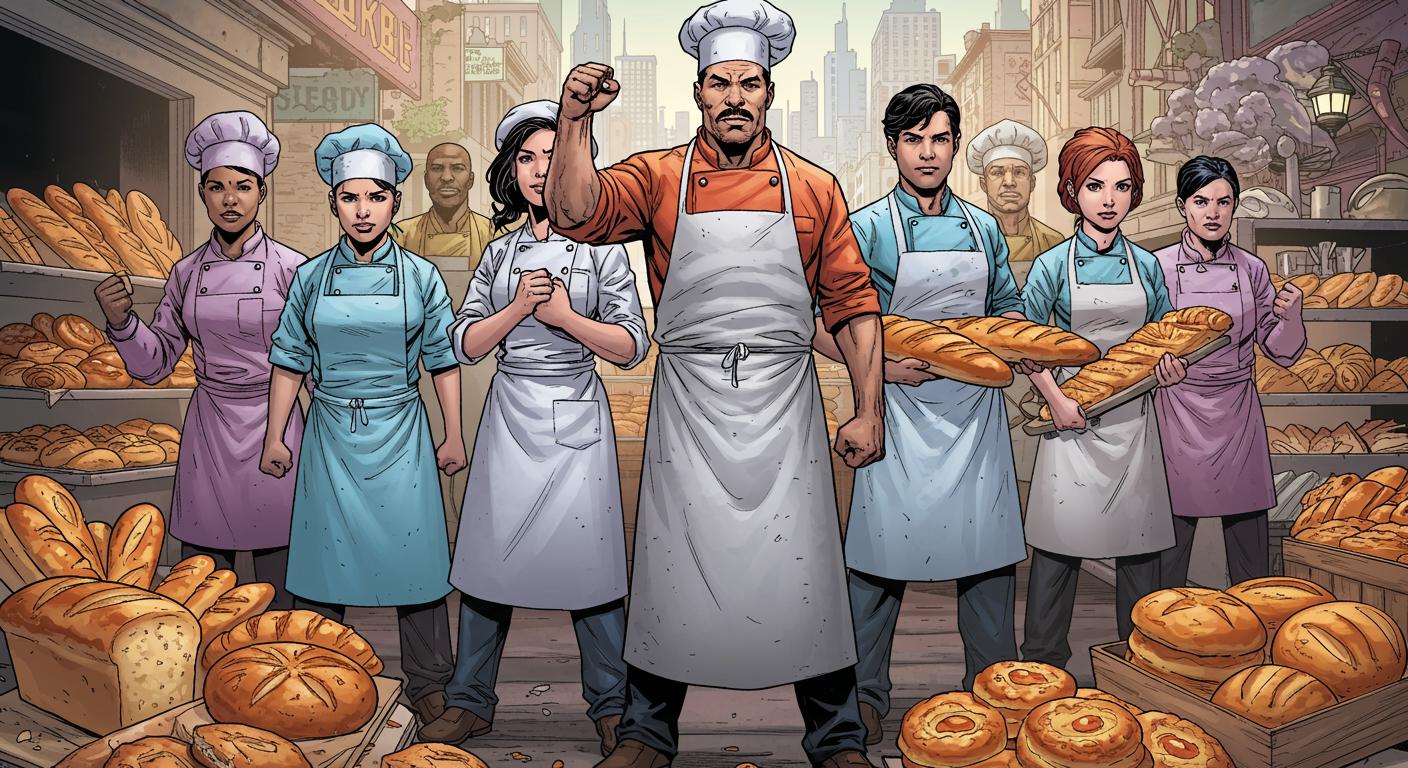
There’s a certain poetry to the idea of bakers rising before dawn, conjuring warmth and sustenance for the rest of us as the city sleeps. But if the latest scene outside the Allied Pinnacle factory in Altona North is any indication, those pre-dawn hours aren’t quite the idyll we might imagine. RedFlag’s recent coverage brings us a tableau both spirited and surreal—a picket line animated by barbeques, union chants, and, believe it or not, dancing.
Solidarity, Sausages, and Shutdowns
For most of the roughly 150 United Workers Union members who joined the 48-hour strike, this was their debut turn at industrial action. According to workers RedFlag interviewed, the atmosphere was more festival than fracas, with grilling, singing, and an unusual unity washing over those present. The optimism was tangible. One participant even likened the experience to a “once in a lifetime feeling,” the sort of endorsement you’d expect for a sold-out concert, not a labour stoppage in a Melbourne suburb.
Yet beneath the convivial veneer, the disruption was real: Allied Pinnacle, a linchpin for supermarket and bakery chains like Coles, Woolworths, and Bakers’ Delight, normally keeps nine production lines humming around the clock. During the strike, all but one—operated in part by non-union casuals—fell silent. Footage shared with RedFlag depicts delivery truck drivers encountering the picket, swapping supportive honks for friendly banter before promptly turning away. Not quite the high-octane drama of a Hollywood standoff, but perhaps a more telling reflection of how these conflicts play out: quietly effective, with just a dash of barbecue smoke.
The Real Dough: Chasing a Living Wage
While the courage to stop the lines might sound dramatic, the actual demands on the table are a lesson in unremarkable reality. RedFlag notes that bakers at Allied Pinnacle make between $26 and $35 per hour—figures that may look modestly sturdy from a distance. But as many workers pointed out to the outlet, it’s the overtime and penalty rates for nights, weekends, and public holidays that tip their earnings into “just enough to get by” territory. Most are working six days a week or moonlighting in additional jobs, with the twin monsters of rent and groceries growing ever more hungry thanks to Australia’s ongoing housing malaise and cost-of-living surge.
Workers are calling for a 15 percent pay bump spread across the next three years, and—given the circumstances—it’s hard not to view this as a straightforward attempt at breaking even rather than a greedy cash grab. The union’s other asks: increases to penalty rates (which management, as described in the article, recently took not-so-creative steps to limit), and a less arbitrary pathway for temporary workers to become permanent. The modern economy loves “flexibility,” but only, it seems, when it’s not the bosses feeling stretched.
RedFlag details how a change to the weekly schedule—shifting from Tuesday-Saturday to longer days Monday-Thursday—has successfully skirted penalty pay that weekends once triggered, leading to a not-so-mysterious drop in take-home pay. One could almost admire the lateral thinking, if it didn’t come at the expense of hundreds of lunchboxes across Melbourne.
Too Hot in the Kitchen
As if being kneaded by spreadsheets weren’t enough, bakers are also being parbaked by the factory climate itself. RedFlag recounts workers’ experiences during heat waves, when oven-adjacent areas soar past 40 degrees Celsius while the company solution is little more than a handful of floor fans. Management, on the other hand, received a $100,000 air conditioning upgrade… but only in the office area. It raises an eyebrow—perhaps both—at what circles as “workplace wellness” in 2025. One wonders if the whiff of fresh air behind closed doors has become another privilege of the salary class.
Heat isn’t the only hazard. The article brings to light how, despite established safety guidelines, employees are regularly asked to lift 25-kilogram sacks of sugar and butter solo. Unsurprisingly, back and leg pain have become common end-of-shift souvenirs. The pursuit of “efficiency” doesn’t seem to factor in the long-term wear and tear on those who provide the human horsepower for Australia’s baked goods aisles.
And then there’s the lottery of “casual conversion.” Court records cited in RedFlag indicate some workers are kept on rolling casual contracts for up to six years, doing the same jobs as their permanent coworkers but without the same security or benefits. If this sounds like a plot twist from a 19th-century labor novel, you’re not alone in your double-take.
What’s on the Table—Besides Donuts
Looking at the scene as documented throughout RedFlag’s report, it’s faintly comical that an industry so associated with comfort food should turn out to be a frontline in the contest over livable wages and fair conditions. The managers’ offices are cooling off, but the dough room still runs hot in every sense. In an ironic coda, whenever officials tried to push back on the picket or threatened police, workers simply upped the volume on their “Union power!” chant until the issue melted away like butter on a fresh scone.
So, are these rolling stoppages about inflation, about job security, about the right to, quite literally, not get roasted at work? None of it feels especially outrageous—unless you’re surprised by just how many levers are being pulled to keep costs down at the expense of the people actually doing the work.
With more action expected, one can’t help but wonder—will management find a recipe that leaves everyone fed, or just keep moving the oven mitts around? And next time you browse the cake aisle, perhaps spare a thought for who’s really putting the sweat into your sponge. After all, in the world of industrial baking, it seems the real contest isn’t just about flour, but fair share.