Self-driving cars may be steering the conversation around the future of transportation, but sometimes it’s the mundane that brings the surreal crashing home—literally, in this case. If you’ve ever wondered how close we are to a world where cars think for themselves, a recent driveway debacle in South Brunswick, New Jersey, may provide food for thought. Spoiler alert: the machines are not quite ready for suburban nuance.
When the Road Less Traveled Is Actually a Driveway
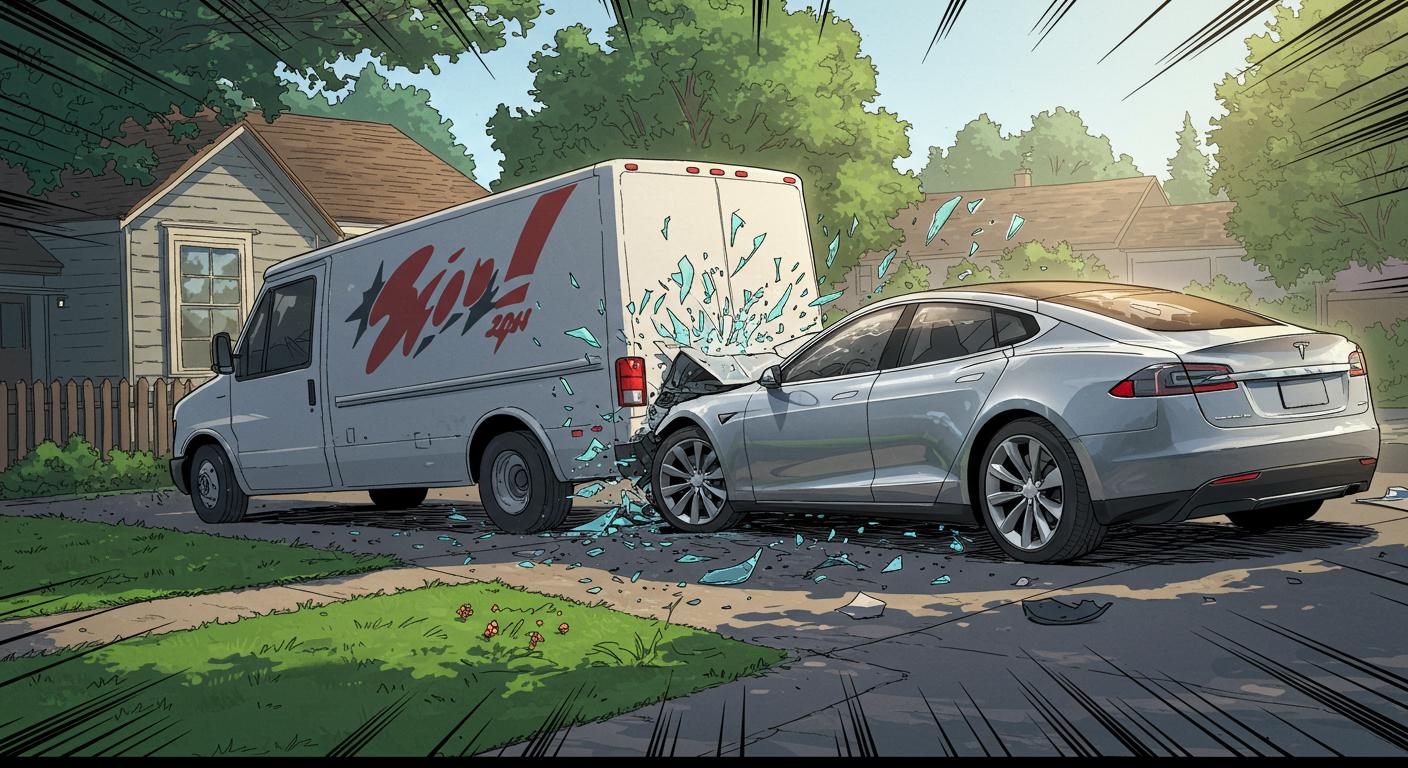
According to ABC7NY, a Tesla operating on autopilot attempted a turn from Georges Road onto a side street. Detecting a white SUV coming from the opposite direction, the car, in a split-second display of digital decision-making, opted for evasive action. But rather than gently maneuvering beside its roadway rival, the Tesla surged across the street, accelerated into what it evidently assumed was a convenient extension of asphalt, and smacked headlong into a minivan parked in a residential driveway.
The story gets even stranger at ground level. As the van’s owner told ABC7NY, he was sitting in the garage by the door, planting seedlings, with his feet underneath the van at the precise moment of impact—close, but just outside the plot of disaster. The force of the Tesla propelled the van into the garage, spreading damage like an overly ambitious Roomba. Fortunately, the only casualties were the minivan’s bumper and the garage door; no humans or seedlings were harmed.
A Misplaced Sense of Street Smarts
The autopilot system, police suggested in remarks quoted by both ABC7NY and a writeup for The Nerd Stash, likely mistook the driveway for an extension of the street, making a snap judgment that proved costly for all involved. While speculation abounds about the precise sequence of events—did the autopilot really “see” a second route, or did it panic and misfire?—South Brunswick Police Det. Sgt. Tim Hoover was clear: even in a future-forward state like New Jersey, “You still have to take due regard to drive with caution.” Whether behind the wheel or behind the code, responsibility remains distinctly human.
There’s a small wrinkle in the writeups regarding the outcome: ABC7NY reports the driver was ticketed for “careless driving,” while The Nerd Stash describes it as “reckless driving.” Whatever the precise legal terminology, the message is clear—a fully-automated car does not free its human of old-fashioned liability.
As highlighted by The Nerd Stash, internet users were quick to chime in, pointing out that with life and property on the line, it makes sense that the driver can’t simply shrug and gesture at the console. Several posters agreed with the police on the necessity of ticketing, while others argued that Tesla itself should shoulder some responsibility, since the AI system played a notable role in the crash. There’s some skepticism, too: more than one commenter speculated that the incident could involve a split-second human mistake, such as hitting the accelerator instead of the brake in an effort to override autopilot.
Not-So-Auto Pilot: The Illusion of the Effortless Commute
Technology, for all its promises, often stumbles over the very things it claims to transcend. The specifics here—a driveway mistaken for a roadway, an algorithm with just a shade too much confidence—sound like a parody of the driverless revolution. Yet each botched junction suggests a broader conundrum: is the average street, with its random mailboxes, driveways, and squirrel-induced zigzags, simply too weird for a machine to master?
There’s a subtle irony to the notion that, even with “full” autopilot, New Jersey law expects drivers to maintain vigilant control—a message reinforced by the officer’s remarks, and, as The Nerd Stash documents via online reactions, compared to airline pilots staying alert even while the computer flies. The machine may have hands on the wheel, but the eyes (and judgment) still need to be human.
Reflections From the Driveway
For the van owner—a gardener enjoying a quiet evening—the implausible became reality in a fraction of a second. Some seedlings and nerves were shaken, maybe some faith in autopilot, too. For everyone else, the incident feels like a parable on the limits of delegation, whether to AI or to that friend who swears they know a shortcut. You have to wonder: is trusting a car to interpret a side street really so different from trusting a browser with your passwords, or an algorithm with your news feed?
This episode is a reminder that progress, while exciting, often comes with comedic blind spots. Perhaps the only thing more human than an honest mistake is the belief that we can automate it away. How many more driveways will need to double as crash-test labs before autopilot’s judgment matches our own—warts, distractions, and all? Or maybe, just maybe, the truly advanced car will stop and ask, “Are you sure about this turn?” before plowing ahead.
For now, autopilot can take the wheel, but the ticket, as ever, finds its way to the actual driver.