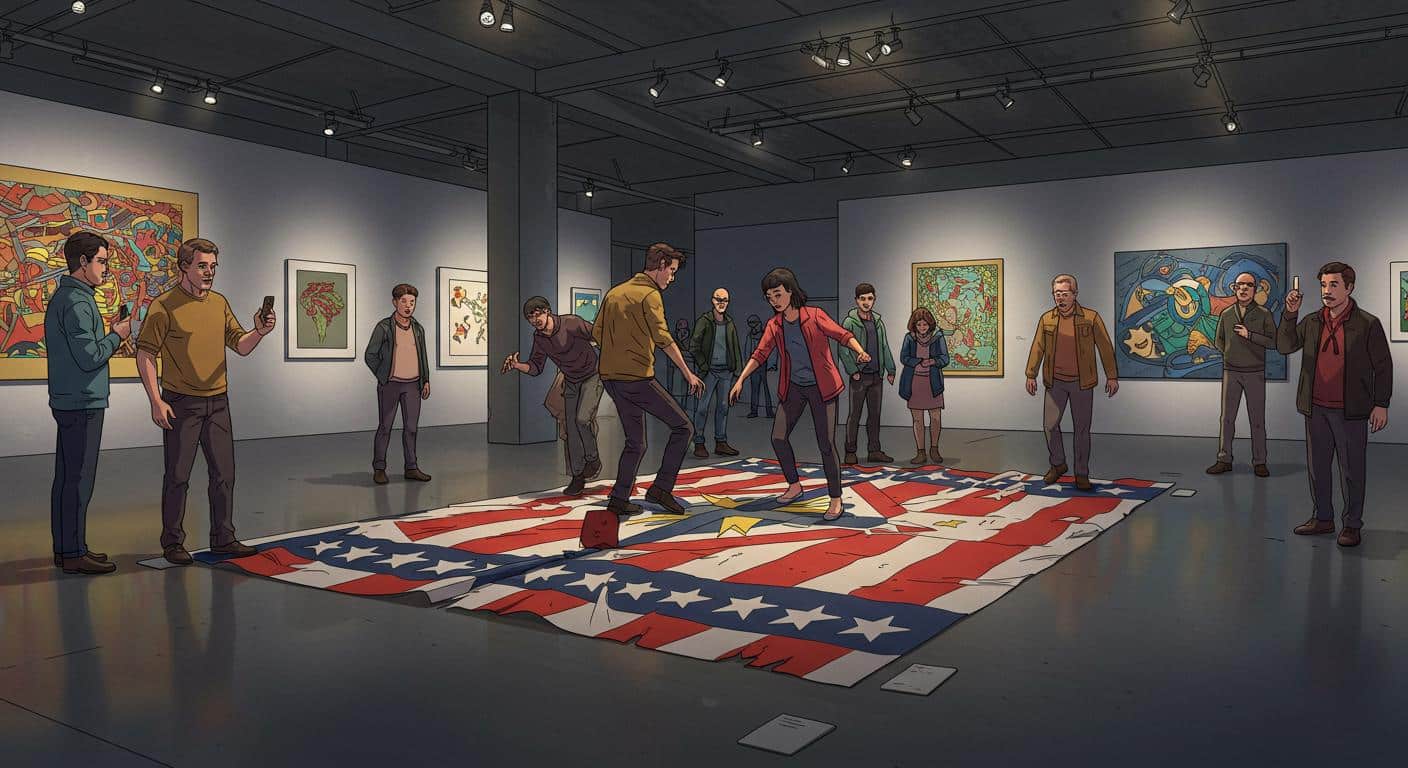
There are certain stories that sneak up behind history, tap it on the shoulder, and say, “Remember me?” The short-lived resurrection of Diane Prince’s “Flagging the Future” at The Suter Art Gallery fits snugly in that category—a work with all the subtlety of an air horn, inviting New Zealand gallery goers (quite literally) to step on the flag. The result? Nineteen days of peaceful provocation, promptly followed by a familiar cycle of outrage and anxious retreat.
Walking (Briefly) on the Line
As reported by the Associated Press, Prince’s artwork—a cloth New Zealand flag printed with “please walk on me”—lands at the intersection of national symbolism, colonial history, and performance art. It’s not the flag’s first foray into controversy, having already been removed from public view during similar uproar in 1995. This round, the exhibit was supposed to last five months but barely made it three weeks, quickly withdrawn after an upsurge of protest and what the gallery described as escalating safety concerns.
Prince, herself Māori, created the piece as a commentary on government policies regarding Māori land claims and the country’s broader colonial legacies. When she spoke to Radio New Zealand in 2024, a remark relayed via the AP, Prince made her position clear: “I have no attachment to the New Zealand flag… I don’t call myself a New Zealander. I call myself a Māori.” That framing, drawing the boundaries of identity and allegiance, seems to be both a spark and a lens for the debates that followed.
Flags, Footprints, and Flashpoints
The AP account weaves together a picture of Nelson—a city apparently never far from art-related controversy—becoming a focal point for national questions about symbolism and belonging. In New Zealand, as in many places, damaging or desecrating the flag is generally taboo and technically subject to fines, though actual prosecutions are exceedingly rare. For some, that flag is bound up with memories of military service and hard-won identity. For others, particularly among Māori, it’s tied to history’s losses: land, culture, and voice.
One episode captured in footage described by the outlet involved Ruth Tipu, a local woman whose grandfather served in the Māori Battalion during World War II, physically removing the flag from the gallery floor and draping it over another art piece—an intervention she vowed to repeat daily. Reactions piled up: veterans’ groups labeled the work “shameful,” and a city council member, Tim Skinner, registered his horror. At the same time, there was vocal support; Nelson’s deputy mayor, Rohan O’Neill-Stevens, publicly defended the right of art to challenge and discomfort. Can a society ever have real reflection or dialogue if nothing ever ruffles feathers?
Safety, Speech, and the Cycle of Censorship
The gallery’s own stance shifted as the mood outside sharpened. In a statement on Facebook, summarized by the AP, staff pointed to “a sharp escalation in the tone and nature of the discourse, moving well beyond the bounds of respectful debate,” as the reason for the flag’s removal. Notably, they emphasized this decision was not a judgment on Prince or her intentions. Specifics about threats or incidents weren’t divulged, and when pressed by the Associated Press, a spokesperson declined further comment.
Police confirmed officers had received multiple complaints about the exhibition, though no direct disturbances or law enforcement interventions at the gallery occurred. As detailed in the reporting, when the work was first shown in Auckland in 1995, it was similarly removed after threats of prosecution—another episode of legal boundaries brushing up against artistic provocation. This time, there’s no indication police directly swayed the gallery’s decision, but the cycle feels familiar.
AP also notes that New Zealand’s slow reckoning with colonial history is ongoing, but as of yet, changing national symbols—like removing the Union Jack from the flag—remains an area where government interest appears tepid, at best.
The Art of the Red Button
This story comes with an unmistakable echo: an artwork meant to prod at ideas of patriotism, identity, and historical memory manages to last only as long as public patience allows. It’s almost as if the real art isn’t the flag itself, but the commotion and debate that springs up around it. Are galleries meant to be arenas for genuine conversation, or just keepers of peace whose main task is swift damage control and well-timed removals?
Prince seems unmoved by the uproar. In her own words to Radio New Zealand, surfaced in the AP’s coverage, her sense of self stands apart from the turbulent fate of the flag. Perhaps it’s the flag that keeps doing all the wandering.
What, after all, is the endgame for this kind of public dialogue? Would the work be less inflammatory if it were a projection on a wall, or does its physicality—its invitation for literal footfalls—redefine the lines between art, protest, and provocation? If repeated outrage is part of the cycle, is that a sign of progress, or just a constant circling of the same unsolved debate?
Nineteen days: apparently, that’s all the time it takes for a flag on a museum floor to launch—and then outlast—the latest round of national soul-searching. Is that progress? Or just another waltz around an old, familiar controversy?