Every so often, a story jumps out of the daily digital torrent and lands—awkwardly—on the intersection of technology, perception, and unintended consequence. Such is the curious case of the Marubo tribe and the rather circuitous chain of internet outrage that followed their first brush with global Wi-Fi, as detailed in a recent Associated Press report.
At the center: The New York Times, a remote pocket of the Amazon, and a societal game of Telephone in which nuance was the first casualty.
Satellites, Sensationalism, and the Marubo
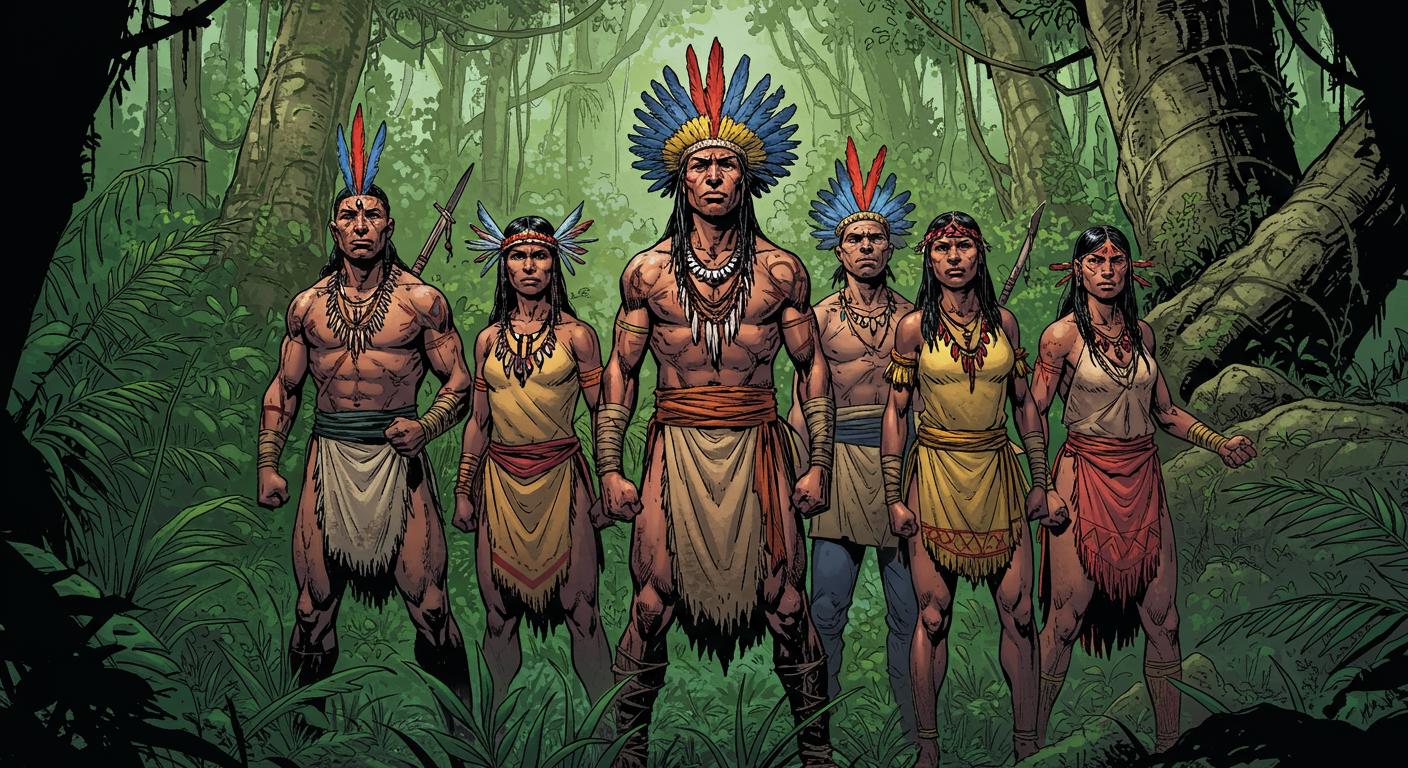
It started straightforwardly enough. Jack Nicas, a New York Times reporter, traveled to visit the Marubo—a tribe of about 2,000 in Brazil’s Javari Valley—shortly after Elon Musk’s Starlink satellites beamed the internet into their world. According to AP, the original intention was to explore how the introduction of internet connectivity was bringing both welcome opportunity and challenging complications to this isolated community. Nicas listed a slate of familiar digital-age struggles emerging: teens glued to their screens, bursts of gossip in group chats, addictive social networks, scams, misinformation, and yes, even the appearance of pornography and violent video games.
In the Times piece, Nicas described a tribal leader who expressed most concern about the spread of explicit videos among young men, noting that Marubo culture traditionally frowns on public displays of affection—a context making this new digital content particularly jarring. Notably, as AP clarifies, this was the only specific mention of pornography in the article.
Yet, what was originally a nuanced list quickly mutated once aggregated elsewhere. The lawsuit filed by the tribe, as AP recounts, argues that the Times reporting suggested Marubo society was unable to handle the arrival of internet technology, and that this framing became sensationalized in subsequent retellings by sites like TMZ and Yahoo. TMZ, for example, published a story and video headlined: “Elon Musk’s Starlink Hookup Leaves A Remote Tribe Addicted To Porn.” The suit contends that such coverage falsely framed the Marubo as having experienced a collapse in morals and social norms—a portrayal the community finds both defamatory and deeply damaging to their reputation and internal life.
Who Owns the Narrative?
The New York Times, asked to respond by the Associated Press, defended its story as a “sensitive and nuanced exploration of the benefits and complications of new technology in a remote Indigenous village with a proud history and preserved culture,” indicating it plans a vigorous legal defense. The AP also notes that as headlines from aggregators became more inflammatory and the narrative spread online, the Marubo felt the post-publication fallout was not merely a matter of public perception. Their lawsuit alleges that the wave of sensational summaries from other outlets led to real harm—damaging reputations, institutions, and culturally significant projects.
Even after the Times published a follow-up in which Nicas stressed, “There was no hint of [porn addiction] in the forest, and there was no suggestion of it in The New York Times’s article,” the tribe remained dissatisfied. Their complaint, according to AP’s account, is that this follow-up did not acknowledge the Times’ own role in fueling the broader narrative, instead putting blame on third-party aggregators.
A further contention: the lawsuit claims Nicas only stayed with the Marubo community for less than 48 hours, rather than the week he was invited for, which, they argue, was insufficient for meaningful engagement or accurate understanding. The AP points out that community leader Enoque Marubo and Brazilian journalist Flora Dutra (credited with assisting the internet connection) are also plaintiffs, saying that video footage showing them setting up equipment was edited in a way that falsely implied they caused social harm by facilitating access to explicit material.
Does responsibility for a viral, and allegedly damaging, interpretation begin and end with the original reporting? Or does it extend outward, entangling everyone who amplifies, tweaks, or recasts a story on its journey through the internet’s echo chamber?
The Infinite Feedback Loop
The AP story draws out a notable point: the Marubo say the repercussions transcended bad press, describing impacts on daily life, community institutions, and long-standing cultural projects. When a single phrase or stand-out detail is extracted and disseminated globally—stripped of context and intent—consequences may land far beyond the reach of any responsible reporting or editorial intent.
That leaves us with a question fit for a digital archivist: Should major media outlets anticipate—in detail—the ways their work might spiral out of their control, or is some degree of narrative mutation simply inevitable? And if so, who takes responsibility when virtual perceptions translate into real-world harm?
Described in the AP account, the Marubo lawsuit highlights the hazards facing any group—no matter how remote—when thrust onto the world stage by a combination of novel technology and an information ecosystem predisposed to extremes. The story itself may be about the Marubo, but the pattern is familiar to anyone who has watched the internet transmute complicated realities into viral caricature.
So, as an Amazonian village finds itself at the center of a controversy over headlines and hashtags, we’re all left to ponder: Is there any way to safeguard the integrity of a community’s reputation in the age of infinite aggregation, or has the tangled web already made that impossible?