Stepping through airport security is already a uniquely humbling experience, but as recent reports out of Shanghai remind us, now it’s your foundation—not just your forgotten water bottle—that may raise an eyebrow from the powers that be. Both Oddity Central and World of Buzz have highlighted a peculiar incident involving a woman and a facial recognition scanner that read her makeup as, apparently, a breach of digital protocol.
Shanghai’s Unintended Cosmetics Checkpoint
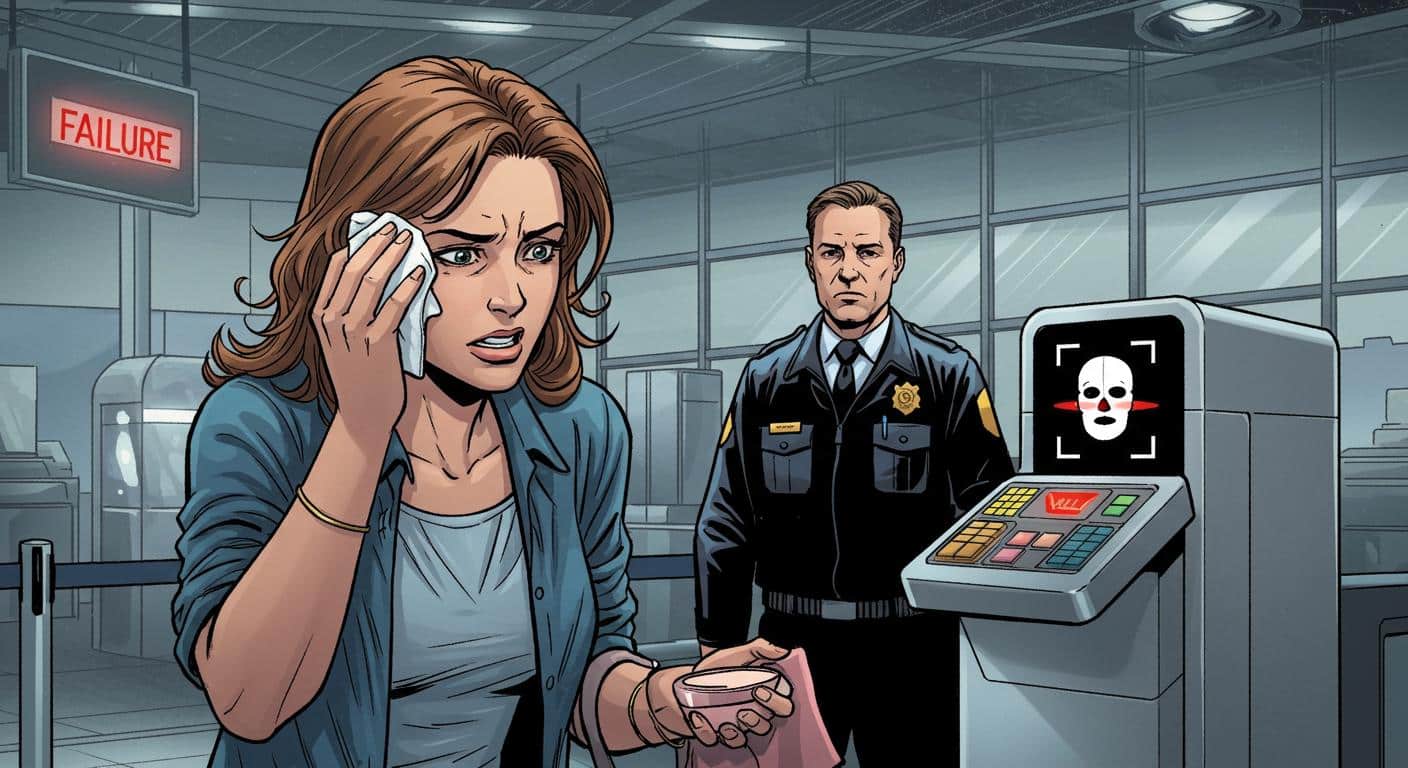
According to details compiled by World of Buzz, a woman passing through Immigration at a Shanghai airport found herself in the unfortunate spotlight when the facial recognition scanner at the checkpoint failed to identify her. The system’s confusion? Her makeup didn’t match the features in her passport photo, leaving her with little choice but to strip off her cosmetics in full view of the queue.
As described in the circulating social media clip, initially shared on Instagram via @wchinapost, the traveler is seen methodically wiping away her makeup, all while an observer offers unsolicited commentary and laughter. Comments such as, “Wipe everything off until you look like your passport photo. Why would you do your makeup like that? You are asking for trouble,” can be heard in the background. The scene, picked up by both Oddity Central and World of Buzz, quickly struck a nerve with online audiences—many expressing discomfort not at the scanner’s limitations, but at the running play-by-play from the person filming.
Criticism on social media, echoed in comments cited by World of Buzz, was swift: many sympathized with the woman, saying the technology’s failure was to blame and suggesting the situation was only made worse by being publicly mocked rather than privately resolved. One user put it plainly, “Don’t blame the makeup when your technology is not performing.” Another chimed in, “This just shows that the machines in your country are not doing their job well; it’s not her problem.” Empathy for the traveler and skepticism toward airport tech carried the day, even as the video made its rounds.
When Machine Logic Meets Human Artistry
There’s some rich irony here: biometric systems are supposed to distinguish us as individuals, but it seems the simple act of a dramatic crease or full-coverage foundation can lead to instant digital anonymity. Oddity Central’s overview of the viral moment notes the surprising ease with which cosmetics can “outsmart” or, perhaps more accurately, overwhelm rigid AI protocols.
For years, the goal has been to seamlessly blend high-tech security with speedy passenger processing. Yet, as highlighted by both outlets, incidents like this reveal a disconnect between technology’s expectations and the reality of everyday travelers. Airport scanners are ready for all manner of threats, but a confident winged eyeliner? Apparently, that’s still an unsolved case.
It begs the question: Are we approaching a future where boarding procedures require no more than a smile and a bare face, lest you be subject to an in-terminal beauty cleanse? If a brow pencil can trip up border control, how long until hair dye or a fresh haircut gets flagged as “suspicious activity”?
Viral Moments and Modern Humiliations
Beyond the technological failure, there’s the social sting. The episode didn’t end with a wiped face; it continued with a play-by-play for anyone scrolling through Instagram. As documented by World of Buzz and referenced in Oddity Central, viewers were quick to defend the traveler, expressing discomfort that her stressful moment became amusement for someone else—and entertainment for countless strangers online.
Social shaming layered atop technological trouble is a distinctly modern flavor of embarrassment. The consensus? Less schadenfreude, more empathy, and a hint of exasperation with the pitfalls of both security technology and human nature. Would the situation have played out differently if helping, not heckling, had been the priority?
The Future of Travel: Passports, Patience, and Powder
For those preparing for international travel, perhaps the lesson is less about technology and more about expectations. Will your face pass muster with a border guard’s favorite algorithm, or will the machine see you as a stranger in your own skin?
The Shanghai incident stands as a surreal cautionary tale in the annals of digital bureaucracy—one where staying true to your passport photo (blemishes, bad lighting, and all) may be the new standard for safe passage. Oddity Central’s coverage sums it up with a wry note: The gap between how we present ourselves to the world and how machines perceive us has never been more literal.
As airports continue to automate and algorithms take on ever-more judgmental roles, who gets the final say in your identity—the person with the scanner, or the scanner itself? Until further notice, concealer and contour might need to be stowed with the rest of your “liquids and gels.” The ultimate travel hack could simply be owning your passport-grade selfie, questionable lighting and all.