Every so often, a news story arrives that’s so perfectly peculiar you almost have to double-check it isn’t an elaborate prank. According to a report by Greek City Times, a Greek woman filed for divorce after submitting a photo of her husband’s coffee cup to ChatGPT and receiving a digital prophecy of marital doom. Welcome to the future, where the wisdom of coffee grounds now lives in the cloud—minus any of the usual foam or saucer-based nuance.
Coffee Reading—Now with a Silicon Seer
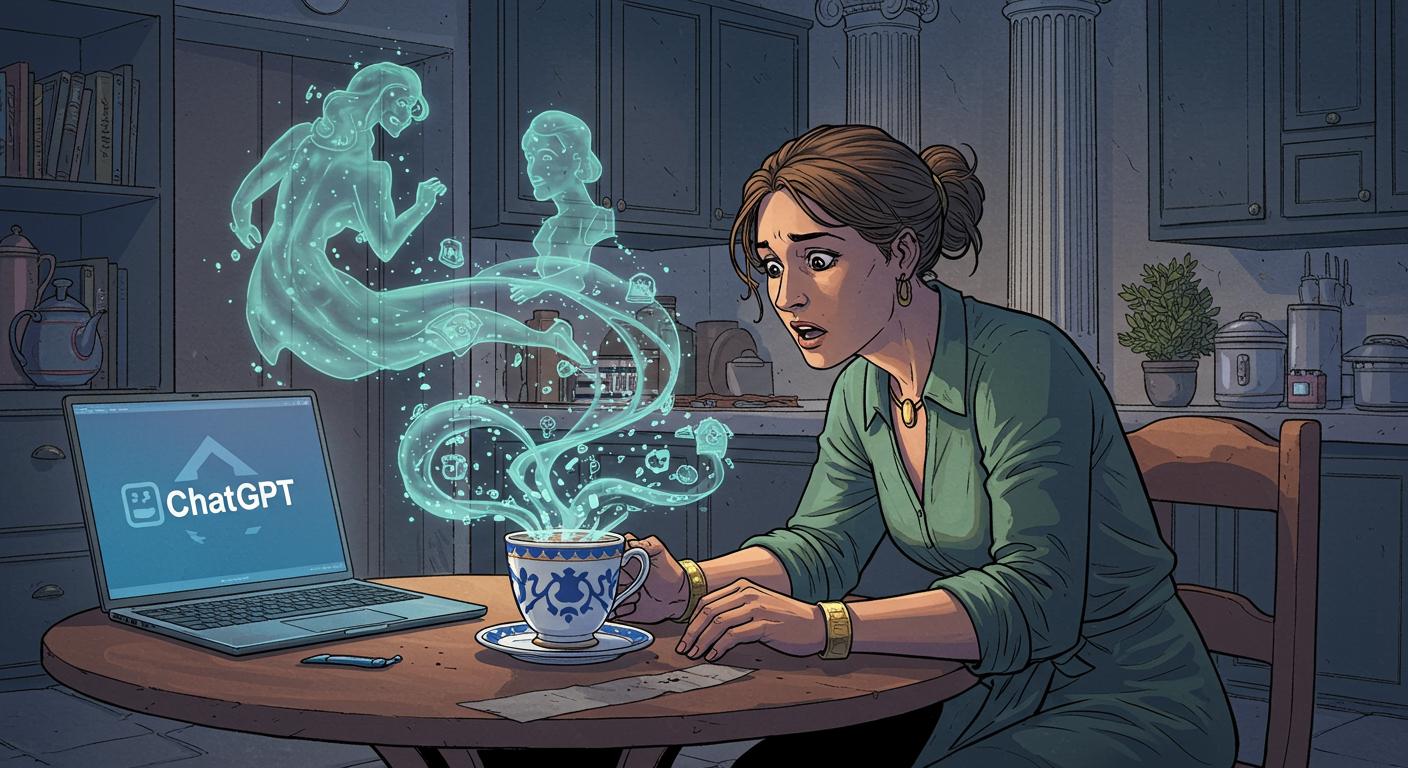
Described in Greek City Times, the woman—a mother of two and twelve years married—decided to blend centuries-old Greek tasseography with the whims of artificial intelligence. Tasseography, for context, is the reading of coffee grounds to divine the secrets of one’s fate. Instead of a neighborhood fortune-teller, she opted for the world’s most popular chatbot. As the outlet documents, ChatGPT interpreted the photo with all the subtlety of a telenovela, diagnosing an affair with a younger woman whose initial, conveniently enough, was “E.” The bot further suggested that this mysterious figure was bent on tearing apart the family.
If that sounds like the kind of speculation that might have once prompted a heated dinner-table eye-roll, think again. Taking the AI’s reading literally, the woman immediately launched divorce proceedings, going so far as to inform their children and contact a lawyer—actions confirmed by her husband during an appearance on the Greek morning program To Proino.
According to Greek City Times, the husband expressed bewilderment at how quickly a supposed joke escalated: the coffee reading was meant as a lighthearted experiment, prompted by his wife’s habitual enthusiasm for “trendy things.” Nevertheless, he found himself on the receiving end of a lawyer’s call and, shortly after, was served formal divorce papers—just three days post-cup photo.
When Algorithms Deliver Accusations
In a detail highlighted by the report, the husband claims this wasn’t his wife’s first brush with the supernatural: several years earlier, she sought guidance from an astrologer and reportedly took a full year to dismiss the forecast as fiction. This time, the forecast simply arrived as strings of code rather than constellations. Is there comfort in knowing old beliefs adapt rather than disappear? Or have we just exchanged velvet-draped parlors for high-speed Internet?
Greek City Times also relays the husband’s lawyer’s perspective: claims made by an AI chatbot have no standing in Greek law, and the husband remains “innocent until proven otherwise.” The legal system, at least, hasn’t (yet) developed a protocol for digitally-translated coffee omens.
Experienced practitioners of tasseography chimed in to the outlet, underscoring that authentic readings are more art than algorithm: they interpret not only the grounds, but also the foam and the impressions left on the saucer—a nuance missed by uploading a smartphone snapshot to a chatbot. For anyone tallying up collateral damage, that’s another point for the irreplaceable weirdness of human expertise.
The Algorithmic Oracle in Everyday Life
What lingers is not the wild tale itself, but the altogether modern willingness—perhaps eagerness—to imbue digital tools with oracular authority. Generations ago, a mysterious pattern in a cup might have inspired anxious speculation; today, it takes a chatbot issuing prophecies in confident, neatly typed English. Are we so hungry for definitive answers that we’ll take them from whatever source offers the clearest narrative, whether that’s a seasoned fortune-teller or a digital assistant trained on terabytes of text?
Earlier in the report, it’s mentioned that the woman’s belief in the AI’s coffee reading was not an isolated incident, suggesting that our collective flirtation with the mystical is alive and well—just with new methods and lexicons. Meanwhile, coffee readers interviewed by Greek City Times maintain that uploading a cup to ChatGPT is as effective as mailing your fortune cookie back to the kitchen for a second opinion.
Perhaps the only thing more inexplicable than the story itself is just how fast we can let a piece of tech—designed to autocomplete our sentences—autocomplete our suspicions, too.
So, next time someone offers to read your coffee cup, consider double-checking whether they’ve got a saucer handy—or at least ask if their reading runs on Java or javaScript. In this strange new age, the lines between the mystical and the mechanical are as blurry as the bottom of a coffee cup, and sometimes, just as hard to swallow.