Curious timelines are the bread and butter of odd news, but sometimes the universe serves up a truly remarkable sequence: the U.S. Copyright Office concludes that AI giants have committed copyright violations, and practically overnight, the agency’s chief is shown the door. For those following The Register’s account, it’s the kind of abrupt turn that invites more than a passing glance.
Who’s Training Whom?
Unpacking the Copyright Office’s findings, as laid out in the draft of its ongoing report, reveals that companies building generative AI systems have, on occasion, gone well beyond mere “fair use” when amassing copyrighted works for training. The Register recounts that, while courts may sometimes accept fair use if AI outputs don’t intrude on original markets, the office’s draft is blunt: deploying huge swathes of protected material—specifically to generate rival commercial content, or accessed illegally—steps outside the lines.
This nuance, referenced in the office’s draft report and highlighted by legal scholar Blake E. Reid, lands as a “straight-ticket loss for the AI companies” entangled in litigation. Reid, as The Register notes, suggests this spells particular trouble for industry heavyweights like Google, Meta, OpenAI, and Microsoft, all currently facing legal action over their model-training methods. The office, for its part, doesn’t anticipate walking back on these findings in its final draft—a detail the outlet also underscores.
Did the Copyright Clock Suddenly Run Out?
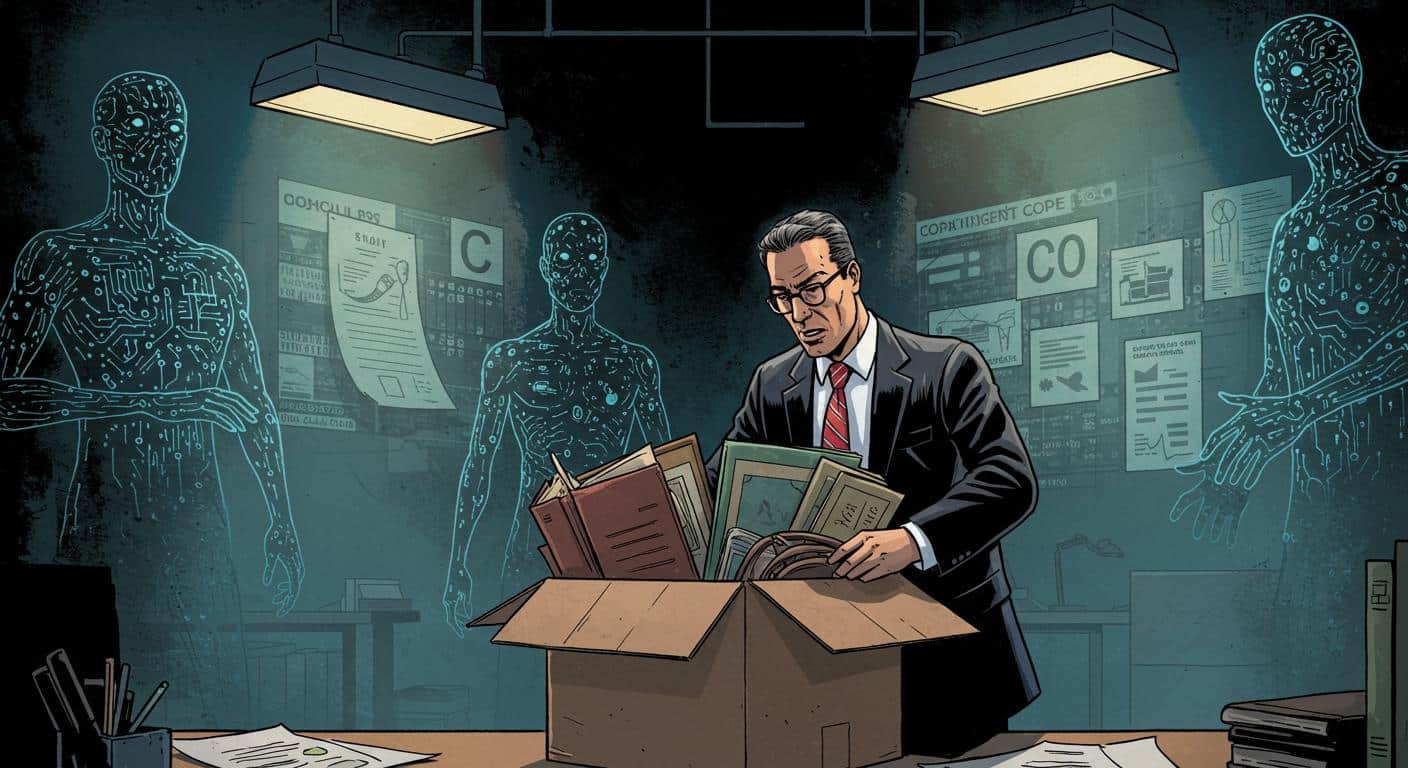
It’s the sequence of events after this draft’s release that proves especially eyebrow-raising. Court records and social media commentary cited in The Register point out that, just a day after the report dropped, Shira Perlmutter—the Copyright Office’s chief—was abruptly fired. Representative Joe Morelle, described in the report, drew a direct connection, suggesting Perlmutter’s ouster immediately followed her refusal to “rubber-stamp Elon Musk’s efforts to mine troves of copyrighted works.” His remarks, linked by The Register to the same office report, cite Musk’s well-publicized ambitions to train his “Grok” AI on X (formerly Twitter) user content, alongside his apparent fondness for scrapping the notion of IP law altogether.
Speculation around timing isn’t limited to lawmakers—a post by Professor Reid, as earlier referenced by The Register, mused about the possibility of an anticipated “purge” at the Copyright Office, implying the report’s rapid release could have been a protective maneuver in the face of expected change at the top.
Yet, the official reason trotted out for Perlmutter’s dismissal, according to White House press secretary Karoline Leavitt—as detailed in The Register’s article—focuses on a broader shakeup at the Library of Congress (the parent agency). This explanation centers not on AI controversy but rather alleged “concerning” DEI (diversity, equity, and inclusion) efforts and the placement of “inappropriate books” in children’s collections. Whether coincidence or calculated, this “diversity crackdown” narrative lobs a competing explanation into the mix and muddies attempts to label the firing as tit-for-tat over AI copyright policy.
Coincidence or Just Another Day in Bureaucracy Wonderland?
Reading between the lines, the story becomes a tangle of culture war, donor politics, and tech industry ambition. Is there a neat throughline connecting a damning report, a highly-timed firing, and the interests of Silicon Valley’s most ambitious AI builders? Or is this an object lesson in how unrelated agendas—copyright enforcement, political turnover, and library policy—can collide in surprising ways?
As The Register has documented, the episode encapsulates the unsettled state of creative ownership in the AI era, where the very system meant to protect creators can find itself caught in a whirlwind of administrative reshuffling. That a landmark call against big AI’s data-hungry appetites immediately gives way to leadership change—well, it doesn’t take a research librarian’s instincts to wonder about the odds.
Curious coincidence, layered irony, or a case study in bureaucratic chaos? In a world where algorithms learn from everything and everyone, even copyright watchdogs can find themselves ejected from the premises while the ink is still drying on their warning. Would the next AI, once it realises how quickly the tables can turn, call this poetic or just par for the course?