Some days, childhood lessons in sharing spin off in truly unexpected directions. Friday’s assembly at Osmaston CofE Primary in Derbyshire offered one such detour, when a student’s “family heirloom” reveal—rather than prompting the usual questions about distant relatives’ medals or ration booklets—instead sparked full-scale evacuation, police mobilization, and a visit from the army bomb squad. According to The Independent, the surprise item in question was nothing less than a hand grenade, reportedly dating from the Second World War.
It’s perhaps stating the obvious that the phrase “eventful assembly” is a bit of an understatement here.
When History Class Goes Off-Script
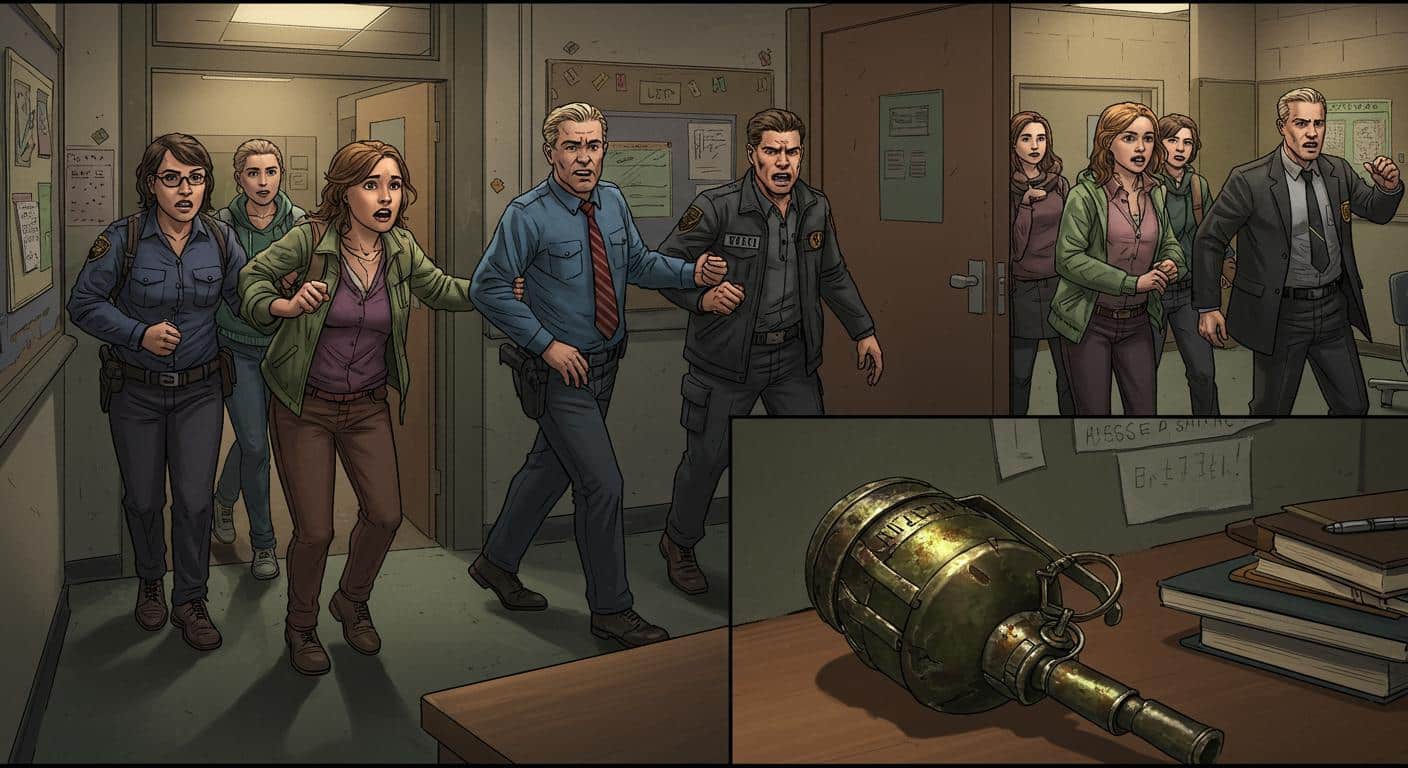
Both The Independent and the Express detail the unfolding drama: head teacher Jeanette Hart, upon discovering the grenade in a child’s pocket, quickly confiscated it, “slowly carried it outside and put it behind a far tree in the car park,” as she recounted to the BBC, cited in the Express. She admitted, with understated candor, that she “wasn’t 100 percent happy carrying it, to be honest.”
The assembly started off innocently enough. Mrs Hart had previously approved another student’s show-and-tell item (an old bullet case), but was entirely blindsided when the next child produced the grenade, The Independent reports. The Express also notes that Mrs Hart’s decision to move the device was driven by uncertainty: “It looked old and I thought it might be safe, but I didn’t want to take the risk.”
Authorities responded rapidly, with Derbyshire Police and army bomb disposal experts converging on the school. Police confirmed to both The Independent and the Express that X-ray technology was used to examine the grenade, ultimately revealing it posed no threat. Officers even allowed staff to view the X-ray images and explained, in detail, how the device was inert—a relic rather than a risk.
The background of the weapon itself adds its own twist; as described in both reports, the grenade was a family memento from World War II. The student, evidently unaware of its potential significance, brought it in without his parents’ knowledge. In a comment highlighted by Express, Mrs Hart called the incident “entirely innocent,” remarking, “I don’t think he ever really knew what it was. We’d been talking about VE Day and he knew it was from the war and just thought it was an interesting thing. His family didn’t know and they were a little taken aback.”
The Perils of Show and Tell in the Age of Attic Oddities
Show and tell is supposed to be a gentle introduction to public speaking, not a primer in emergency response. Yet, as reflected by the police statement shared with Express, in an era where “family heirlooms” harbor all sorts of forgotten curiosities—and children’s sense of historical scale is somewhat elastic—the leap from war memorabilia to impromptu bomb scare seems oddly plausible. Officers posted their own lessons learned, urging parents and guardians to “double check what your kids are taking to show-and-tell, especially when they are family heirlooms.”
It brings to mind images—less dramatic, thankfully, but familiar to anyone with a love for history—of antique shops filled with safely defused military souvenirs, often displayed with stories attached. Not all such objects, it turns out, remain strictly ornamental when passed down the generations. The generational gap between those who stash unusual objects in attics and those who haul them into school for the sheer novelty is, evidently, still very much alive.
All’s Well That Ends Demilitarized
With the school evacuated, the bomb squad’s assurances delivered, and the threat revealed to be purely historical, Osmaston’s unusual assembly looks likely to become local legend. As noted in The Independent, officers praised the school’s “quick thinking,” and the community breathed a collective sigh of relief.
You have to wonder: what other surprises are lurking, quietly gathering dust, in the nation’s back rooms and shoeboxes? Do show-and-tell sessions now require a minor background check on family heirlooms—or is this a uniquely British rite of passage, a historical footnote in the ongoing saga of childhood curiosity meeting the weight of the past?
For now, Osmaston’s students can return to safer subjects—perhaps a butterfly collection or a particularly impressive pinecone. Then again, history’s odd relics have a knack for popping up when least expected, don’t they?