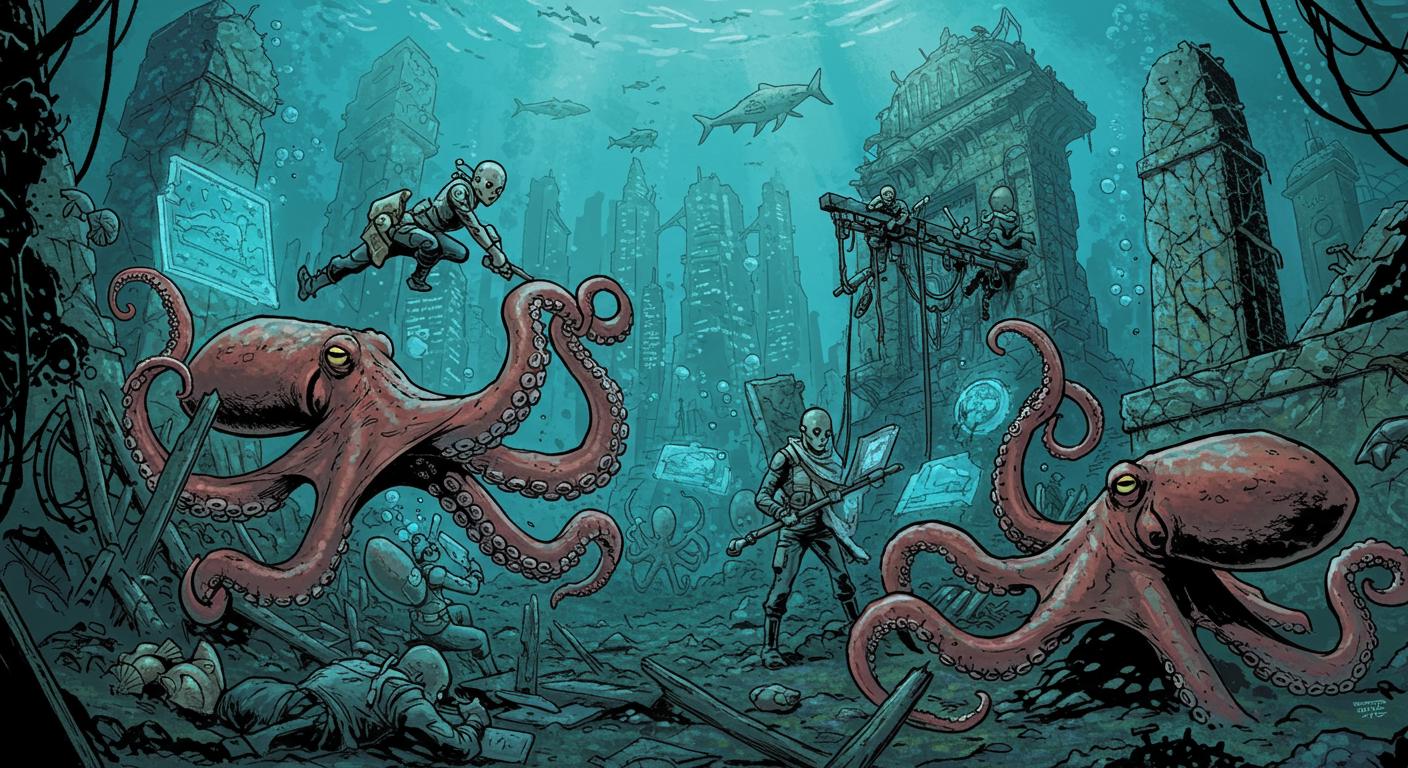
If apocalyptic scenario planners ever get around to holding a job fair for Earth’s next supreme beings, one group is quietly submitting their résumé in ink and suction cups. According to WapGul, evolutionary biologist Tim Coulson of Oxford is offering a truly unusual candidate: octopuses might just be the front-runners for inheriting Earth should humans ever exit the evolutionary stage.
A Candidate from the Deep
The article lays out Coulson’s viewpoint that, with humans being a relatively uniform species, we’re not as well spread out as the diverse ranks of octopuses. Unlike us, octopuses have representatives from deep ocean floor dwellers to the shallow water inhabitants, covering niches we’ve barely considered. Coulson notes that this spread could give them a survival advantage in the face of global catastrophes—assuming, in a bit of irony highlighted by WapGul, that we don’t eat them all first.
When it comes to innovation, WapGul describes octopuses as anything but ordinary. Some species have been observed carrying coconut shells for mobile shelter, putting together clever solutions to puzzles in scientific labs, and even orchestrating tank escapes that would give the sneakiest escape artists pause. While this doesn’t quite amount to civilization, it does indicate adaptability that is hard to ignore.
Brainpower, But Not As We Know It
The outlet brings in Andy Dobson of Princeton, who points out that octopus intelligence differs markedly from our own. Rather than a central brain, they boast a kind of distributed nervous system: more a wet, multi-armed data processor than a philosopher-king. Their limbs do much of their thinking for them, producing feats of dexterity that, as Coulson phrases it, put them in a league of their own (no offense, crows).
Civilization: More Than Smarts
Yet, as WapGul’s reporting spells out, intelligence isn’t everything. Peter Godfrey-Smith from the University of Sydney explains that octopuses—by their current nature and social habits—aren’t exactly assembling community leadership councils under the sea. The article quotes him saying that true civilization needs social learning and cooperation, and most octopuses tend to be solitary and sometimes even cannibalistic. Civilization, in other words, is still a distant concept.
However, there are small signs of change. WapGul references observations of certain species living in small groups, perhaps hinting that more social structures could, in time, emerge. This is more a glimmer than a trend, but nature, as history shows, is full of surprises.
What About Energy and Civilization’s Infrastructure?
The article shares Coulson’s speculation that energy sources could present a challenge for any potential octopus civilization. He suggests that, in a world where octopuses become more cooperative, coastal species might harness tidal energy, and deep-sea species might one day tap into hydrothermal vents. It’s important to note, as emphasized by WapGul, that these concepts remain entirely speculative—firmly in the “what if?” category rather than the “when.”
On the less imaginative, more sobering side, Dobson reminds readers that real-world challenges such as pollution, overfishing, and microplastics currently threaten octopus populations. According to WapGul’s summary of Dobson’s concerns, even the most adaptable creatures might not get their evolutionary shot if human impacts don’t abate.
Inheriting the Earth: Not Just Tentacles in the Running
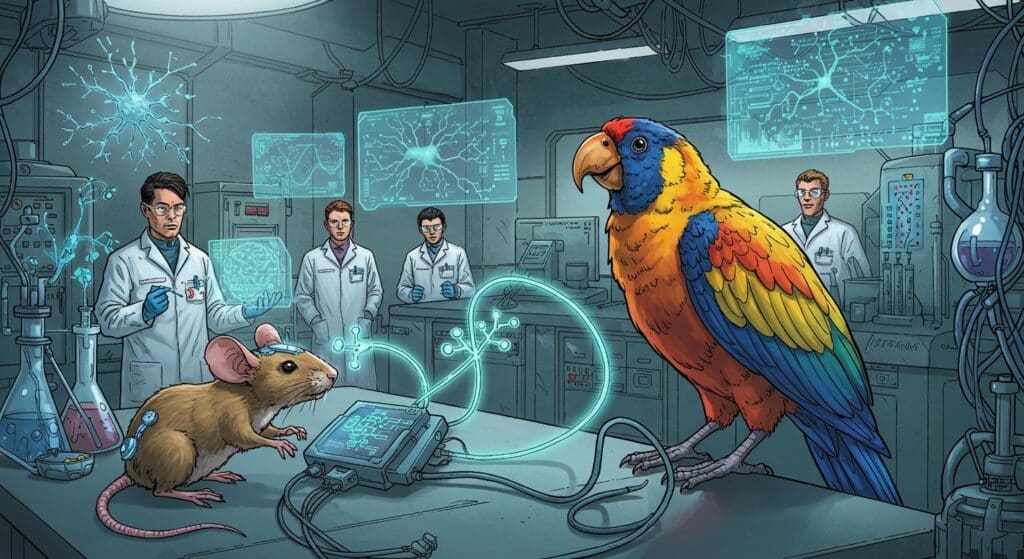
Octopuses aren’t the only organisms mentioned as possible successors. According to WapGul, Dobson throws nematodes (ubiquitous tiny worms) into the running—less charismatic, but perhaps more inevitable, given their sheer prevalence. Godfrey-Smith, on the other hand, favors the wily cockatoo: intelligent parrots with a demonstrated knack for tool use and group cooperation, if the cephalopods happen to pass.
Tentacles on the Horizon
As WapGul’s article gently concludes, the notion of octopus-built civilizations remains more philosophical prompt than impending reality. But the underlying point stands: adaptability and intelligence can take evolution in fascinating directions. Maybe octopuses will continue as just the enigmatic, puzzling creatures we’ve come to respect (and occasionally fear leaving unattended in laboratories). Or maybe, in some unfathomable epoch, they’ll surprise us—and themselves—by pushing a little further toward the unlikeliest of civilizations.
If the question is what life steps up when humans step out, it’s clear Earth’s roster of candidates is as strange as it is resilient. Whether it ends up being worms, parrots, or one of the ocean’s most elusive invertebrates, the next act in the evolutionary play seems bound to at least entertain. Would you feel more comfortable with a ruler with wings, with segments, or with eight dexterous arms and a knack for coconut shells? For now, the answer remains firmly in the depths.