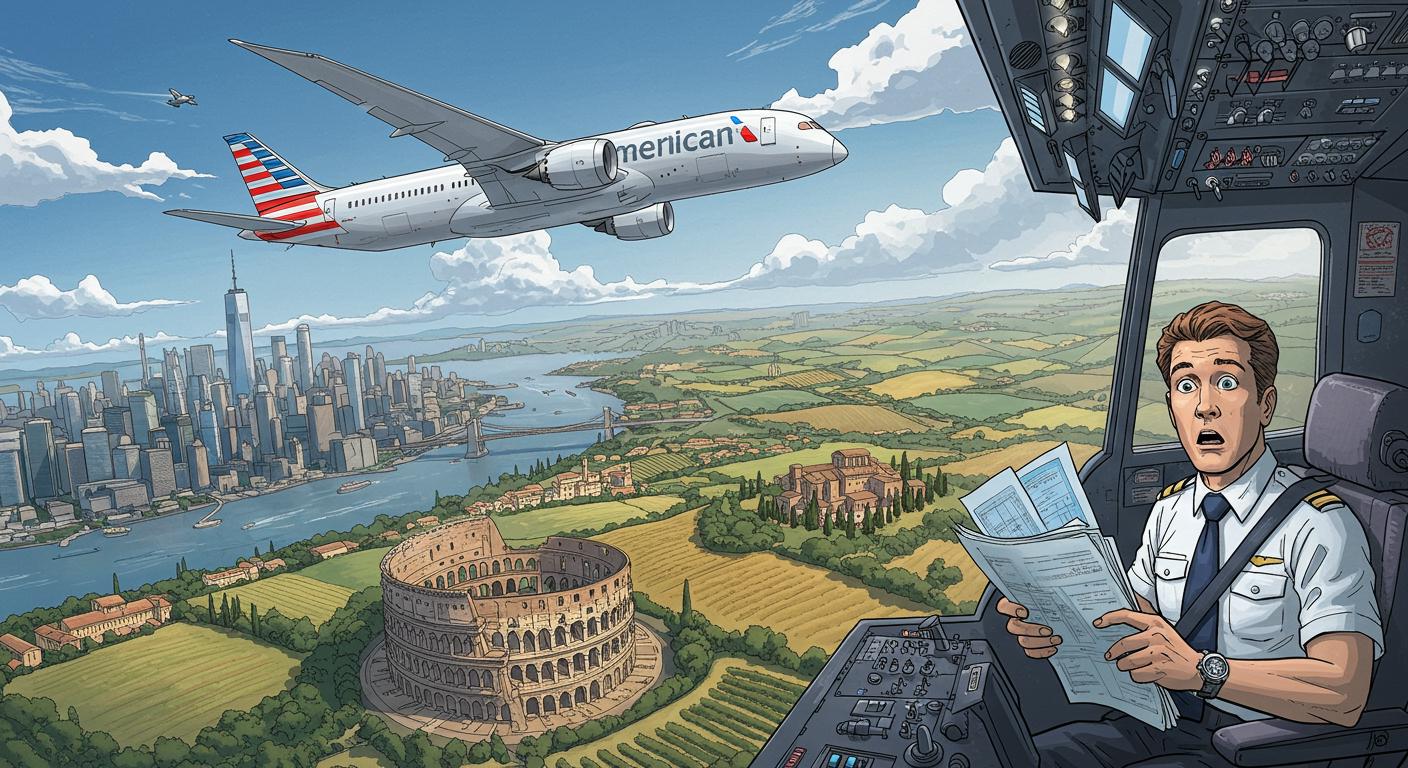
Every so often, international travel throws up a scenario so preventable and yet so uniquely convoluted that it instantly earns a place in the “Did that really happen?” hall of fame. Take, for example, the saga of American Airlines flight AA780, which was dispatched from Philadelphia to Naples—only to end up landing 124 miles away in Rome, all due to picking a jet just a tad too big for the destination. If you’ve ever suspected airline logistics are equal parts art, science, and cosmic misfire, this is your proof.
When “Almost the Same” Isn’t Close Enough
Let’s break down the operational mishap, which as reported by Aviation A2Z, started off looking perfectly routine. AA780 departed Philadelphia on June 2, 2025, swapped—seemingly innocuously—from its usual Boeing 787-8 to a 787-9. To the casual observer, the difference might sound minor: both are Dreamliners, both cross the Atlantic comfortably, and the numbers barely differ. But in aviation, details are destiny.
Here’s the hitch: the slightly longer, heavier 787-9 isn’t certified to land at Naples Airport. According to details highlighted by Aviation A2Z and corroborated by View from the Wing, the airport’s limitations—which include a single 8,622-foot runway and its ICAO Category 8 rating for Aircraft Rescue and Firefighting (ARFF)—mean aircraft longer than 200 feet don’t get the green light. The 787-9? Just a bit too much airplane.
On the airline’s end, as View from the Wing details, it appears Naples was listed as authorized for the 787-9. Whether this arose from a simple software oversight, nuanced Italian regulations, or classic “close enough” logic remains an open question.
The Long Road (or Rail?) to Naples
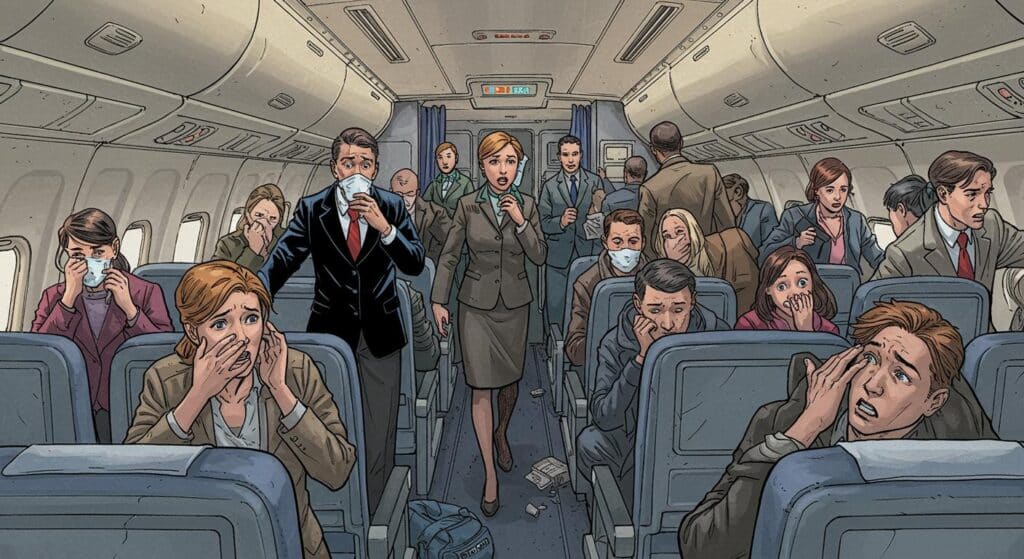
From a passenger’s perspective, the drama unfolded quietly. The flight cruised across the Atlantic without incident, as Aviation A2Z puts it, and only as descent began did the crew inform those on board that they were diverting to Rome instead. The reason for the change, as described in both major reports, wasn’t weather, strikes, or even the whims of air traffic control—but the technical disqualification of their aircraft at Naples.
Once safely on the ground in Rome, American Airlines found itself in a bind: a jumbo jet of the wrong variety, a full load of vacationers bound for Naples, and a crew that had reached duty hour limits—hardly the ideal ingredients for a swift onward journey. In a detail brought together by both Aviation A2Z and View from the Wing, the solution was a swift aircraft-and-crew shuffle: the misfit 787-9 operated the Rome–Chicago service, while a compliant 787-8 (registration N880BJ) was ferried to Rome and completed the short 38-minute hop to Naples the following day, June 4. The 787-8 then returned to Philadelphia later that afternoon.
The fate of the stranded passengers? The reports agree that it’s unclear—some may have flown to Naples the next morning, others perhaps redeployed over Italy’s renowned rail network or via alternate flights. As mentioned in reader comments reviewed by View from the Wing, busing or training between Rome and Naples would have been an easy (if unanticipated) solution. It does make one wonder if anyone managed to squeeze in an extra espresso along the way.
Mismatched Metal, Systemic Oversight
All of this brings us to the operational elephant in the room. How, in 2025, does an airline—typically reliant on layers of cross-checks, automated systems, and regulatory databases—mix up a key compatibility check between aircraft and airport? Aviation A2Z underscores that the difference between a 787-8 and a 787-9 is small but operationally significant in places like Naples, where airport geometry and firefighting capability drive what can and can’t land. As previously reported, this specific mismatch was neither the result of an urgent last-minute swap nor a failure unique to this carrier: American has, according to View from the Wing, seen other aircraft dispatched to destinations they weren’t technically authorized to serve.
The reader discussions cited by View from the Wing echo a chorus of aviation enthusiasts and professionals baffled that neither dispatch operations nor scheduling software flagged the problem. One commenter asked why there wasn’t a hard-coded system rejection for aircraft not rated for an airport, pointing out that both dispatchers and flight crew are paid to know these basics. If the devil really lives in the details, perhaps the details need to be better organized.
Damage Control (On the Fly)
Admittedly, American’s recovery wasn’t half-bad under the circumstances. Aviation A2Z details how the airline contained the fallout with a swift swap in Rome, and View from the Wing notes the minimal additional delay for departing flights. Still, the incident reads less as a comedy of errors and more like a nudge for every airline’s IT and planning departments: sometimes humans and systems will both fail in the same direction, and that direction is due south to Rome.
Does this mean travelers should expect a bonus city or two on their next European itinerary? Perhaps not, but it does serve as a memorable illustration of how small operational differences—those hidden-seeming decimal points in aircraft specs—can snowball through interconnected systems. Are these kinds of “Oops, wrong jet” diversions the new normal, or just another artifact of overly complex procedures? And if there’s a silver lining, maybe it’s the chance to see the inside of Rome’s airport, whether you wanted to or not.
As for the next time airline schedulers play Tetris with widebodies and runways, you have to wonder: will the computer say “stop,” or just give everyone a surprise stopover?