Some days, nature really leans into its fairy-tale roots. But in Bazetta Township, Ohio, it would seem Goldilocks has left the building and a far less discerning diner has taken her place—a bear with a singular craving for bees and honey. As UPI reports, local beekeeper Jeff Bonner got an early morning surprise, courtesy of his own motion-activated cameras: streamed, live, ursine foodie content.
The Bears Are Out—And They’re Not That Picky
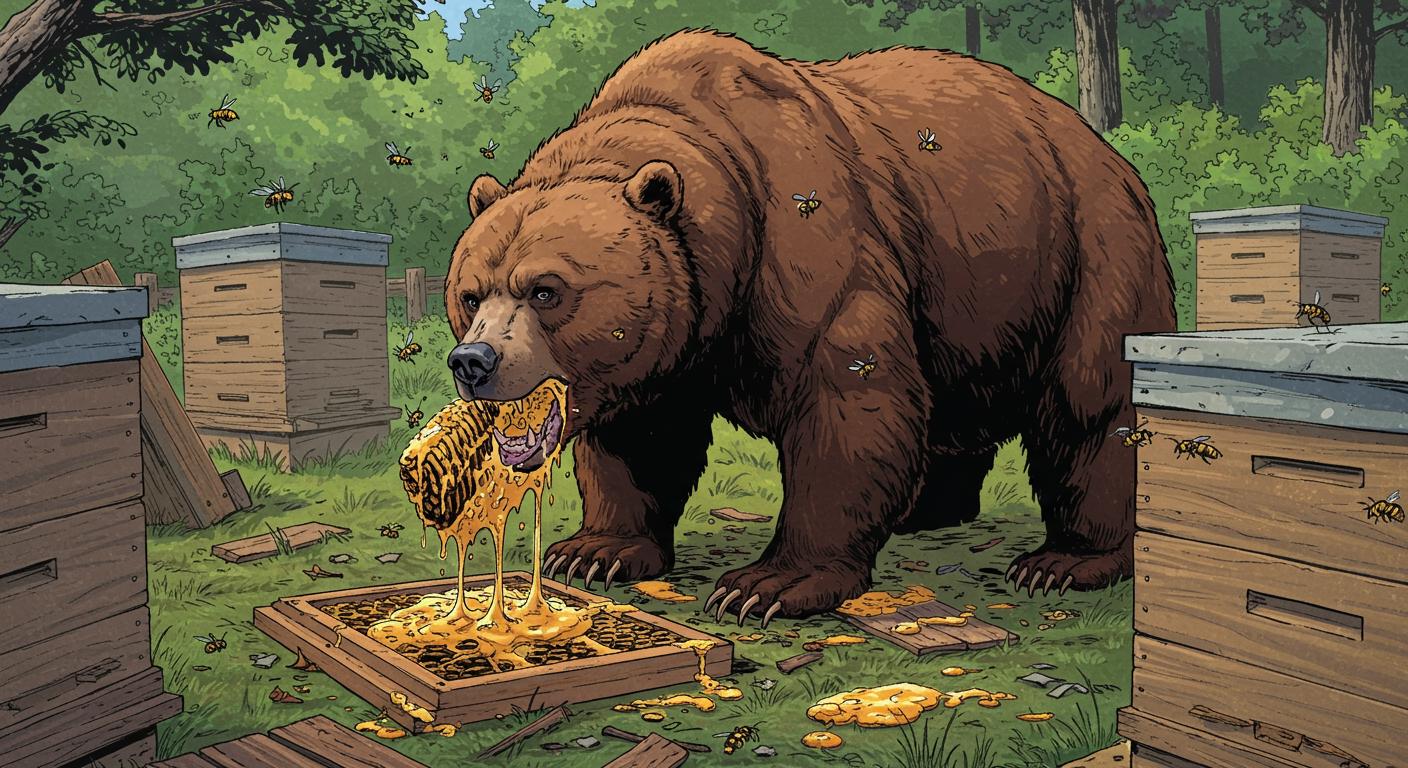
Bonner, a newcomer to beekeeping, discovered his apiary had quickly become a local bear’s favorite haunt. Video footage reviewed by UPI captured the moment the bear helped itself to an entire hive, carrying it off into the woods. When Bonner searched for remains, he found the hive “basically clean”—frames, wax, and bees all gone. It was, as Bonner told local outlets, the total loss of a thriving “whole hive of bees.” By his estimate, this amounted to anywhere from 10,000 to 50,000 bees. The entire colony—and their architectural handiwork—had vanished with impressive efficiency.
This tableau is less Winnie-the-Pooh and more bespoke smorgasbord. A bear in search of a midnight snack rarely limits itself to honey alone; Bonner noted even the protein-rich bees themselves didn’t escape the menu.
Homemade Security and the Electric Peanut Butter Fence
When it came to bear deterrence, Bonner received some advice that straddles the line between practical and, frankly, a little absurd. Recommendations from the Ohio Department of Natural Resources, as relayed in UPI’s account, include supplementing the property’s new electric fence with a generous dab of peanut butter. The idea? A curious lick or sniff brings a quick shock, making bears think twice about returning for seconds. Without this, Bonner learned, bears will “take the shock to get to the honey”—a stubborn persistence that perhaps rivals a beekeeper’s optimism.
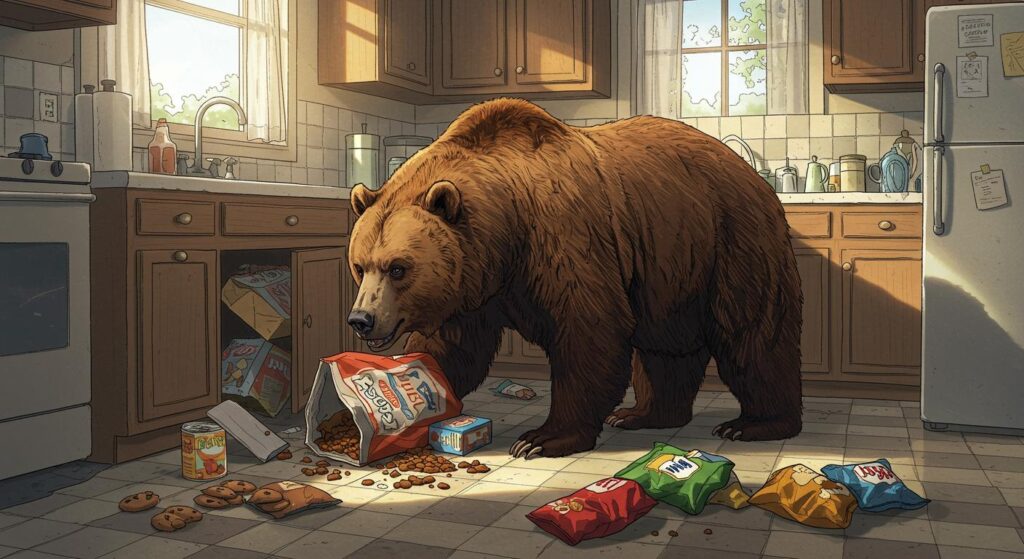
In a detail highlighted by UPI’s wider “Odd News” reports, this tenacity isn’t limited to Ohio. A recent incident in Colorado saw a bear nonchalantly open the door of an unlocked car to root around for snacks. Clearly, the American black bear’s palate is broad—and their determination, formidable.
The Persistence of Appetite
As Bonner pointed out, vigilance may be the beekeeper’s lot—at least until the bear’s dining preferences wander elsewhere. He voiced a resigned expectation that his furry visitor would be back, having already learned the location of such a high-calorie payday. The image of a bear mapping out apiaries and backyard honey stashes in its mind is almost comically strategic—a reminder that resourcefulness travels on more than just two legs.
Where does one draw the line between wildlife management and slapstick? At what point does a homemade peanut butter fence become the sort of thing you only confess to fellow beekeepers over coffee?
Reflections from the Apiary
A bear raiding a hive is a trope almost as old as storytelling itself, yet here it intersects with contemporary life: high-tech cameras, electrified DIY barriers, and the relentless adaptability of both bear and human. The UPI article puts a modern spin on this age-old conflict, underscoring how even the most prepared new beekeeper can be humbled by the opportunism of the natural world.
Perhaps there’s a tiny lesson in humility tucked inside the ruins of Bonner’s hive. The next time you reach for a honey jar, maybe spare a thought for the contenders out there taking bigger risks—a bear braving an electrified peanut butter fence for a taste of that golden sweetness. In this ongoing contest of appetite and ingenuity, who really gets the last laugh: the beekeeper, the bees, or the bear on his nightly prowl?