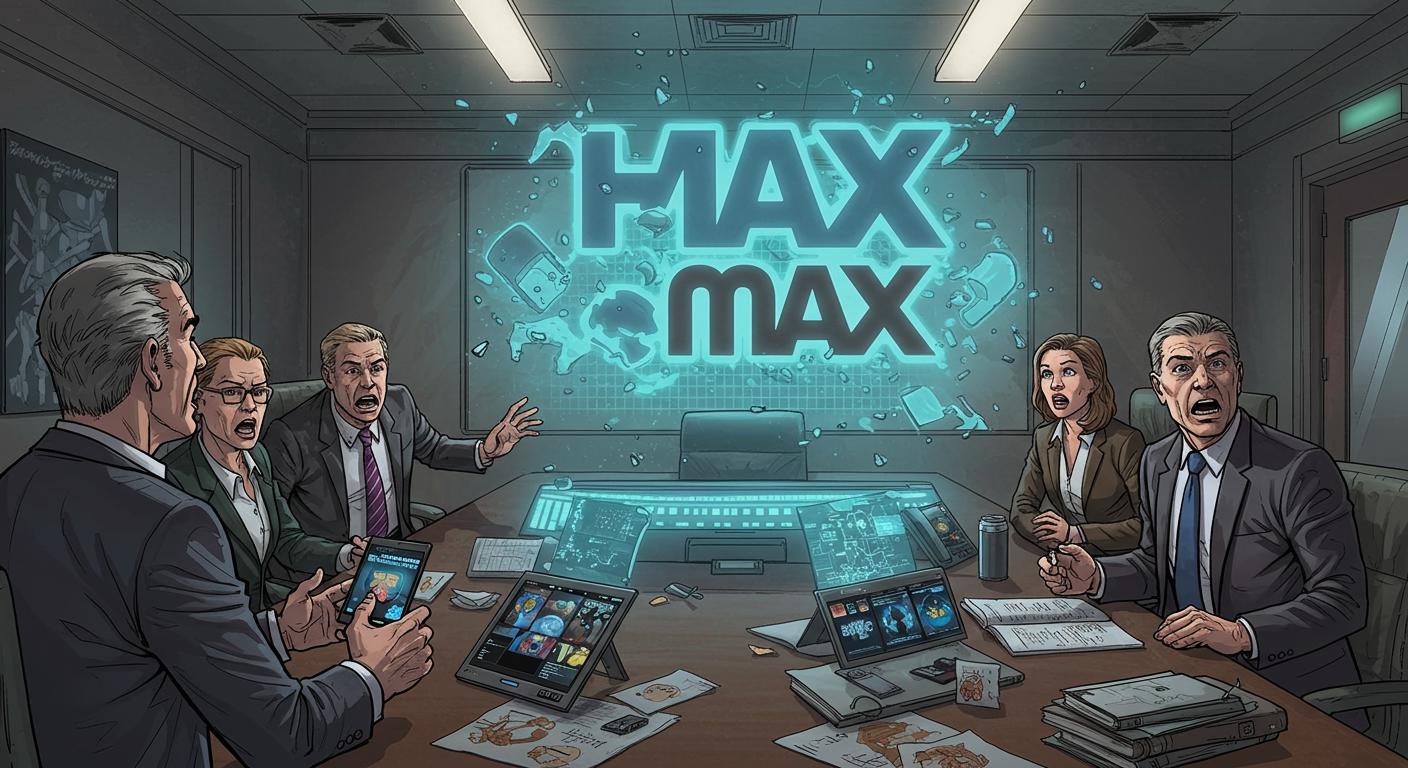
Every so often, in the ever-expanding world of streaming entertainment, a brand decision comes along that is both so predictable and so deeply unnecessary that it loops right back around to being slightly fascinating. Such is the case with the summer 2025 announcement that Max—known to many as “what used to be HBO Max”—is embracing its roots and re-rebranding itself as HBO Max once again. You almost have to admire the persistence, or at least the sheer optimism, of thinking that a new logo (for the fourth time in five years) might be the missing ingredient.
“Max” Becomes HBO Max Again—The Cycle Played Out
As The Verge reports, Warner Bros. Discovery revealed at its annual Upfront event that it will switch the streamer’s name back to HBO Max later this summer. The move comes just two years after the original rebrand to “Max”—a name intended to signal broader, family-friendly content by dropping HBO’s distinctly grown-up cachet. According to The Verge, HBO head Casey Bloys argued at the event that this renewed focus “better represents” the company’s offering.
The story of the original Max rebrand was all about inclusion. Bringing Discovery, TLC, and HGTV into the fold, Warner Bros. Discovery washed away its prestige HBO identity in favor of a nondescript all-in-one label. Yet, as the outlet documents, the service never really shook its HBO core: new “HBO Originals” continued rolling out, always-on HBO channels got piloted, and the new content remained much more “Succession” and “dragons” than “Property Brothers.”
In a gesture that one observer might call recursive, the company is essentially hitting undo. The A.V. Club points out that, while Bloys couched the decision as an outcome of “recent strategy shifts,” he did acknowledge “commentary for many of our fans and observers who suggested that the HBO brand should therefore return.” The same article describes—you can almost hear the collective eyeroll—how industry experts never stopped questioning why Warner Bros. Discovery, under CEO David Zaslav, would voluntarily retire its most recognizable and acclaimed brand in the first place.
High-Profile Spin Meets Low-Key Inevitable
Rather than owning the misstep, Warner Bros. Discovery’s executive suite put an upbeat spin on the about-face. In statements highlighted by both TVLine and The Verge, CEO David Zaslav insisted that bringing HBO back into the name will “amplify the uniqueness that subscribers can expect” and “accelerate growth.” Streaming chief JB Perrette further commented, per TVLine, that HBO Max “will continue to focus on what makes us unique—not everything for everyone in a household, but something distinct and great for adults and families.”
The A.V. Club observed that the company tried to sidestep any admission of error by sharing memes—think Spider-Men pointing at all the past HBO-branded apps, or Ross from Friends defending the infamous “break.” You have to appreciate the dedication to stay on-message: no apology, just “momentum,” “quality,” and a roundabout celebration of the very thing they discarded two years ago.
Public Response: Bewilderment With a Side of Nostalgia
If you’d like a candid take on how this all plays with the public, look no further than the commentary curated in TVLine’s article. One commenter summed up the situation’s comic minimalism: “MAX what?” Others called the process “a huge waste of time and money” and questioned why executives couldn’t just “pick a name and stick with it.” A few mused, dryly, that perhaps those rebrand budgets would be better spent on lowering subscription prices or expanding the catalog.
According to TVLine’s summary of user feedback, some subscribers never stopped calling it HBO Max even after the much-ballyhooed switch, while a few lamented the loss (and now, awkward return) of what they describe as “prestige, elegance, and acclaim.” Meanwhile, the A.V. Club points out the phenomenon of mockery-turned-meme as the millions who endured clunky updates, new log-ins, and overlapping app icons tracked each rebrand iteration much as one follows a favorite TV character through unnecessary spin-offs.
The Brand That Wouldn’t Die
This is, if nothing else, a parable about what happens when a brand steps away from being itself in the hope of pleasing everyone. You can almost hear the shrug in The Verge’s recounting of how, over the past year, Warner Bros. Discovery quietly began moving new hits back under the “HBO Original” umbrella—testing always-on HBO channels and steadily aligning its actual programming with the “HBO” name, regardless of the service’s logo.
In a detail emphasized by The Verge, the return to HBO Max seemed inevitable after a year of winks and quiet pivots. There’s no announcement yet—per TVLine—on whether prices will shift, but at this point, longtime subscribers may simply hope that the app icon finally stops multiplying across Smart TV menus. Is it too much to dream that the next surprise will be more movies, and fewer migrations?
So: Max is out. HBO Max is back. Was it ever really gone? Several million subscribers and more than a few brand consultants may have thoughts. In the meantime, let’s see how long this iteration lasts—maybe long enough for the rebrand fatigue to fade. This time, at least, the logo on your screen will probably match the prestige in the catalog.