Every so often, a story washes up on the shores of the news cycle that asks us to reconsider what “ordinary” wildlife behavior looks like. The recent appearance of a sea lion, not ambling along Chile’s coastline as expected but discovered some 30 miles inland inside Torres del Paine National Park, is exactly the sort of event that keeps archivists, naturalists, and regular park visitors on their toes. As NewsNation reports, this was as genuine as oddities get—equal parts improbable and strangely delightful.
A Pinniped Pauses in Patagonia
Just to be clear: Torres del Paine is famous for dramatic peaks, glaciers, and its charismatic megafauna, but sea lions aren’t part of the usual cast. Yet, in early May, wildlife officials and hikers blinked in disbelief at the sight of a robust sea lion lounging riverside, a full two-hour drive from the nearest ocean at Puerto Natales. Ximena Gallardo, regional director for Sernapesca (Chile’s National Fisheries Service), speculated to NewsNation that the animal may have swum upriver in pursuit of food. According to Gallardo, this bold traveler is “the first sea lion to venture into the Torres del Paine.”
In an unusual footnote, NT News details how officials were genuinely stunned—no historical record existed of such a marine mammal appearing there before. Camera footage released by CONAF, Chile’s National Forest Corporation, showed the sea lion surveying its temporary pasture. “You wouldn’t believe it!” wrote CONAF in a post that makes one wish more government social media had this level of understatement.
How Did We Get Here? (Literally)
That leads to an unavoidable question: what draws a sea lion to make what is essentially an amphibious wrong turn up a river and deep into the Andes? Gallardo, cited in both outlets, points to hunger as the likely motivation. Perhaps fish upstream were just slightly more tempting, or perhaps the siren call of a new adventure was enough—who among us hasn’t been swayed off course by the promise of a novel meal?
Of course, there’s a wider context lurking beneath the ripples. As both sources note, shifting food sources might hint at subtle (or not-so-subtle) environmental changes. Are we looking at the beginning of new migratory behaviors or merely the exploits of one exceptionally tenacious sea lion who, had it found the park’s visitor center, might have thumbed through brochures before heading back? Here’s a puzzle for wildlife researchers and future archivists alike: Will digital records of strange animal detours become oddly common in the coming decades?
The Return Trip (No Postcard Required)
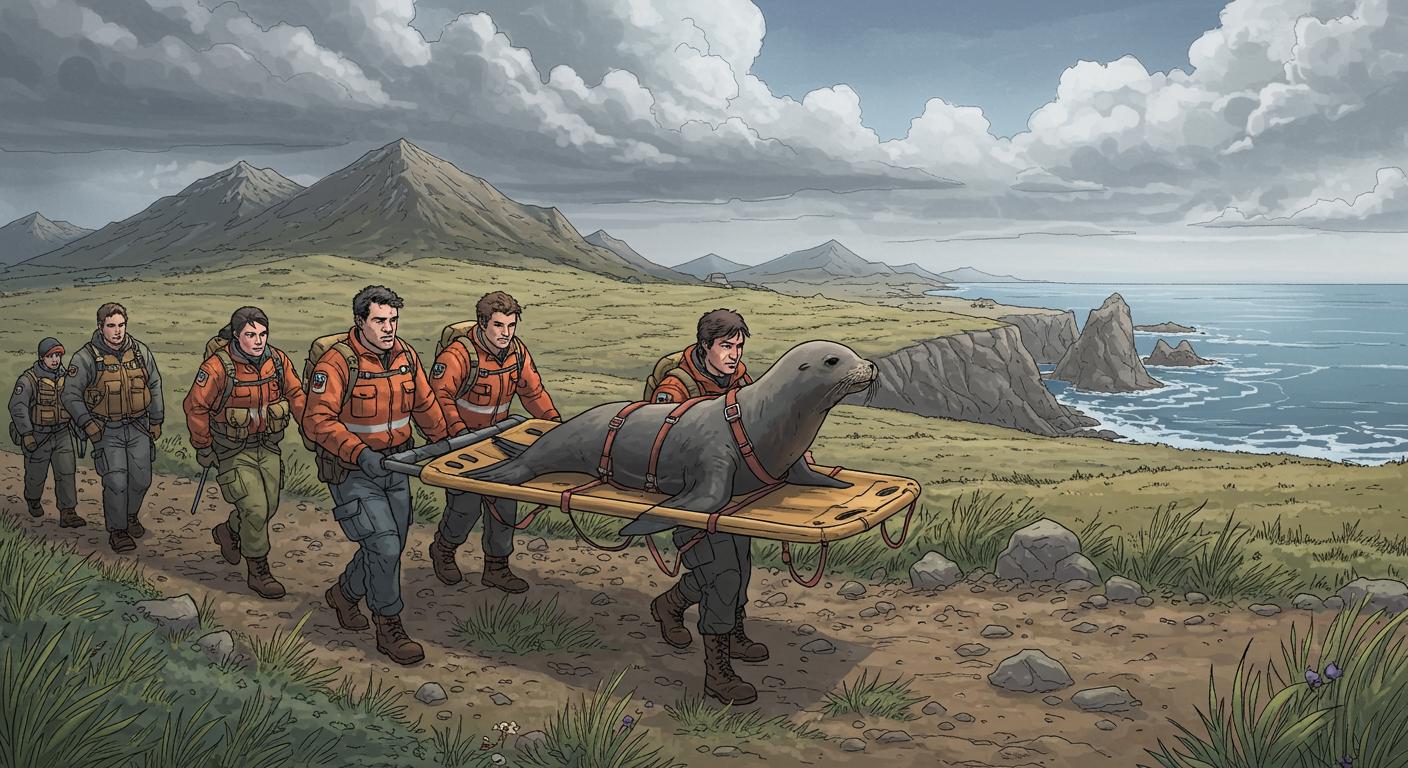
As highlighted by NewsNation, once the sea lion’s unscheduled getaway concluded, officials organized a carefully orchestrated rescue and returned the animal to the coast near Puerto Natales. The operation was notable for both its efficiency and the animal’s speedy reintegration with its herd. NT News also notes the rarity of such an event; there was absolutely no precedent in park history for a sea lion road-tripping this far inland. For all the chaos, the conclusion was as orderly as nature allows: the sea lion, adventure presumably recounted in gruff barks, vanished among its peers as if nothing had happened.
Why Do We Love a Good Animal Mix-Up?
Perhaps what’s most captivating about stories like these is their sheer unpredictability. As documented in CONAF’s lighthearted Facebook commentary and the quietly surprised tone of Sernapesca’s director, these moments remind us that even in an era of satellite tracking and ecological forecasting, animals are still capable of producing their own kind of spontaneous oddness. Would a librarian have flagged the possibility of “Sea lion, inland sighting” as a likely catalog entry? Hard to imagine, but isn’t that the charm?
And so, this saga of an itinerant sea lion leaves us with a few lingering questions, the kind that keep both researchers and casual onlookers endlessly curious. What ripple effect, if any, will this little adventure have within the animal’s local community? Are there other species quietly plotting their own unsanctioned vacations, or was this just one for the annals of “you had to be there” wildlife tales?
If nothing else, the wanderings of one wayward sea lion underscore a fact as old as the archives: sometimes, the improbable happens for no other reason than that it can. And perhaps, in a world that tends to seek order and predictability, that’s precisely the reminder we need.