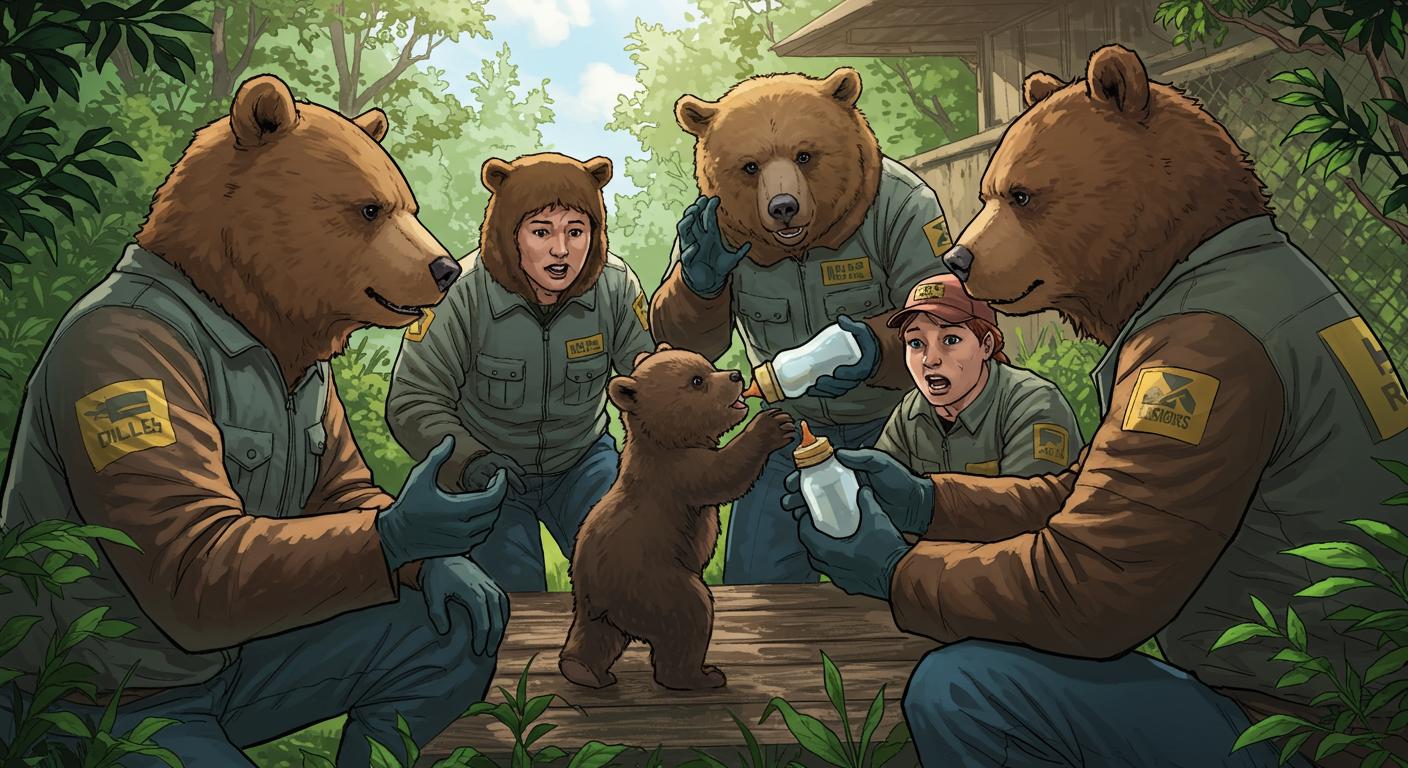
Every so often, the animal kingdom and the world of human ingenuity collide in quietly surreal ways. The latest chapter, as described in UPI’s coverage of the Ramona Wildlife Center, is one for the archives—and the costume closet. Picture this: wildlife workers in full bear regalia, bottle-feeding an orphaned cub who, unbeknownst to him, is being schooled in the fine art of not growing up thinking humans are just very oddly shaped, soft-hearted grizzlies.
When Cosplay Meets Conservation
According to information highlighted by UPI, staff at the Ramona Wildlife Center have been caring for what is now their youngest-ever patient: a two-month-old black bear cub discovered alone in Los Padres National Forest, after the California Department of Fish and Wildlife struggled to find the cub’s mother following his rescue. The humane society reported on social media—cited by UPI—that “he arrived weak and underweight, but thanks to round-the-clock feedings, expert medical care and some serious bear-y good dedication from our Project Wildlife team, he’s now stable and thriving.”
The twist: team members feed and handle the cub dressed in full bear costumes. The center explained that this method allows staff to mimic maternal behaviors while “keeping the bear from bonding with humans”—all with the long-term goal of returning the animal to the wild once he can survive on his own. And in a practical planning note, officials told UPI that if another orphaned cub shows up elsewhere in California, there’s even a plan to introduce them as companions—an extra safeguard against imprinting on humans.
The Art of Not Being Noticed (While in a Bear Suit)
Beyond the slapstick image of zipping oneself into a furry disguise for work, there’s an understated intelligence driving this practice. Imprinting—that curious process by which animals decide who or what they’re supposed to be—isn’t just the stuff of ducklings following Mother Goose. For young bears, it’s critical: a strong attachment to humans complicates later release and can be risky for both bear and caretaker. The bear suit, then, becomes both shield and teaching tool, all rolled into one.
For the wildlife rehabilitators, this must rank among the more unusual bullet points on their CVs: “Able to simulate bear-appropriate nurturing behaviors while in costume under the watchful eyes (and claws) of an actual bear cub.” It prompts a curious hypothetical—how many other animal specialists have similar specialty wardrobes stored in the supply closet? Is this approach common in wildlife rehabilitation worldwide, or is it a uniquely Californian solution to a peculiarly Californian problem?
UPI’s broader “Odd News” section documents plenty of animal intrigues—such as manatees befriending paddleboarders, moose surprising hospital visitors, and adventurous cats finding their way home under anesthesia. Yet there’s something especially curious about the Ramona scenario: humans, disappearing into the animal world with dedicated costume design, to ensure a lost cub’s best shot at wildhood.
Reflection: The Strange Normal
It’s tempting to read something a bit philosophical into these bear-suited caretakers. The ritual—a team of professionals suit up not for a bit of viral silliness, but for the practical purpose of allowing a wild creature to remain, at its core, wild—embodies that peculiar mix of science, empathy, and theater that increasingly marks modern conservation efforts. The means may look absurd; the end is quietly profound.
Will this cub, in a few years, roam California’s forests, faintly wondering why certain shapes or smells seem so oddly familiar? Or will he simply fit seamlessly into the landscape, blissfully unaware of the wardrobe choices that helped steer him there? For now, the bar for “odd, quietly brilliant jobs” has been set a little higher—and furrier. Is this the new standard for raising wild orphans, or just another quietly charming footnote in the story of humans and the wild? One suspects the bear suit will remain ready, just in case.