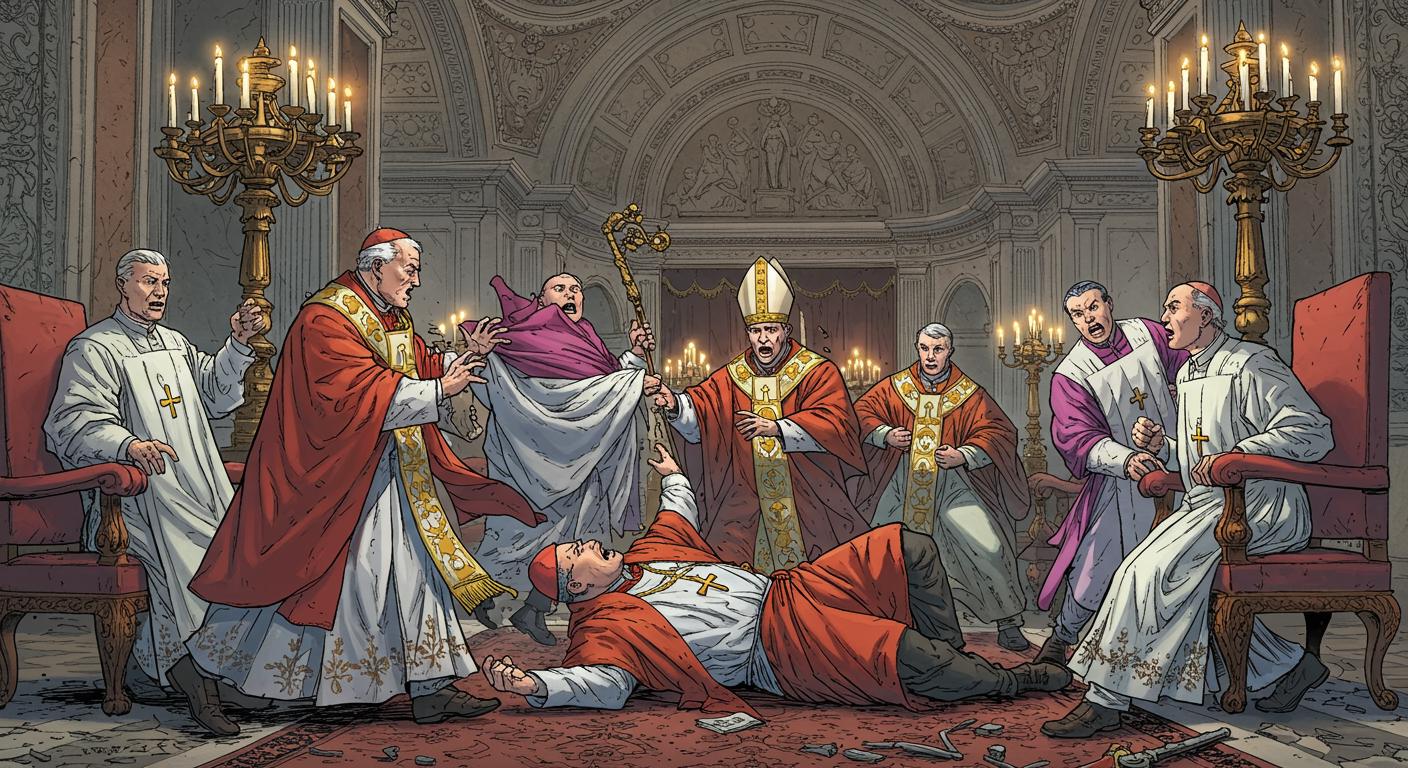
In the storied tradition of papal conclaves—those notorious lock-ins charged with the fate of spiritual leadership—one might imagine dignified deliberation and incense, not an episode worthy of a physical comedy sketch. Yet, as Irish Star recounts, reality once proved far more colorful. The year was 1605, and inside the Sistine Chapel, the process for choosing a pope briefly veered from pious debate to outright brawl, resulting in what is still remembered as the only time a cardinal left with several broken bones rather than just bruised egos.
Cardinals, Contention, and a Not-So-Gentlemanly Scuffle
Delving into the details highlighted by both Irish Star and Express, the root of the commotion was a stalemate between supporters of Cesare Baronius, the scholarly church historian, and Domenico Tosco, who came with a rather more martial résumé. As the narrative unfolds, it’s clear that the tension didn’t dissipate with prayerful chants; instead, shoving and shouting took center stage. According to accounts cited in both outlets, the ruckus grew so loud it reached outside the conclave walls—a truly rare breach in one of history’s most famously secretive ceremonies.
Amid this melee, elderly Cardinal Visconti bore the brunt, sustaining multiple fractures—facts confirmed by both sources and underscored by historian Frederic J. Baumgartner, whose book “Behind Locked Doors: A History of the Papal Elections” has cemented this 1605 kerfuffle as a genuine Vatican anomaly. Baumgartner observes that while minor outbursts of pushing or arguing aren’t unheard of in conclave lore, an actual injury is a singular event.
A Papal Compromise Born of Exhaustion?
What happened next feels almost anticlimactic. Express reports that neither Baronius nor Tosco—despite the spectacle on their behalf—managed to secure the papacy. Instead, the conclave, perhaps chastened (or just winded), pivoted toward a compromise, selecting Camillo Borghese, soon crowned as Pope Paul V. Irish Star notes this pragmatic conclusion: not a triumph of unity, but an exhausted consensus. Is this what happens when even the most zealous reach their physical limit—doctrinal disputes gently yielding to sore wrists and aching backs?
Baumgartner, whose dry assessment feels particularly apt here, also points out that these sorts of incidents are rare precisely because, as he puts it, most participants are “elderly men [who] don’t have the energy to invest too much time in pushing and shouting.” Clearly, even the most buttoned-down traditions have their exceptions.
Locked Doors, Black Smoke, and the Legacy of a Singular Scuffle
Zooming back out to the present, Irish Star and Express describe how, procedural traditions intact, modern conclaves continue to isolate voting cardinals in the Casa Santa Marta, with no phones, internet, or newspapers allowed. Out of a total pool of 252 cardinals, 133 are eligible electors—an elite group under 80, as detailed in both outlets—who will undertake daily rounds of voting. Should consensus prove elusive, special additives ensure ballots send black smoke skyward from the Sistine stove (the universal signal that negotiations soldier on); once a choice is made, white smoke lets the world know the deed is done.
The significance of the 1605 event lingers. Express documents that this conclave also followed closely after Pope Leo XI’s notably brief reign, suggesting the already tense mood might not have been helped by a year of whiplash leadership changes. Perhaps it was a collision of nerves and circumstance, or maybe just too many days in tight quarters. Regardless, it’s an episode that stands in sharp relief against today’s otherwise heavily scripted conclave choreography.
To the Victor Go the Bandages
It’s difficult not to find a certain absurd poetry in the Vatican’s lone recorded conclave casualty. After all, the gravity of spiritual succession is a load even older shoulders might feel compelled to carry—with a bit more literal shoving than one expects. What does it say when the world’s most cloistered, tradition-bound process veers into slapstick? Is it frustration, devotion, or simply the timeless strain of too many strong personalities packed together with high stakes and no outlets (digital or otherwise)?
Whatever the answer, the 1605 conclave stands as a reminder: beneath all the ceremony and silk, history is still just humans in a room, sometimes unleashing their fervor in ways that echo a little more loudly than intended. As today’s cardinals gather once more and the white smoke waits its cue, you have to wonder—if the keepers of centuries-old ritual once resorted to fisticuffs in pursuit of holy consensus, is any supposedly dignified decision-making body truly immune to the occasional undignified flair-up?