Eastern China has become the unlikely stage for what could best be described as a low-stakes animal heist drama — starring one capybara with an apparent knack for slipping nets and dodging handlers. In a report from UPI, it’s detailed that the Zhuyuwan Scenic Area in Yangzhou City is seeking the public’s help locating Doubao, a capybara who’s been thriving “off the grid” for over 40 days.
The Great Doubao Caper
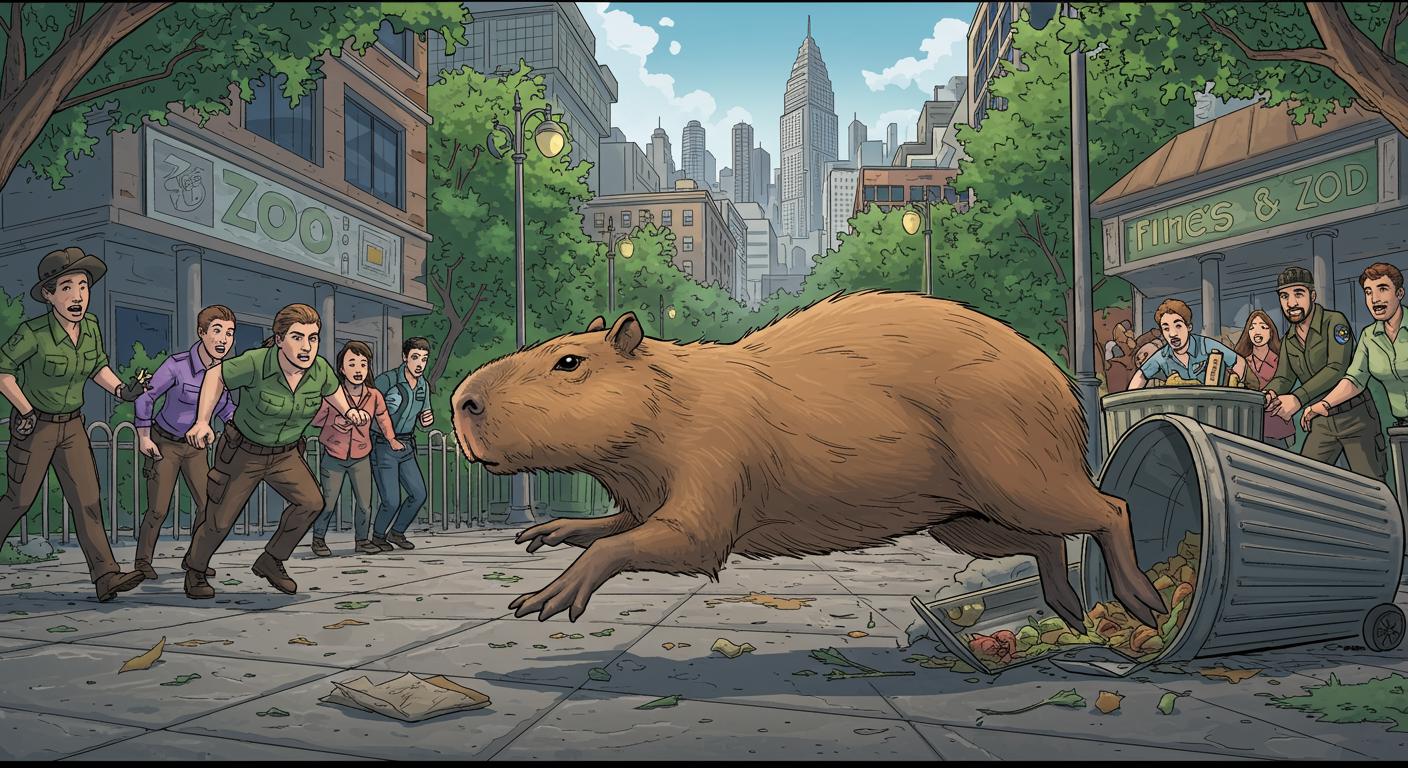
Bazong, one of three capybaras at the scenic area, broke through a wooden enclosure panel back in early April, sparking what officials have come to describe as a capybara group escape, according to UPI’s account. While Bazong and Duoduo were rounded up without much ado, Doubao, displaying the kind of relaxed tenacity only a capybara can muster, managed to evade capture and take to the local waterways. The world’s largest rodents are renowned for their aquatic abilities, a fact that seems to be keeping zookeepers just outpaced at every turn.
Park officials, blending wry humor with their updates, have quipped on social media that Doubao “carries no dangerous weapons and poses no threat to the public,” an assurance perhaps aimed at those inclined to imagine the world’s most menacing rodent rampage. Adding to the lightheartedness, the incentive for information leading to Doubao’s safe return isn’t monetary—just free zoo admission, a reward both oddly on-brand and gently whimsical.
Survival, Capybara-Style: Adaptable Escape Artists
Doubao’s well-being, as documented by UPI, doesn’t appear to concern zookeepers, who point to the area’s mild weather and abundant local flora as ample support for a capybara on the lam. Thanks to the proximity of the canal and Doubao’s prodigious swimming skills, attempts to recapture him have turned into a drawn-out game of hide-and-seek—where the quarry seems completely at ease and in no particular hurry to come in from his adventure.
Through their appeals, the zoo anthropomorphizes Doubao’s situation with an oddball charm, suggesting he might “surrender himself voluntarily” and touting the benefits of “a good life with a regular job,” presumably one involving scheduled feedings and the familiar comforts of captivity. It’s an invitation that probably holds little sway over a creature relishing his taste for freedom and plentiful waterside snacks. One has to wonder: does Doubao miss his old routine—or is the allure of untamed independence just too compelling?
On the Trail of Odd Escapes
Stories like Doubao’s, where the missing animal is more of a local curiosity than a cause for alarm, are a refreshing counterpoint to the usual “animal on the loose” headlines. UPI folds this episode neatly into its broader menagerie of recent animal escapades: from raccoons discovered in San Francisco arena walls to an ocelot misidentified as a tiger in Jamaica, there’s a pervasive sense that reality has, perhaps, quietly become a gentle zoo of its own.
In the grand scheme of things, Doubao’s swimabout might not change the world—but it does gift us a glimpse of capybara cool-headedness and the silent, undeniable pull of the unknown. The great question lingers: will Doubao eventually tire of canal life and return to the structured monotony (and ready-made snacks) of zoo living, or remain a symbol of serene, rodent rebellion? Whichever way this curious animal caper wraps up, it’s yet another chapter for the ongoing archive of quiet absurdities—reminding us that sometimes, the world’s strangest stories involve nothing more than a capybara in pursuit of capybara things.