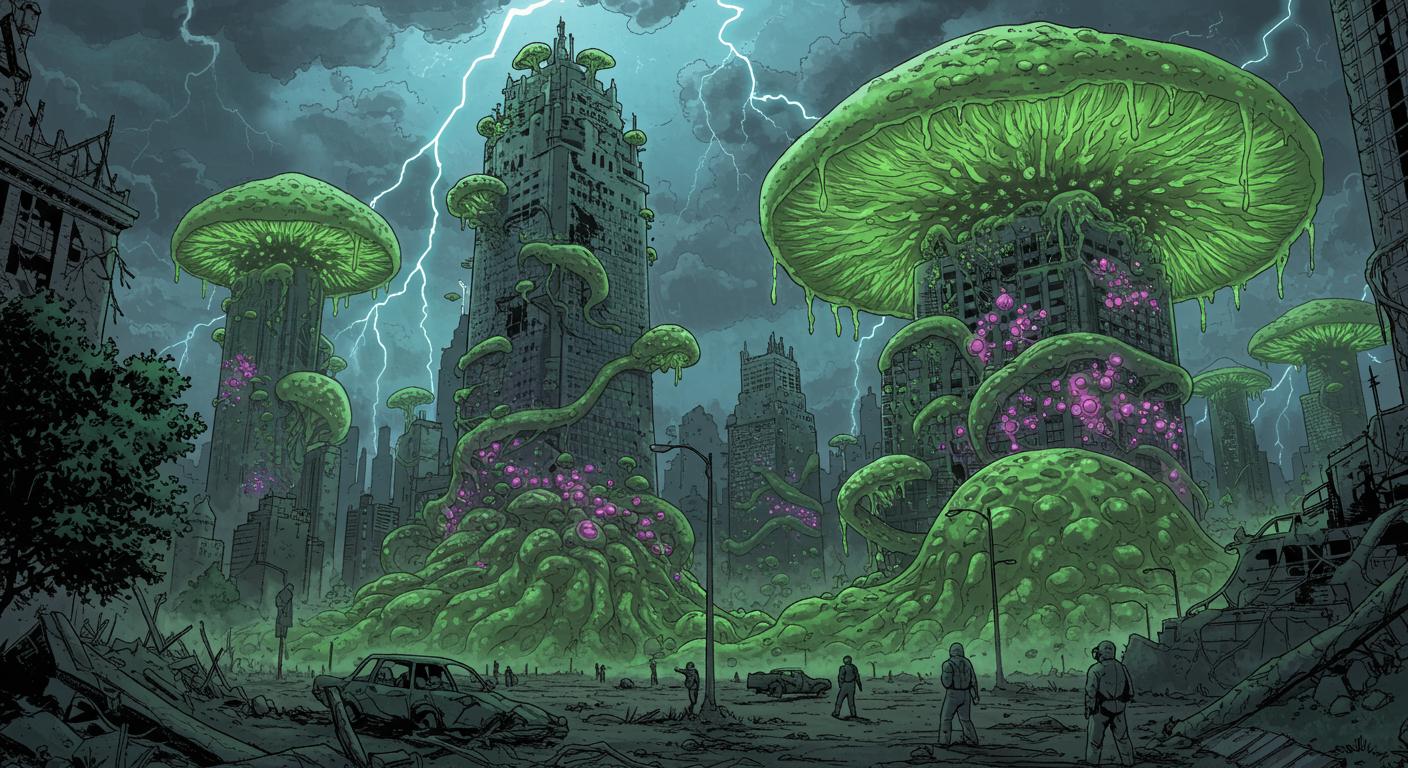
If the words “apocalypse” and “toxic fungi” put you in mind of giant, marauding mushrooms straight out of a B-movie, you’re not alone. Yet, as described in a recent brief by the Global Center for Health Security, the threats posed by the fungal kingdom may turn out to be far less cinematic and far more insidious.
The Fungus Among Us
According to findings reported by the Global Center for Health Security, researchers analyzing multiple climate scenarios project that toxic fungi will likely spread into new geographies as global temperatures rise, potentially putting millions at risk. The study underscores a double-edged problem: while many fungi serve as critical decomposers, enabling life as we know it by breaking down plant and animal matter, even these helpful species could be driven to extinction in some of the Earth’s hottest regions, with Africa noted as particularly vulnerable.
One detail highlighted by the outlet is that we’re still in the fumbling-in-the-dark phase with fungi. About 10 percent of all fungal species have been cataloged, leaving a yawning knowledge gap and suggesting that as ranges shift, we might encounter surprises—possibly not the good kind. With most fungi unexplored, the spread into unfamiliar territory could introduce species to new ecosystems, and to humans who may not be prepared for the encounter. It invites the uncomfortable question: What constitutes a “toxic” or “harmful” fungus if we don’t even know what most of them are?
The Known, the Unknown, and the Spores to Come
As the Global Center for Health Security report documents, the intersection of climate change and fungal adaptation creates substantial uncertainty. Only a fraction of the world’s fungi are studied or even known. This limitation makes it difficult to predict which types will flourish and which might die out as regions warm and habitats shift. The report also points out that beneficial fungi—which play a pivotal role in natural recycling by decomposing organic matter—are themselves at risk of disappearing in places where the climate becomes inhospitable.
As previously reported in the same briefing, these changes could yield complex chain reactions, including the rise of pathogenic species in new areas, complicating both ecological stability and public health. The direct threats from known troublemakers like Candida auris or Aspergillus—species already displaying robust adaptability—may become just one aspect of a much larger, and very much unfinished, story. With so few fungal species cataloged, blank spaces easily outnumber knowns in the microbial ledger.
Reflection: What Lurks in the Mulch?
Given how abruptly fungal roles can shift from garden-variety to globally significant, just how much concern is warranted? The Global Center for Health Security notes we still lack critical information on how most fungi operate or what their potential human health impacts might be, making forecasting difficult at best. Perhaps the most unsettling thought is that, beneath our feet, lie myriad species yet to be named or understood.
The upshot: Tomorrow’s fungi may behave in ways neither we—nor our immune systems—are prepared for. The real story could be growing quietly out of sight, ready to make itself known in the unlikeliest places. Is it possible that our greatest rivals in the climate era will turn out to be the ones we still haven’t met? Or will we simply learn to tread a little more carefully, with new respect for the ecosystems, and the odd inhabitants, under our noses—or boots?