Formula 1 is famously unpredictable, but no amount of trackside data, pit strategy, or weather calculations seems to account for Montreal’s most persistent wildcard: the local groundhog population. This weekend’s Canadian Grand Prix delivered a truly unusual tableau as Ferrari’s Lewis Hamilton found himself—rather unwillingly—entangled in the sort of wildlife encounter more often reserved for suburban picnickers than elite racing drivers.
Nature Meets Nanoseconds: The Lap 13 Showdown
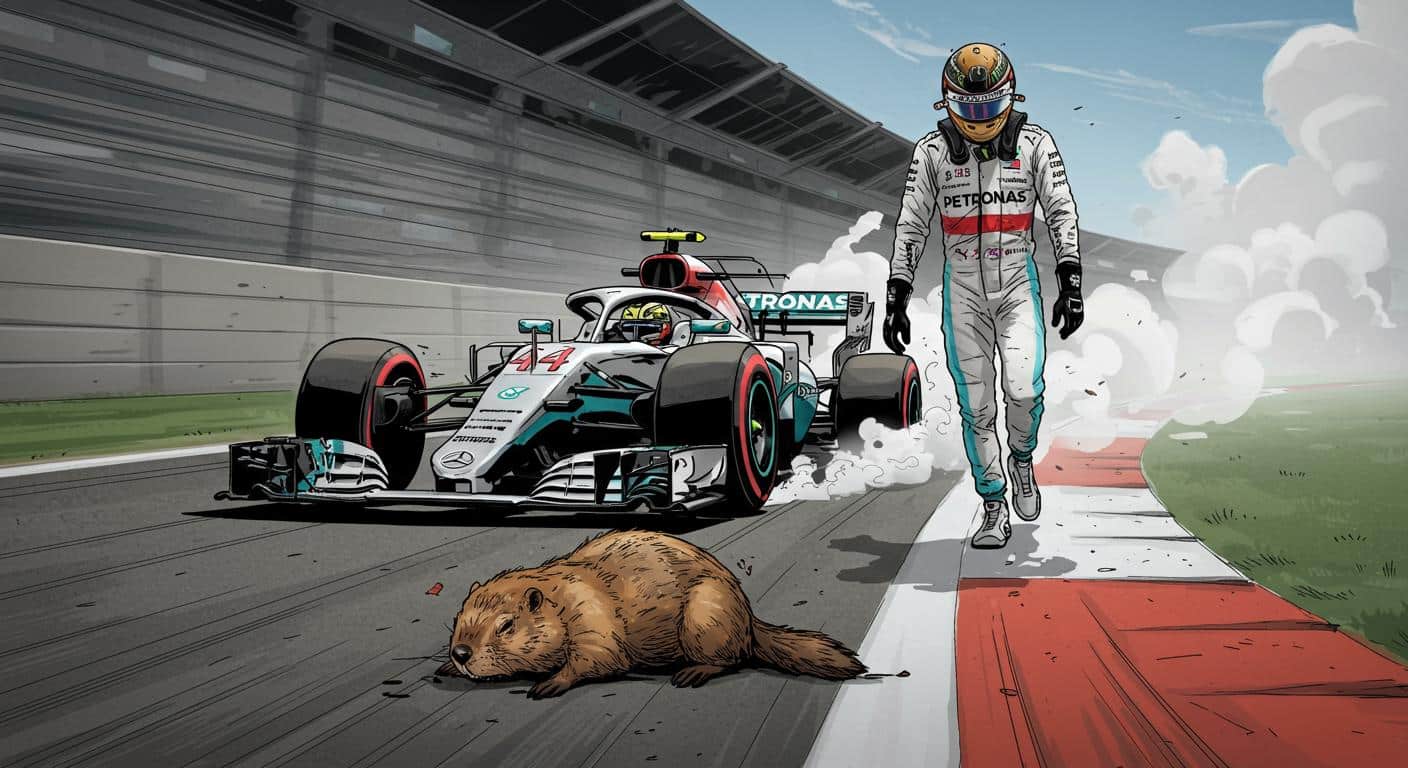
Both BBC Sport and Fanatik recount the somber turn during Sunday’s race: on Lap 13, Hamilton’s SF-25 collided with a groundhog darting across the famous Circuit Gilles Villeneuve. The mishap was not without consequence—Fanatik reports that the impact left a noticeable hole in the Ferrari’s floor pan and, as both outlets indicate, cost Hamilton an estimated half-second per lap for the remainder of the race. These are the fine margins that make or break a podium finish in Formula 1.
Yet, the numbers were hardly Hamilton’s chief concern. Described by BBC Sport as a “well-known animal lover” and a dedicated vegan, Hamilton’s post-race comments reflected a very different kind of anguish. “I love animals, and I’m so sad about it. That’s horrible. That’s never happened to me here before. It’s never nice to see that—I just hope it didn’t suffer,” he told reporters, sounding less the hardened veteran racer and more like a regretful passerby at an unfortunate roadside scene.
Is it possible to prepare for every variable in motorsport, or is nature’s randomness perpetually one pit stop ahead?
Montreal’s Groundhog: Mascot or Menace?
The spectacle of a groundhog halting a multimillion-dollar race car is, by now, almost a Canadian GP tradition. Both sources highlight that groundhogs—technically large ground squirrels native to North America—are a frequent sight around the circuit, which sits on an artificial island in the Saint Lawrence River. The creatures appear to treat the track as a kind of squirrel superhighway, oblivious to the global spectacle roaring past.
Fanatik notes their presence “often adds an unexpected element” to the race, as if Montreal’s engineers and teams weren’t already busy enough contending with unpredictable weather, wily tire strategy, and the occasional flying debris. For all the wind tunnel hours and team briefings, it seems that scanning for marmot-shaped projectiles remains off the official checklist.
Should wildlife crossing signs become part of the FIA’s safety regulations, or is this just one more quirk that gives the Canadian GP its peculiar personality?
A Race Overshadowed, A Champion Unsettled
Despite the drama—or because of it—Hamilton ultimately finished sixth, his performance hampered by the damage sustained. Both outlets point out that the bigger story for Hamilton wasn’t the lost positions, but the loss of one of Montreal’s resident rodents. His hope that the groundhog “didn’t suffer” offers a rare and strangely wholesome glimpse behind the visor, especially in a culture that celebrates calculated emotional restraint.
As BBC Sport documents, the eventual winner proved to be Mercedes driver George Russell, who clinched his first victory of the season from pole, with reigning champion Max Verstappen following in second. The podium, as always, was a celebration of the sport’s relentless pursuit of perfection. Yet the paddock talk seemed to orbit, with a hint of disbelief, around the collision that no one—not even the best strategists in the business—could have seen coming.
Can F1 Ever Outpace the Absurd?
There’s an odd symmetry to a day where engineers split hairs over wind resistance and yet find themselves at the mercy of one furry interloper. Even as Hamilton’s team calculated lost seconds and strategists adjusted in real time, the race’s defining image became a groundhog-shaped hole and a champion’s uncharacteristic melancholy.
If every sport has its humbling moments, perhaps Formula 1’s regular run-ins with local critters offer a reminder, as noted earlier in Fanatik’s report, that the universe is infinitely less tidy than a pit lane diagram.
Will anyone on the grid be thinking ground-level radar for 2026, or is racing—as it so often is—a marvelous experiment in chaos management?
Hamilton’s heartbreak was genuine, the groundhog’s fate unfortunate, and the story—well, it’s the sort that lingers in the odd corners of F1 lore. In the relentless calculus of motorsport, there’s apparently still room for an unscripted, unpredictable interruption. How often does a world-class driver find their fate quite literally linked to a local ground squirrel’s split-second decision? Sometimes, even in a world of precision, the wild has the last lap.