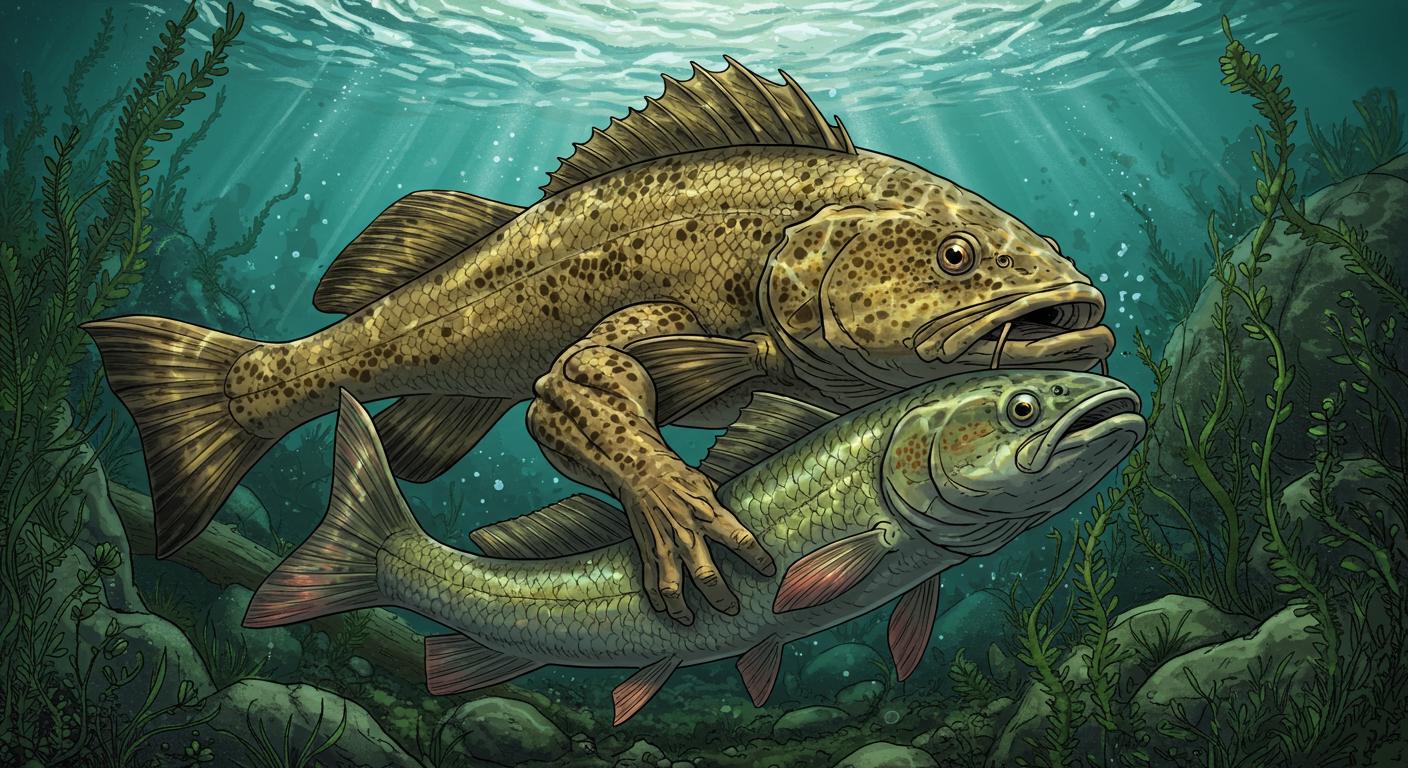
In one of those rare moments where nature seems to be reading from a script with a sense of irony, the endangered Mary River cod has reportedly started dining on the fish that most threatens it: the invasive tilapia. As reported by ABC News, recent research along Queensland’s Mary River has revealed concrete evidence that these critically endangered cod are making tilapia part of their regular menu.
Predator Becomes Problem Solver
During a routine survey, conservationists with the Burnett Mary Regional Group (BMRG) discovered remnants of tilapia in the mouths of two Mary River cod. Tom Espinoza, BMRG’s chief executive, explained that while they always suspected large cod were consuming invasive fish, this is the first concrete, observed proof. Espinoza described one encounter: an 80cm cod in the process of swallowing a 40cm tilapia—an act that seems more mythic than mundane, but was fully documented by the survey team. According to Espinoza, “There was always the hope and suspicion that they [cod] were eating everything.”
This bit of ecological turnabout has given hope to those invested in the cod’s survival. The fact that a fish dwarfed to less than 30% of its former range is now munching on the very competitor that has displaced it? You can almost hear a slow clap from the riverbank. However, as ABC News details, tilapia have become entrenched in 26 of Queensland’s 67 catchments and have proven so prolific that eradication isn’t considered plausible. So, as much as this makes for a satisfying underdog story, one has to ask—will even a revitalized cadre of giant cod be enough to slow the tide?
Appetite for the Exotic
Professor Mark Kennard of Griffith University, working with the National Environmental Science Program, adds a bit of local color: these apex predators are as omnivorous as they are rare. Kennard told ABC News that cod have been found with everything from possums to lizards in their stomachs. It’s clear they’re not picky about what’s for dinner. While researchers have theorized that tilapia would be a likely part of this smorgasbord, until now, hard documentation was missing.
Kennard further emphasizes the dilemma—seeing cod eat tilapia is promising, but cod numbers remain critically low despite considerable restocking and habitat work. Even with initiatives such as “cod logs” (handmade structures to bolster habitat) and fertiliser schemes made from tilapia carcasses, he says, “there’s still a lot of work to do.” Despite 30 years of direct intervention, Mary River cod populations haven’t bounced back as much as conservationists hoped.
Within the same report, Espinoza points out that while this discovery boosts resolve for new and ongoing conservation strategies, supporting a sustainable, naturally balanced river will require years of effort. “Hopefully in 10, 15, 20 years’ time we’ve got a population of large cod that can do the rest of the job themselves,” Espinoza reflects, hinting at a future where the cod manage pest control on their own terms.
Fishy Solutions, Human Limitations
This development ticks all the right boxes for the part of the human brain that loves poetic justice, but the numbers game remains daunting. As ABC News also notes, the Mary River’s ancient and peculiar residents—the “bum-breathing” Mary River turtle, lungfish, and snapping turtles—are still under serious pressure from tilapia, despite decades of innovation in river conservation.
While it’s heartening to imagine a self-regulating ecosystem featuring apex predators handling a long-standing invader, history rarely unfolds that neatly. Maybe the cod’s newfound taste for tilapia is the start of a new equilibrium—or perhaps it’s just a brief highlight in a much longer struggle.
Does an endangered cod munching on an invasive tilapia ever really tip the scales? Or is it just another strange, quietly hopeful headline to file away under “nature’s oddities”? Given the stubborn resilience of both species, it’s a story future generations of Mary River-watchers—and cod—will have to finish.