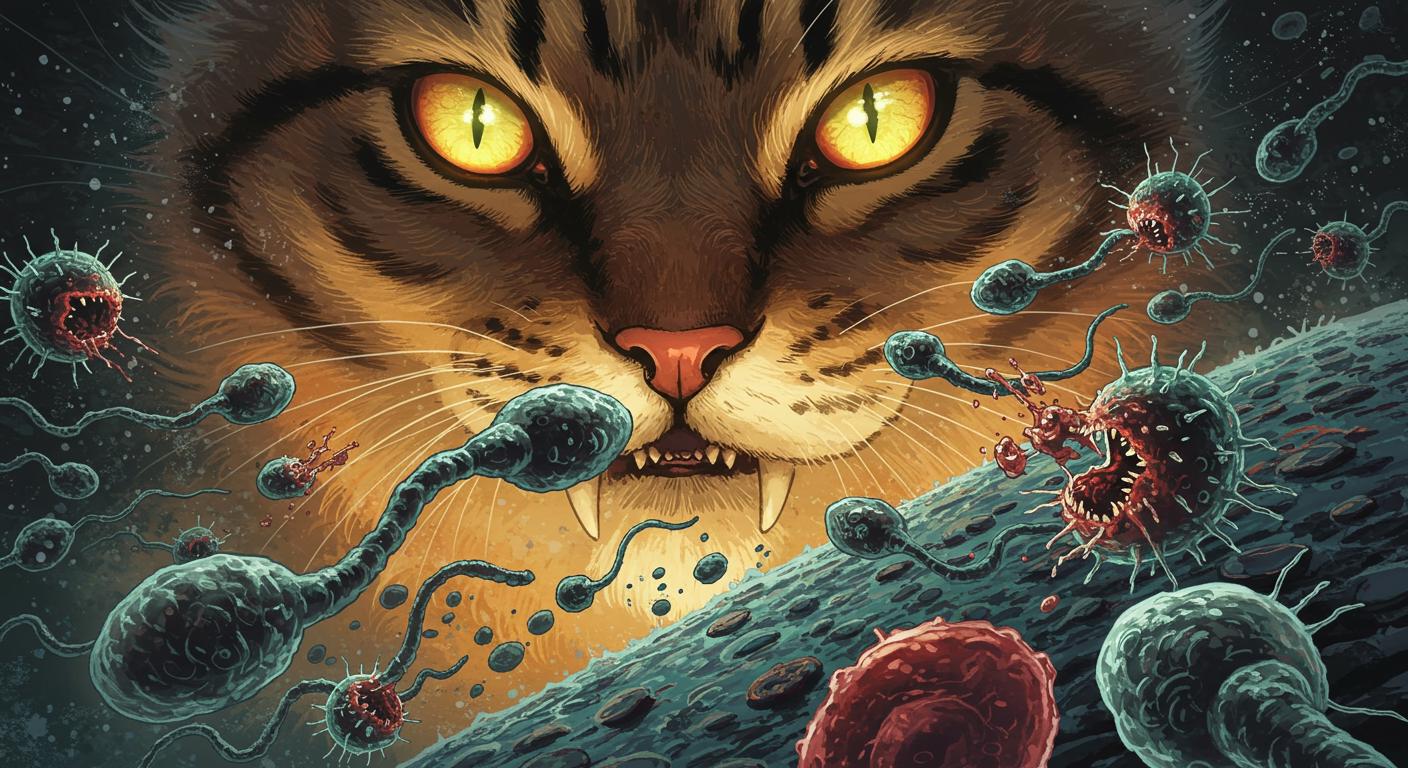
Among the endless roster of unlikely threats to human fertility, one microscopic contender stands out for sheer audacity: Toxoplasma gondii. According to Gizmodo, this single-celled parasite, often lurking in cat feces, might be playing a covert role in declining male fertility by literally decapitating sperm cells. In the annals of odd hazards, it’s a standout.
Feline Friends and Their Unseen Hitchhikers
Toxoplasma gondii isn’t exactly a stranger to the spotlight; it’s the reason for long-standing warnings aimed at pregnant cat owners and anyone skittish about the mysteries of the litter box. What’s caught researchers’ eyes now, as described by Gizmodo, is that T. gondii’s repertoire of mischief appears to extend well beyond what’s already known—slinking from intestines to the male reproductive tract, and apparently reducing sperm cells to victims of what one researcher characterized as cellular “decapitation.” Gizmodo cites analysis published by Bill Sullivan in The Conversation, noting that this destruction leaves the sperm non-functional and might quietly sabotage fertility.
There’s a certain dry irony in the idea that the most domesticated of animals, the housecat, could be an unwitting middleman in a protozoan plot against human reproduction. Most adults who contract toxoplasmosis show no symptoms, with the immune system quietly dispatching the invader. Yet, chronic, unnoticed infections are where things get interesting—and potentially problematic for reproductive health. Gizmodo highlights that ongoing, silent infections might gradually undermine sperm quality, a factor that typically goes untested and undetected.
When Everyday Life Gets Extra Weird
It almost feels like a biology test question: What do environmental toxins, job stress, and cleaning a litter box have in common? Apparently, they can all end up as suspects in the case of missing fertility. With declining sperm counts a growing concern worldwide, Gizmodo’s report brings a fresh variable into the equation—one that’s both invisible to the naked eye and cheerfully indifferent to modern anxieties.
Measured against the usual suspects, a parasite best known for riding along in cat droppings seems unlikely. Yet, as the outlet points out, the possible impact of T. gondii on reproductive health deserves closer examination. The mechanics of “sperm decapitation” may sound almost theatrical, but the process is as silent as it is efficient. What’s left to ponder is how much blame this parasite should shoulder for fertility issues, and whether its role has been hiding in plain sight among much noisier culprits.
Gizmodo also notes the researchers’ call for further studies to pin down just how significant this threat really is. For now, routine pet care hardly qualifies as a fertility risk factor at the top of anyone’s mind—but stranger things have happened. Does this mean it’s time for cat owners to panic or rush for a full hazmat suit before tackling the litter box? Probably not, but it does add a curious new twist to the ongoing saga of human health and our strange domestic alliances.
There’s a quiet fascination to be found in the idea that a creature so small could play havoc with such a vital process, all while flying under the radar. Are there more of these microscopic dramas unfolding quietly in the background of daily life? And would anyone have guessed, before now, that the phrase “cat poop parasite decapitates sperm” would ever have real scientific weight? Life, as usual, continues to find ways to out-weird even the most imaginative fiction.