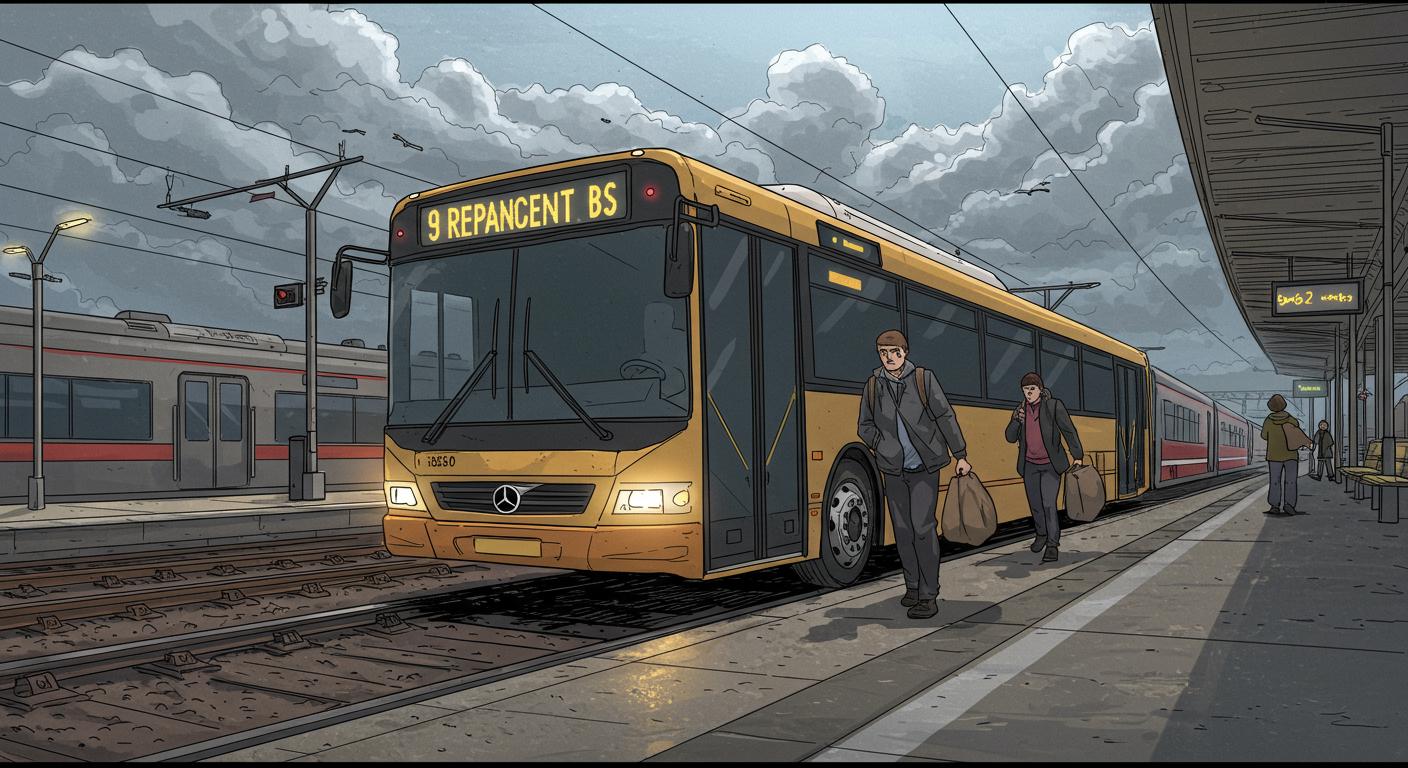
If you happen to collect transport memorabilia, there’s a peculiar rarity making the rounds: tickets marking the debut of South Western Railway’s (SWR) return to national hands. The catch? As described by BBC News, that first journey under Great British Railways ownership won’t take place on the rails at all. Due to bank holiday repair work, the ceremonial “first train” will be—what else—a replacement bus.
The Grand Relaunch, Now Leaving from the Curb
The timetable transition is precise, with ownership flipping to Great British Railways at 01:59 BST this Sunday. Yet, the scheduled 02:27 Guildford-to-Waterloo service won’t be rolling; that one’s outright cancelled. The next scheduled departure, 05:36 from Woking, is available—if you enjoy traversing the silent early hours on a coach rather than a train. According to the BBC’s reporting, these bank holiday repairs have serendipitously engineered a situation where the freshly nationalized rail line debuts… without running a train.
Somehow this all feels deeply fitting. While Transport Secretary Heidi Alexander’s official unveiling of the new Great British Railways brand in Bournemouth came off with the requisite polish, BBC News notes, the behind-the-scenes reality greeted passengers with little but the familiar view of a coach in place of a carriage.
Was there ever a more British way to mark an occasion? Shiny new logos for a much-celebrated return to public ownership, paired with the old faithful: rail replacement buses and a smattering of confusion.
Nostalgia, Promises, and Policy Puzzles
Not that there’s any shortage of optimism. Labour MP Amanda Martin, reflecting on her family connections to the railway, tells the BBC she feels a strong personal stake in this transition. She’s eager, she says, to make passengers feel the difference—from planning their trips to getting compensation for delays, and perhaps eventually finding an easier route to affordable tickets. While instant fare reductions seem unlikely, Martin speaks of incremental improvements and a more humane approach to customer service.
Of course, optimism usually finds a sparring partner in practicality. Olly Glover, Liberal Democrat MP and a voice on Parliament’s transport committee, puts forward a straightforward caution. He points out, as summarized by the BBC, that while nationalization offers opportunities, everything hinges on ministers taking a big-picture approach: set clear aims, fund sufficiently for several years, then—crucially—let those running the trains do their jobs. Glover expresses concern that government may be tempted to meddle in the minutiae, a move unlikely to help trains (or buses) run smoother.
The perspective from the other side of the aisle is no less pointed. Former Conservative MP Chris Loder, who previously worked within the train industry, recalls an era of rising passenger numbers and unprecedented investment during privatization. As discussed in the BBC report, Loder suggests shaking up even the nationalized system by inviting Open Access Train Operators into the mix, competing alongside government-owned services. This, he argues, would reflect the post-pandemic changes in how—and when—people travel, something he notes isn’t emphasized in Labour’s current blueprint.
How many structural experiments does it take before anyone actually gets a reliable train?
Progress, Delays, and the Potholes in the Platform
Supporters of this new public ownership admit, even as hopes are raised, that change won’t arrive overnight. Expectations of cheaper tickets or unbroken, bus-free journeys are best held in check for now, as the BBC’s coverage makes clear. Perhaps the early irony—a “rail” debut by bus—will simply become a footnote in the long, occasionally circular saga of Britain’s transit adventures.
It’s difficult not to picture that first bus driver eyeing a history book or two, perhaps adding a commemorative badge to the dashboard: “I drove the inaugural nationalized train (well, bus).” If logos and speeches are the easy part, then actually getting passengers onto a train seems to remain a stubborn challenge, despite a new coat of political paint.
Does this bumbling start point toward more systemic growing pains, or will it become just another trivia nugget for future enthusiasts? For now, the experiment chugs—and occasionally idles—on, reminding anyone watching closely that sometimes even the grandest relaunch needs a little boost from a four-wheeled understudy.