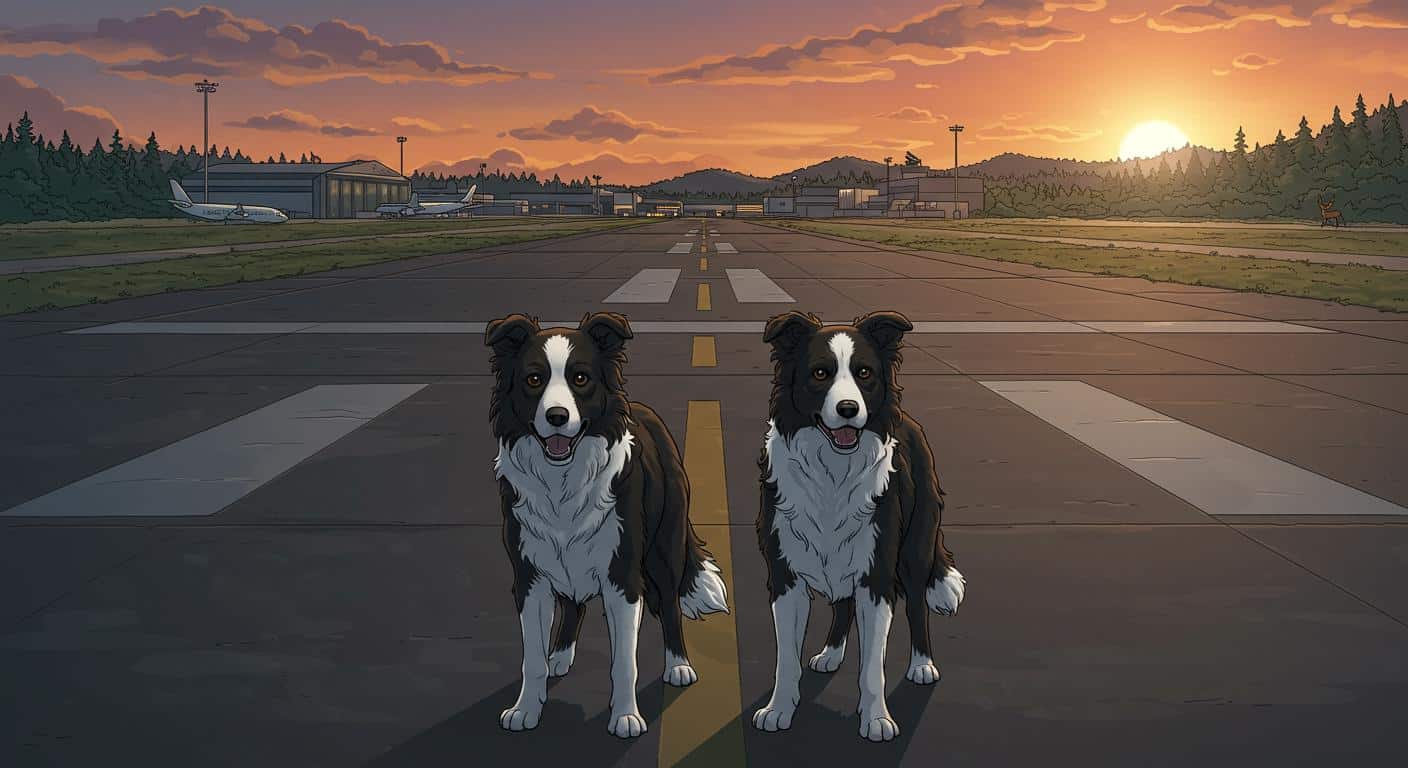
If you ever find yourself in Charleston, West Virginia, peering out an airport window and spotting a black-and-white blur bouncing along the tarmac, don’t worry—the local coyote population hasn’t upgraded its travel plans. That’s just Hercules, sometimes accompanied by Ned, both border collies with job titles more interesting than most humans at West Virginia International Yeager Airport. As reported by the Associated Press, these canines are responsible for the highly specialized task of keeping birds, bats—and, on particularly eventful days, deer—away from the critical paths of departing and arriving planes.
Mile-High Dog Patrol
Working the airfield at Yeager isn’t your average game of fetch. The airport, perched atop a mountain, sees everything from Canada geese to the occasional opportunistic songbird or bat dropping in (literally). Herding them off the field is a full-time occupation for Hercules, Ned, and their handler, Chris Keyser, who told the outlet that every day is a balancing act between keeping wildlife away and listening in on radio chatter from air traffic control. According to Keyser, “preventing a bird from hitting a plane can make a difference for someone’s life”—a fact harder to argue after looking at the statistics.
The AP cites FAA data that tallies some 19,000 wildlife strikes at U.S. airports in 2023 alone, with birds responsible for the overwhelming majority. And while that sounds like the setup for a slapstick comedy, there’s real danger afoot. Notably, incidents like the 2009 Miracle on the Hudson—when geese struck a departing New York flight and forced an emergency water landing that Tom Hanks later dutifully reenacted—linger in professional memory for a reason. Locally, Yeager’s wildlife run-ins range from minor to memorable; the outlet describes everything from post-rain bird surges to a 2000 incident involving two deer and an unlucky propeller blade puncturing a plane’s fuselage—serious enough to injure a passenger and lodge the story firmly in airport lore.
From Sheepdog School to Terminal Celebrity
Hercules, now eight and nearing “elder statesman” status in dog years, didn’t just stumble into the role. As highlighted by the report, he spent his puppyhood at Flyaway Geese in North Carolina, herding geese (and, presumably, the occasional sheep with delusions of grandeur), before being recruited for airport duty on a wildlife biologist’s recommendation back in 2018. Rebecca Gibson of Flyaway Geese recounted to the AP that watching Hercules take his first lap of the runway was a “hold your breath” moment—soon replaced by pride as he took to the field with disarming competence.
Since then, Hercules has amassed a following of both two- and four-legged admirers. Social media stardom (with his own Instagram and TikTok accounts, as the outlet documents), guest-hosting schoolchildren, and moonlighting as chief airport ambassador are all just part of his extended job description.
Last year, the airport added Ned, fresh from another kennel—where he learned goat and goose herding—to ease Hercules’s workload. Ned has picked up the routine quickly, Keyser noted, learning when to chase and when not to dart onto the runway itself (a critical distinction for maintaining a “good dog” reputation with the tower).
The Science of Canine Crowd Control
It’s not just tradition that makes border collies the natural fit for this work. According to training experts cited in the AP piece, their instinct isn’t to attack, but to herd—meaning animals like birds interpret their presence as that of a fox or coyote, convincing even the most persistent goose that maybe a layover somewhere else is wise. Gibson explained that for the birds, a border collie’s approach is “no different than a coyote or a fox, which is a natural predator.”
The dogs’ energy is apparently inexhaustible. When not chasing birds, Ned can be found in the ops center, blue bouncy ball at the ready, soliciting games of fetch from willing humans. Meanwhile, Hercules prefers to lounge in a state of Zen—right up until the next patrol is announced, at which point he springs into action, barking with anticipation. If only we all could muster such enthusiasm for workplace meetings.
After rain, worms rise to the surface and, as described in the article, trigger a boom in bird activity—not exactly the feedback loop you’d expect at 943 feet above sea level. Keyser claims the upside is obvious: “You get plenty of exercise. You don’t gain no weight in this job.”
More Than Just Runway Security
In a note that feels right on brand for this sort of wholesome absurdity, Hercules doubles as an unofficial therapy dog in the terminal. The AP relates how, for at least one passenger battling a fear of flying—and fresh grief at the loss of her pet cat—a visit from Hercules provided the sort of comfort money, or frequent flyer miles, simply can’t buy. Janet Spry recounted that Hercules not only lifted her spirits but planted himself by her side, prompting her to joke about sneaking him onto the flight to San Antonio. You have to wonder if emotional support livestock on a plane ever gets this level of customer satisfaction.
Old Problems, Clever Solutions
Just when you think every modern problem demands a digital or high-octane fix, in strolls a dog, tasked with centuries-old instincts and a fluorescent vest, solving a very jet-age dilemma. As the report illustrates, airports across the country have turned to border collies and their penchant for herding not to harm but to move—which works wonders, at least until the birds unionize or figure out the collies’ schedule.
It does raise an eyebrow: amid all the radar, radio, and meticulously mapped flight paths, the decisive line of defense against avian hazards is a creature whose next move could just as easily be a nap on the break room carpet.
So, are Hercules and Ned the oddest “staff members” at Yeager Airport? Possibly. The most beloved? Judging by their popularity with nervous passengers, exhausted staff, and Canada geese desperate to avoid their judgmental gaze—they might just be running this mountain-top outpost. Would a robot in a hi-vis vest greet you at the gate with a wag and a wet nose? Not likely.
In the end, perhaps the real marvel isn’t just that dog patrols work, but that centuries-old instincts—and a bit of tennis-ball enthusiasm—are exactly what the jet age needs. Strange world, isn’t it?